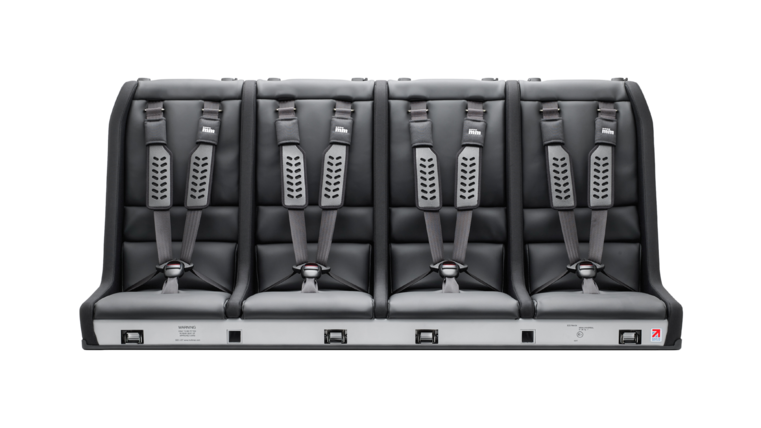
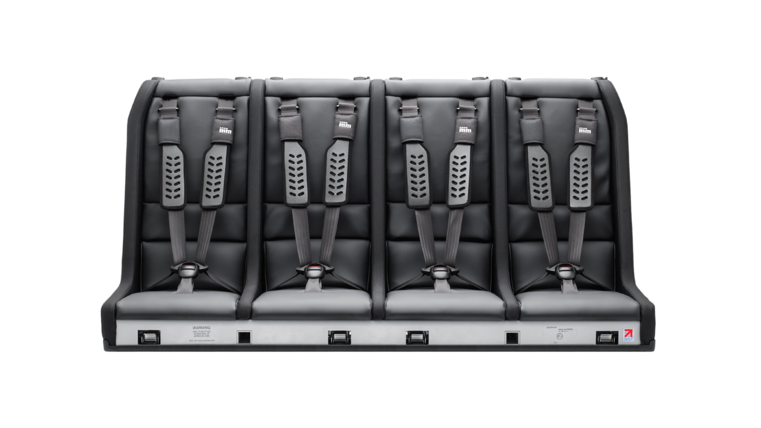
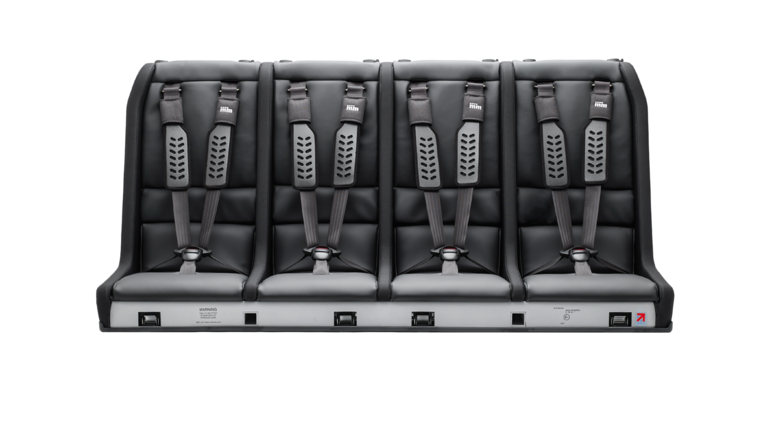
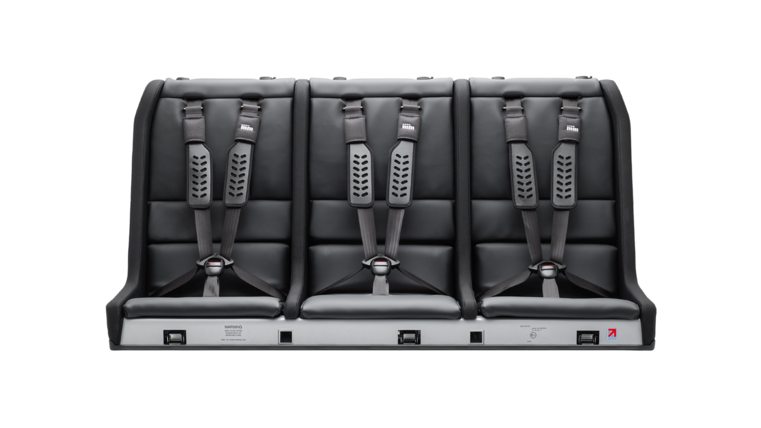
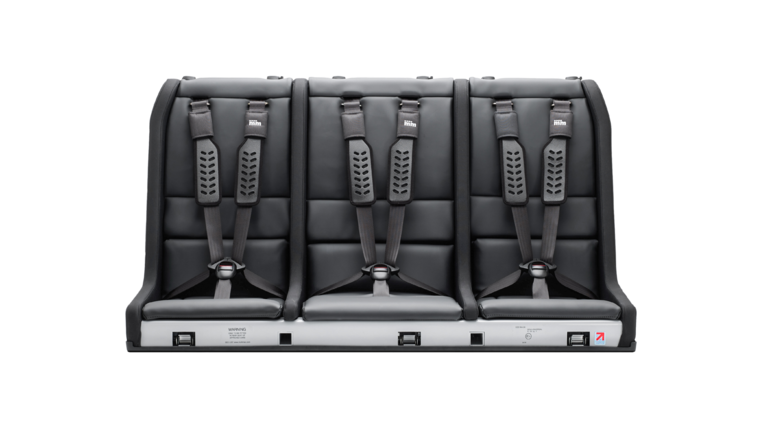
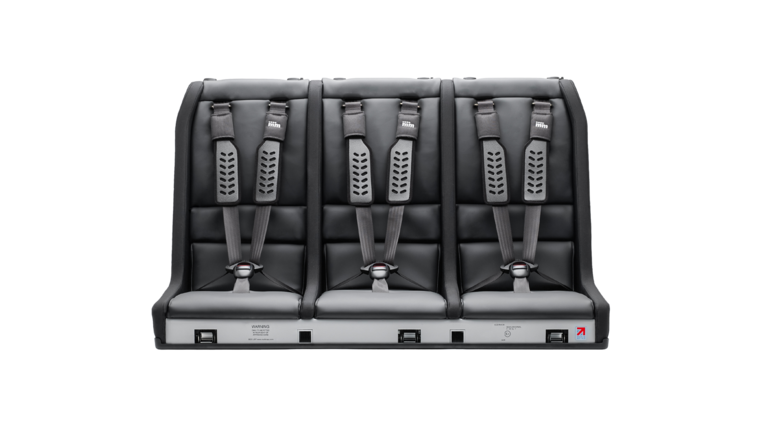
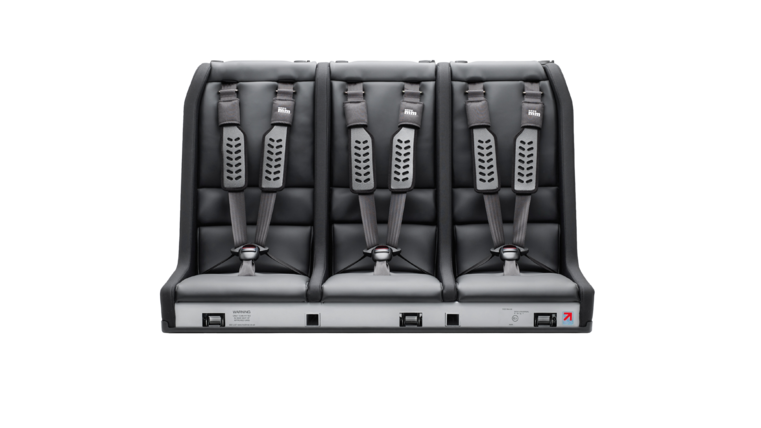
A Multimac isn’t a cheap purchase, and we know that. Compared to buying a bigger car or running two vehicles instead of one, it works out significantly cheaper over time, but the upfront number still makes people pause. So the question we get asked more than almost any other is a fair one: what do you actually get for that money, and how long does it last?
Short answer: a lot longer than you’d expect from a car seat.
It’s aluminium, not plastic, and that changes everything
Every standard child car seat on the market is built from moulded plastic, and plastic has a shelf life. UV exposure, temperature swings inside a parked car, and just the plastic itself breaking down over time all combine to give most seats a manufacturer expiry of around six years, regardless of how gently they’ve been used. That’s not scaremongering from the seat manufacturers either. It’s a real material limitation.
Multimac doesn’t have that problem, because it isn’t made from plastic. The frame is aluminium, the same material family used in aircraft manufacturing, and it doesn’t degrade the way plastic does. Practically, that means:
- No six-year expiry. A Multimac frame is built to outlast the car it’s fitted in.
- Genuinely tough. It shrugs off the day-to-day wear that would leave a plastic seat looking tired within a couple of years.
- Crash resilience most seats can’t match. We’ve sent the same unit down the test rig twice, and the second set of results came in within 5% of the first.
None of that means a Multimac is indestructible or that you should skip replacing it after a serious accident (always speak to us first if you’ve been in a collision). But it does mean the seat itself isn’t the thing that’s going to force a replacement.
So what actually wears out?
The parts that see daily contact: chest pads, harness webbing, seat cushions. All of these are replaceable, which is exactly the point. Rather than binning an entire seat because the fabric’s had enough, you swap the worn component and the frame carries on. It’s a genuinely different ownership model to a standard car seat, closer to how you’d think about a pushchair than a five-year-disposable safety product.
Fitting parts are the other piece worth knowing about. They’re specific to each car, not to the seat, so if you change vehicles the Multimac itself doesn’t need replacing, just a new fitting kit for the new car. We’ve written a separate guide on exactly which ages, weights and heights a Multimac covers if you want the full breakdown.
How it adapts as your child grows
This is where the “one seat for the whole journey” claim actually plays out in practice.
From birth, it’s the Minimac. Our rear-facing infant seat clicks into the Multimac chassis and covers children up to 18 months, 13kg, or 82cm, whichever comes first. Up to three fit across most Multimac models, which is a genuine lifeline if you’ve got twins or triplets to manage. It’s built exclusively for the Multimac and won’t work with any other pushchair or travel system, so don’t try to mix and match.
Extended rear-facing is coming. We’re currently developing an ERF version of the Minimac, designed to keep children rear-facing well beyond the standard infant stage, all the way through to around four years old. Rear-facing for longer is one of the clearest wins in car seat safety (it spreads crash forces across a child’s back rather than concentrating them on the neck), and doing it for two or three children at once in a single vehicle is something no other seat on the market offers. If you want to understand why that matters, we’ve covered the safety case in detail here, and what multi-child ERF actually looks like in practice here. The waitlist is open now if you’d like to be first in line when it launches: join the ERF waitlist.
Forward-facing, it’s the Ylva. Once a child outgrows the Minimac, the Ylva Headrest takes over, giving essential side-impact protection alongside a fully height-adjustable five-point harness. It’s rated for forward-facing children up to at least six years old, and the Ylva Back Pad works alongside it to add extra head and neck support as they get taller.
For older kids, there’s the Tommy. If a child outgrows the Ylva, or your car’s roofline is too low to accommodate it, the Tommy Headrest is a smaller, simpler alternative that still keeps things comfortable.
And a couple of accessories stretch it even further. The Low Profile Seat Cushion lowers the seating height, which keeps older children in the five-point harness for longer. The Plug-In Buckle does the opposite job at the other end of the age range, letting teenagers or small adults use the car’s normal seatbelt instead of the harness. Between the two, most families get well past the 12-year mark without needing anything new.
Does it hold its value?
Yes, and this is where the aluminium build pays off a second time. Because Multimacs don’t wear out the way plastic seats do, they hold their value considerably better on the second-hand market. We also run our own buy-back and refurbishment scheme, Resto-Mac, so if you’ve reached the end of your journey with your Multimac, you don’t have to just list it and hope for the best. Get in touch and we’ll talk you through how it works.
Worth flagging if you’re the one buying second-hand rather than selling: fitting parts aren’t transferable between owners, since they’re matched to a specific car, and only seats made after August 2024 meet the current R129 standard. Our guide on buying second-hand covers what to check before you commit (search “pre-owned” on our blog for the full piece).
The bottom line
Twelve years, sometimes more, from a single seat that moves with your child from their first car journey home from the hospital right through to secondary school, and that’s before you factor in what it’s worth if you sell it on. Very few things you buy for a baby are still earning their keep a decade later. A Multimac usually is.
If you want to see which model fits your car, our quote builder takes about two minutes. Or give us a call on 0121 44 22 007, or email info@multimac.com, if you’d rather talk it through first.