The secret to long car journeys with kids isn’t a perfect playlist or a bag of new toys. It’s planning the trip around the children rather than the destination. Build in proper stops, sort the seating before you leave, pack so you can reach things without pulling over, and accept that a four-hour drive will probably take five.
Here’s how to make that work, whether you’re heading to Cornwall for half term or driving to Scotland for Christmas.
Plan your route around the breaks
Start with the stops, then fill in the driving. The Highway Code (rule 91) recommends a break of at least 15 minutes after every two hours of driving. That’s guidance for drivers, but it suits children too. Two hours is roughly where boredom turns into bickering.
A few things that make stops work harder:
- Pick them in advance. A services with a play area or a nearby park beats a lay-by every time.
- Treat each stop as a reset. Toilets, a run around, fresh air, then back in.
- Don’t skip a stop because everyone’s asleep. Take the win, but plan to stop when they wake.
- Add 30 to 60 minutes to whatever your sat nav says.
If you can, leave early in the morning or time the first leg around a nap. An hour of quiet driving before anyone’s properly awake is an hour you don’t have to entertain.
Long car journeys with a baby
Babies change the maths. Many car seat manufacturers advise taking young babies out of their seat regularly on long trips, often every two hours or less, so check the manual for your specific seat. Use stops for a feed, a nappy change and a proper stretch out of the seat.
Never feed a baby a bottle while the car is moving and they’re strapped in. Pull over. It’s slower, but it’s safer.
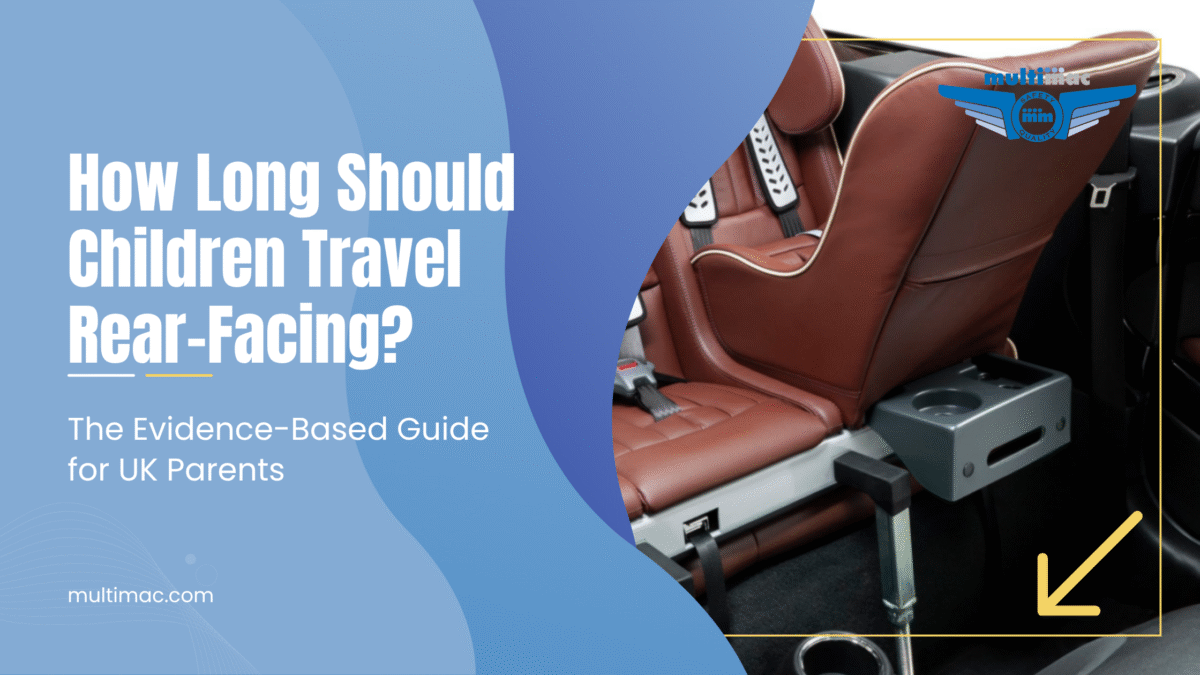
If your baby is rear-facing (and they should be for as long as possible), a backseat mirror means you can check on them without turning round. Our guide on how long children should travel rear-facing covers the evidence in more detail.
Sort the seating before you set off
Who sits where matters more on a five-hour drive than on the school run. Siblings who can reach each other will. Children who can’t see out of the window are more likely to feel sick. And if a parent needs to sit in the back to help a baby, you need to know that before you’ve loaded the boot.
Think about:
- Separating the siblings most likely to wind each other up.
- Putting the child most prone to car sickness where they can see out of the front.
- Whether an adult can reach the youngest child at stops without unloading everyone else.
Travelling with three or more children
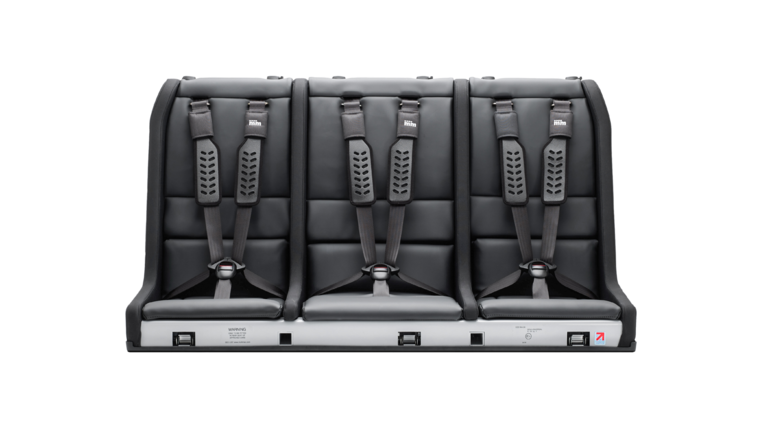
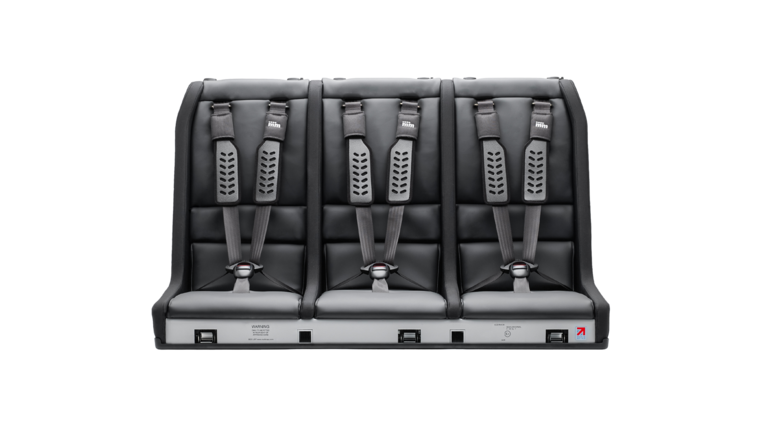
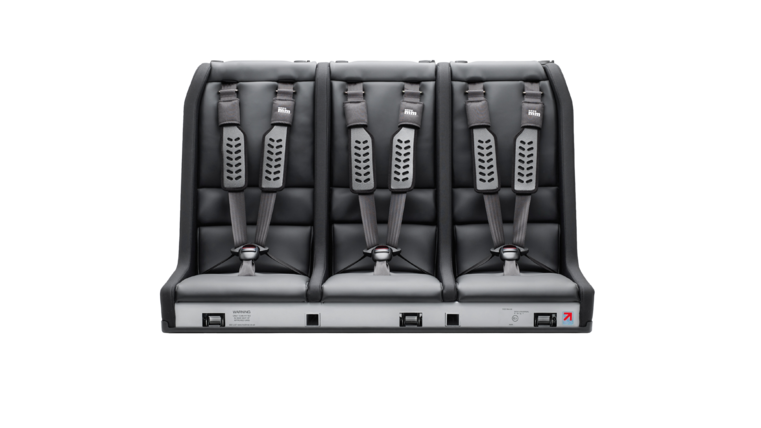
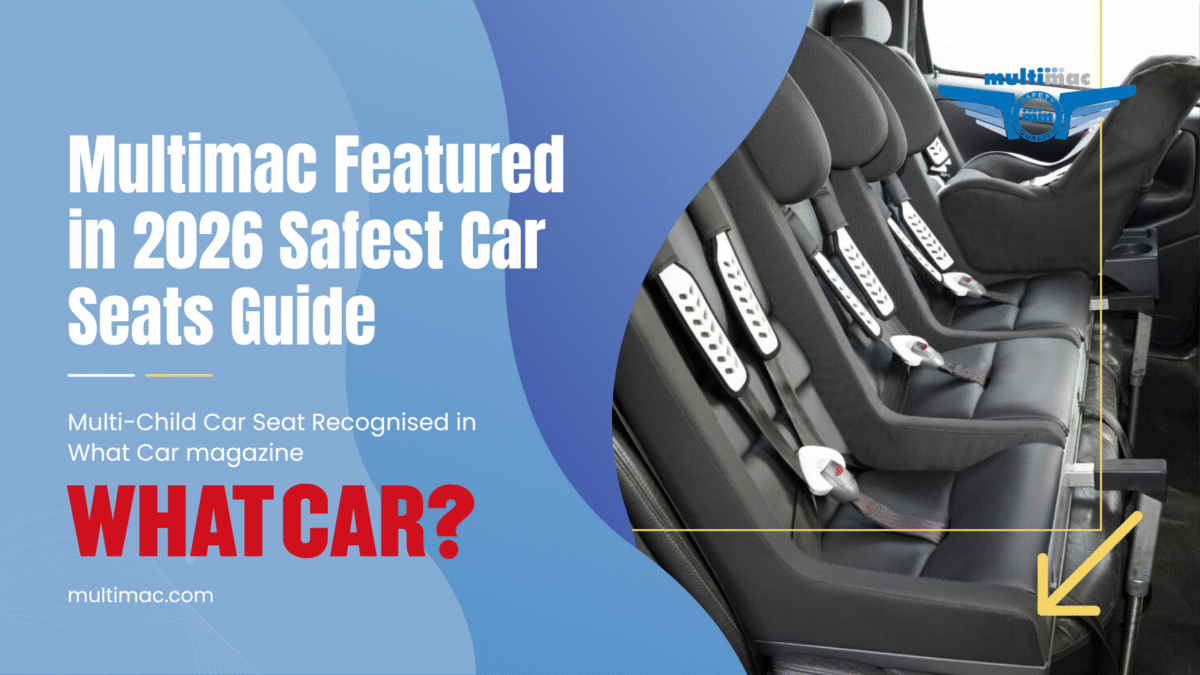
This is where long journeys get properly difficult. Three conventional car seats rarely fit across the back of a standard car, which is why so many families end up buying a seven-seater and losing most of the boot to the third row.
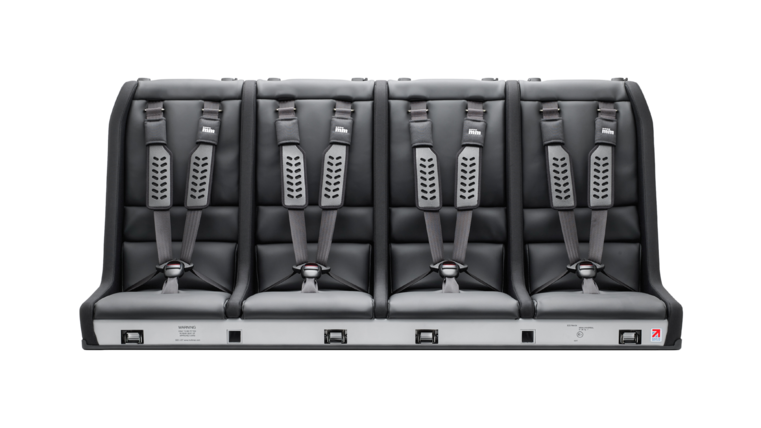
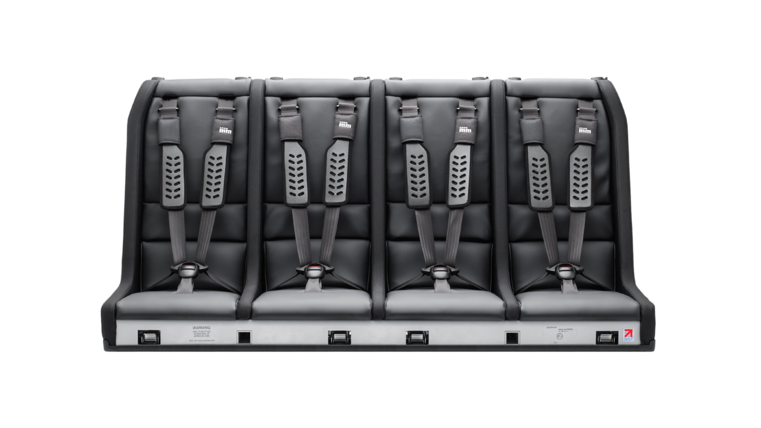
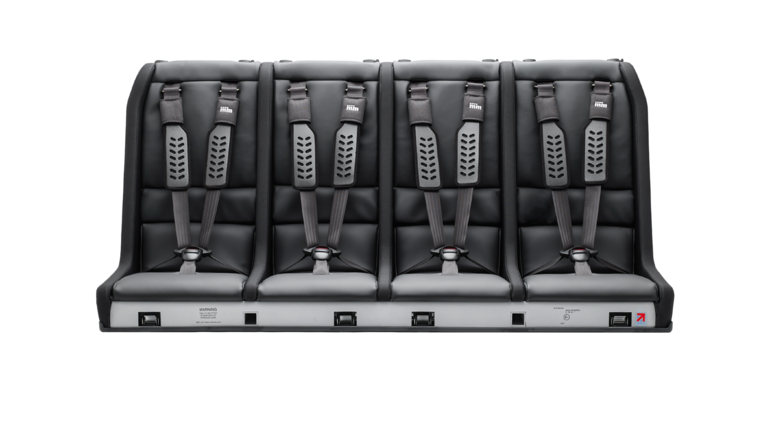
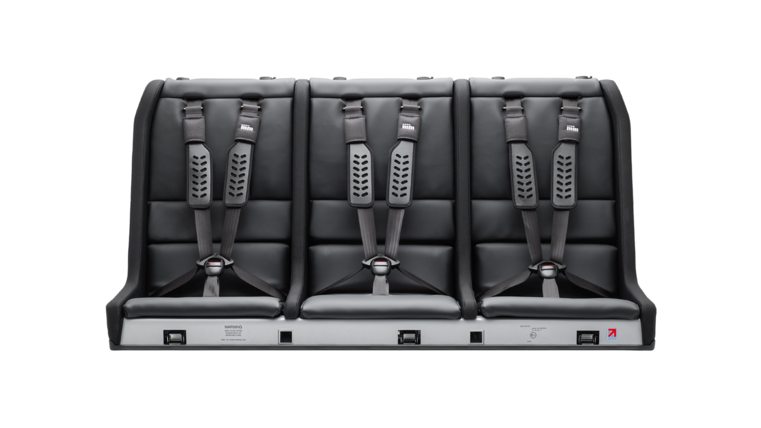
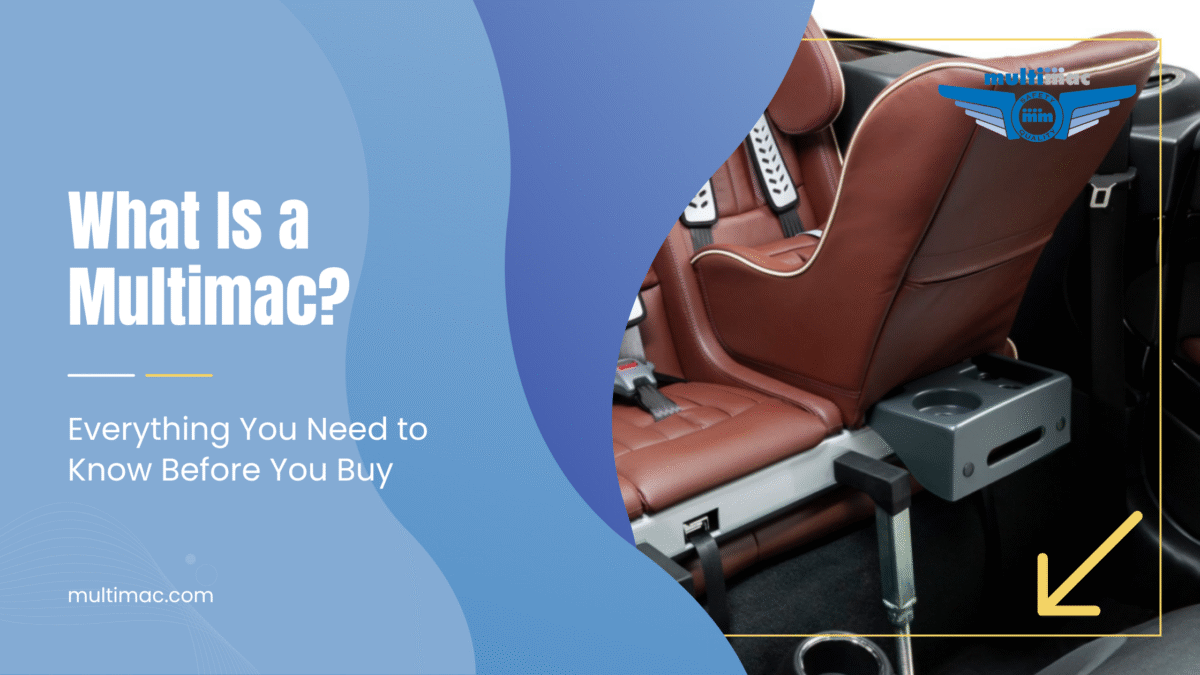
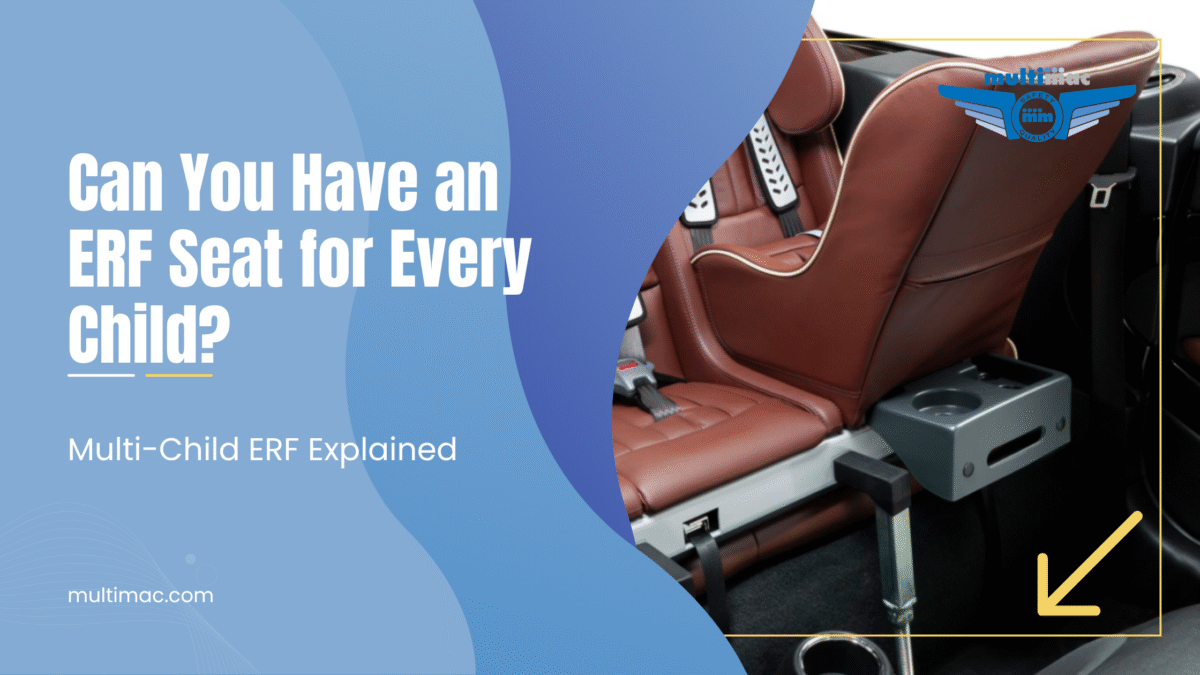
A Multimac fits three or four children across the back seat of a five-seat car, so everyone sits in one row and the boot stays free for the luggage. If you’re planning a big family trip abroad, our guide to taking your Multimac on holiday covers hire cars, driving in Europe and R129 approval.
What to pack for a long car journey with kids
Pack in two layers: the stuff in the boot, and a grab bag in the car that you can reach without stopping.
The grab bag:
- Wipes, tissues and kitchen roll
- Sick bags (or freezer bags with a zip seal) and a spare towel
- A full change of clothes for each child, including socks
- Snacks portioned into small bags or pots
- Water bottles with lids that don’t leak
- A small bin bag
- Plasters, children’s paracetamol or ibuprofen, and any regular medicines
- Chargers and headphones
- Two or three entertainment options per child, rotated rather than handed over all at once
In the boot, keep the overnight bags you’ll need on arrival near the top. Nobody wants to unpack the whole car at 9pm to find pyjamas.
Dress them for the car, not the destination
Comfortable, layered clothing works best. Soft trousers over jeans, and a T-shirt with a zip-up top over a thick jumper, so you can adjust as the car warms up.
Take bulky coats off before you strap children in. A thick coat compresses in a collision, which can leave the harness too loose to do its job. Put the coat over them like a blanket once they’re buckled in instead.
How to stop car sickness in children
Car sickness happens when what the eyes see doesn’t match the motion the body feels. The NHS advice on motion sickness suggests:
- Looking out of the window at a fixed point, such as the horizon
- Opening a window for fresh air
- Avoiding reading, screens and films
- Breaking the journey into stages
- Avoiding heavy meals just before or during the trip
Distraction helps too. Talking, singing and listening games keep eyes up and out of the window. Travel sickness medicines and bands are available for children, but ask a pharmacist which is suitable for your child’s age.
If someone is sick, pull over when it’s safe, clean up, swap clothes and get some fresh air before setting off again. This is exactly what the spare towel and change of clothes are for.
Car games and entertainment for kids
Screens have their place, but they’re not ideal for children who get car sick, and a dead tablet two hours from home is its own crisis. Mix it up.
Car games that need nothing but voices:
- I spy (or colours, for younger children)
- 20 questions
- The alphabet game, finding each letter on signs and number plates in order
- Spot the car: first to see a red car, a caravan, a tractor
- Would you rather
- The story game, where each person adds one sentence
Audiobooks and children’s podcasts are brilliant for long stretches. Everyone can listen together, there’s no screen, and a good series can carry you through a whole motorway section.
For younger children, a small wrapped surprise at each stop gives them something to look forward to. It doesn’t need to be expensive. Stickers, a new colouring book or a small toy all work.
Snacks and drinks
Little and often beats a big meal before you leave. Go for food that isn’t sticky, crumbly or messy: crackers, breadsticks, cut fruit, cheese cubes, rice cakes. Save sugary treats for later in the trip, when you need them as a bribe rather than a boost.
Watch the drinks. Too much water early on means extra toilet stops, but don’t restrict drinks on hot days. Just plan stops accordingly.
Keep the car safe as well as calm
On a long journey the car becomes a living room, and it’s easy for things to end up where they shouldn’t.
- Keep heavy items in the boot, not loose on seats or in footwells. In a sudden stop, they become projectiles.
- Check harnesses are snug at every stop. Children wriggle, and straps loosen over a few hours.
- Turn on the child locks for doors and windows.
- Use sun shades on the rear windows rather than leaving children to squint for hours.
Frequently asked questions
How often should you stop on a long car journey with kids?
Aim for at least a 15-minute break every two hours, in line with the Highway Code’s advice for drivers. With babies and toddlers you may need to stop more often for feeds, nappy changes and a break from the car seat.
How long can a baby stay in a car seat on a long journey?
There’s no legal limit in the UK, but many car seat manufacturers recommend taking babies out of the seat at regular intervals, often every two hours or less. Check the guidance for your specific seat and use stops for feeds and stretches.
What do you do with kids on a long car journey?
Mix audiobooks, podcasts, car games like I spy and 20 questions, small surprises at each stop and some screen time. Rotating activities works better than handing everything over at once.
How do you stop children getting car sick?
Encourage them to look out of the window, keep fresh air flowing, avoid screens and reading, keep meals light and break the journey into stages. Speak to a pharmacist about travel sickness remedies suitable for their age.
What’s the best way to fit three children in the back of a car?
Most standard cars can’t take three conventional car seats side by side. A multi-child seating system such as the Multimac fits three or four children across the back of a five-seat car without losing boot space.
Making the long drive easier with a bigger family
The families who find long car journeys easiest aren’t the ones with the calmest children. They’re the ones who planned the stops, packed the grab bag and sorted the seating before anyone got in the car.
If seating three or four children is the part that makes every trip harder than it needs to be, get a quote for your car and see how a Multimac would fit.