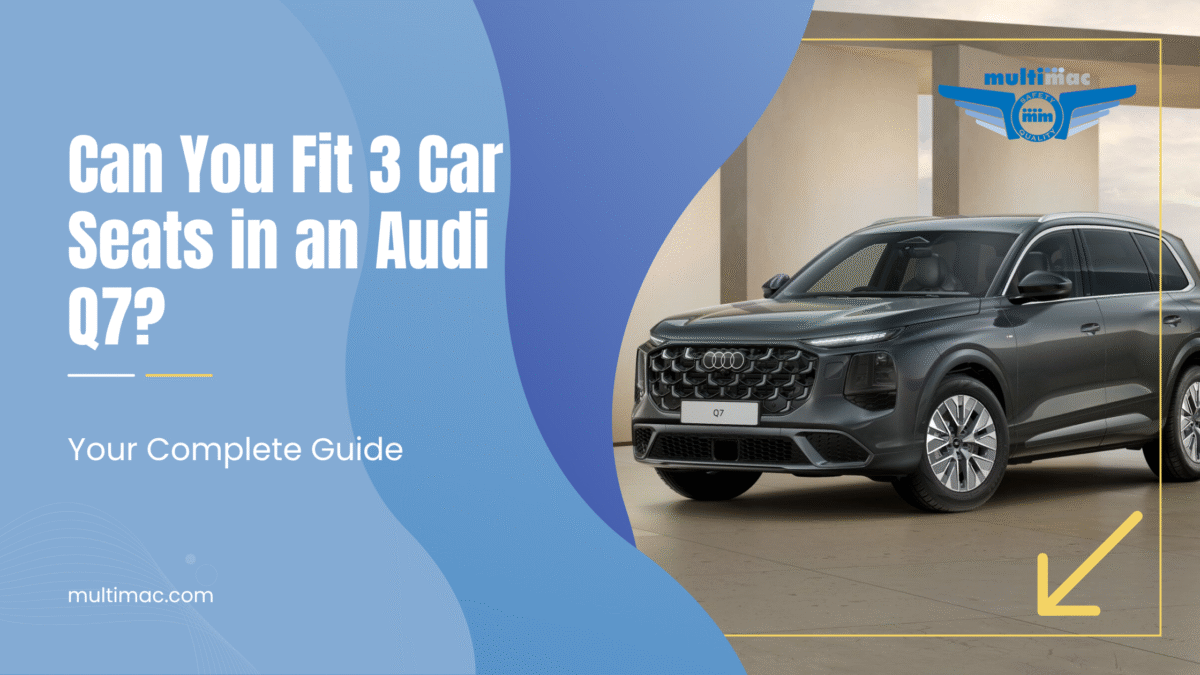
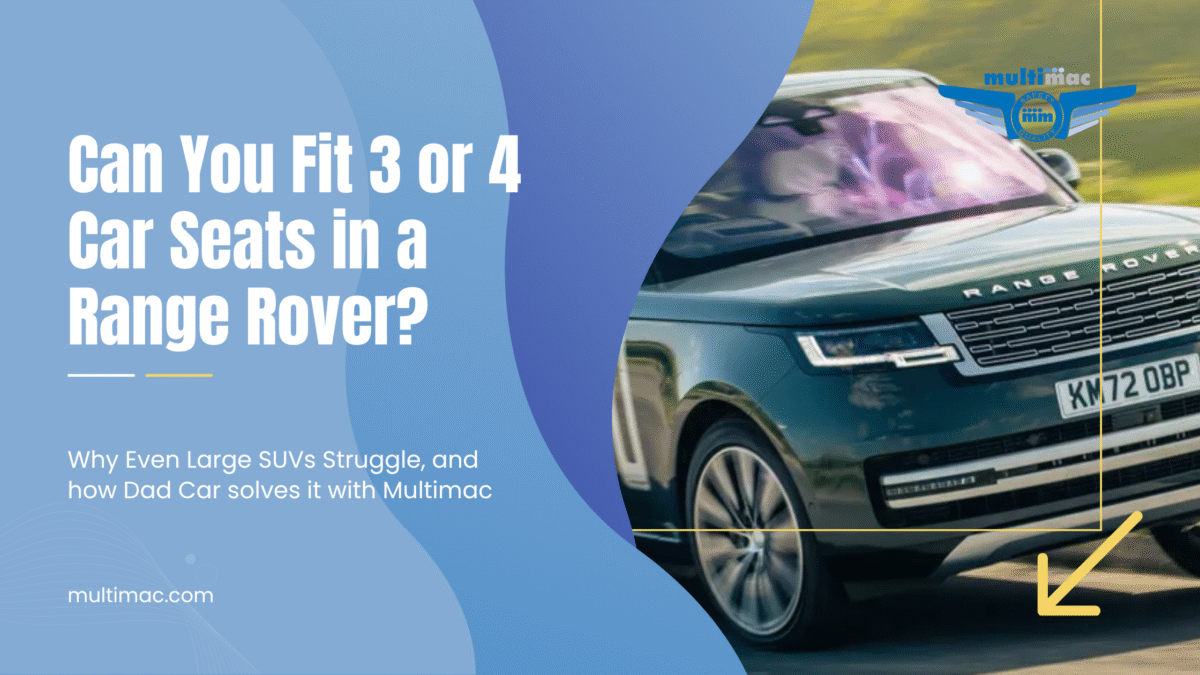
he Audi Q7 is the car a lot of families buy when they decide they need more space. It’s a big, premium seven-seater SUV, and for a family with three children wondering whether three car seats can fit across a rear bench, it looks like an obvious answer.
The good news is that the Q7 is genuinely better than most cars for this. The less good news is that “better than most” and “properly sorted” aren’t the same thing, and families who buy a Q7 expecting the car seat problem to disappear often find it’s more complicated than the brochure suggested.
Here’s the honest guide to car seats in a Q7, what actually works, and what doesn’t.
What makes the Q7 different from most cars
Most cars only provide ISOFIX anchor points on the two outer rear seats. The middle rear position gets a seatbelt and nothing else, which means fitting an ISOFIX car seat there either isn’t possible or requires a belt-only installation that limits which seats are compatible.
The Q7 is an exception. The second row has three individual seats, and all three have ISOFIX. That’s unusual, and it’s one of the reasons the Q7 has a reputation as a good family car. In principle, you can fit three ISOFIX-anchored car seats across the second row without any of them needing to compromise on installation method.
In practice, there are a few things that complicate this.
The width reality
The Q7’s second row has a shoulder room of approximately 1,476mm. That sounds generous, and in most contexts it is. Three car seats side by side, each with their own structural bulk, tells a slightly different story.
Individual child car seats aren’t narrow objects, particularly in the infant and toddler stages. A rear-facing infant seat with its base, or a forward-facing seat with side-impact wings, takes up more lateral space than the seat itself suggests. Fitting three across the Q7’s second row is doable with the right combination of seats, but “doable” and “comfortable to use every day” are different things. The middle seat tends to be the tightest position, and reaching the middle child’s buckle with the outer two seats installed requires some commitment.
Families who’ve made three seats work in a Q7 second row often report that seat selection matters enormously, and that combinations which work on paper don’t always work in the car. Testing before buying is strongly recommended.
The seven-seater trap
Here’s the thing about the Q7 that tends to catch families out. The third row, which is the other reason people buy a seven-seater SUV, becomes substantially less useful once the second row has three car seats in it.
When car seats occupy the second-row positions, those seats often need to be positioned further back than they’d otherwise be, particularly if any of the children are rear-facing. Moving the second row back reduces the already limited third-row legroom from “tight” to “effectively unusable for anyone over about ten years old.” The Car Seat Lady, one of the most widely respected car seat resources in the English-speaking world, recommends treating the Q7 as a five-seater rather than a seven-seater for this reason.
So you end up with a situation where you’ve bought a seven-seater SUV, it’s doing the job of a five-seater, and the boot space (which reduces dramatically when the third row is up) is now also compromised.
This isn’t a criticism of the Q7 as a car. It’s a genuinely good family vehicle. But it’s worth understanding before you make the purchase on the assumption that seven seats plus three car seats equals a comprehensively solved problem.
What the Multimac does differently
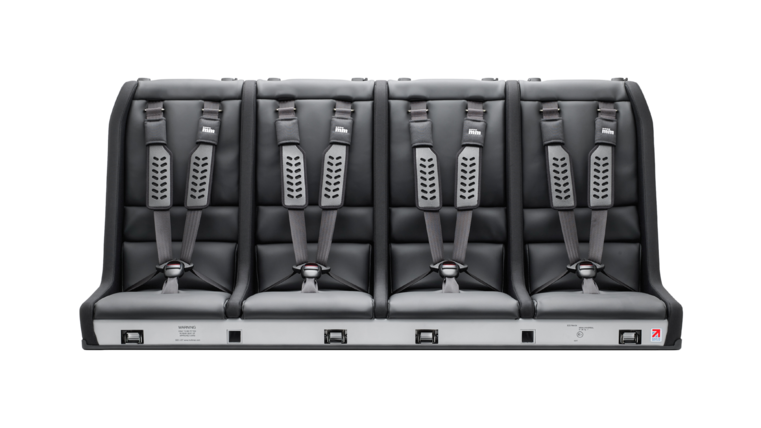
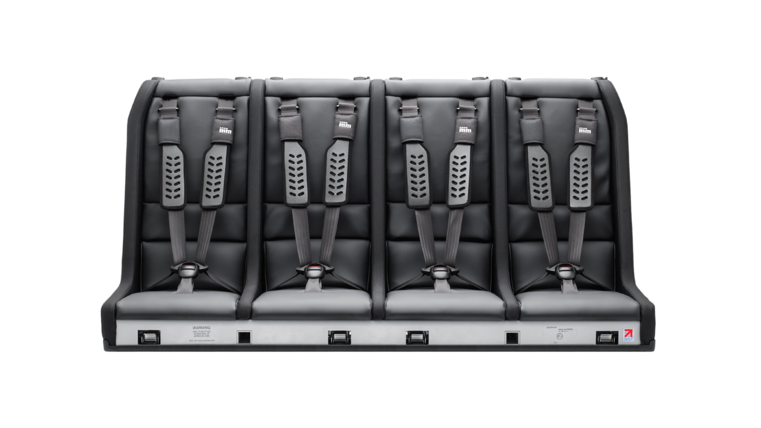
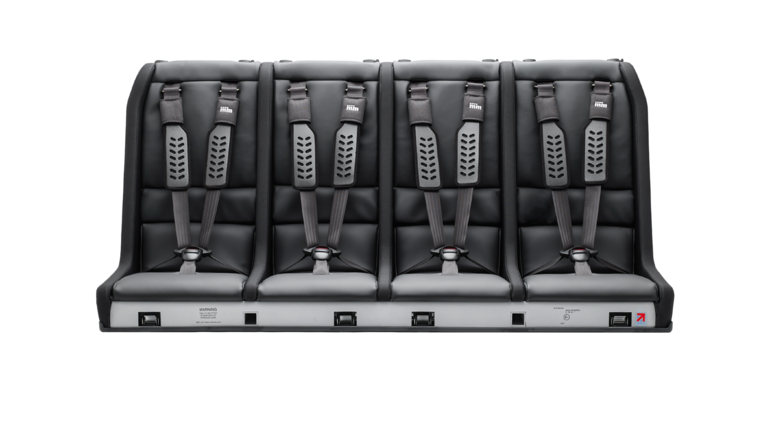
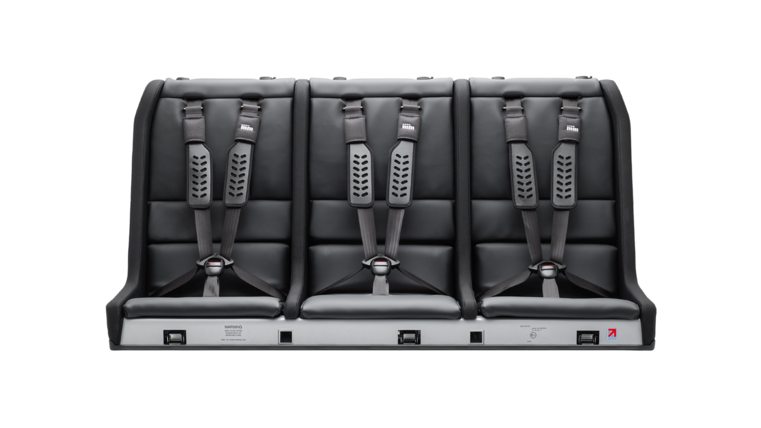
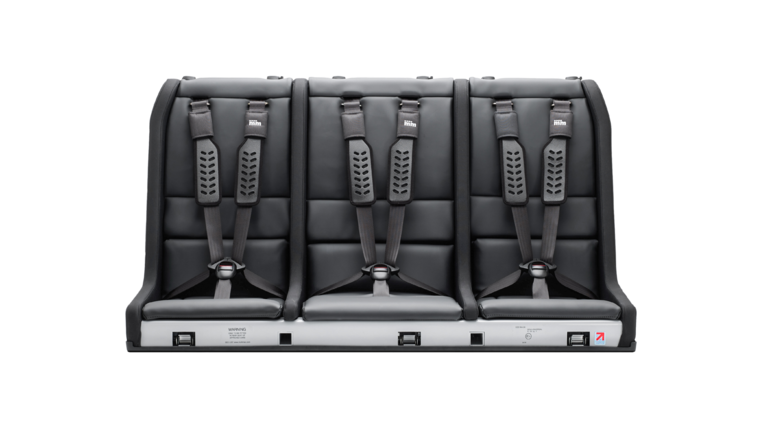
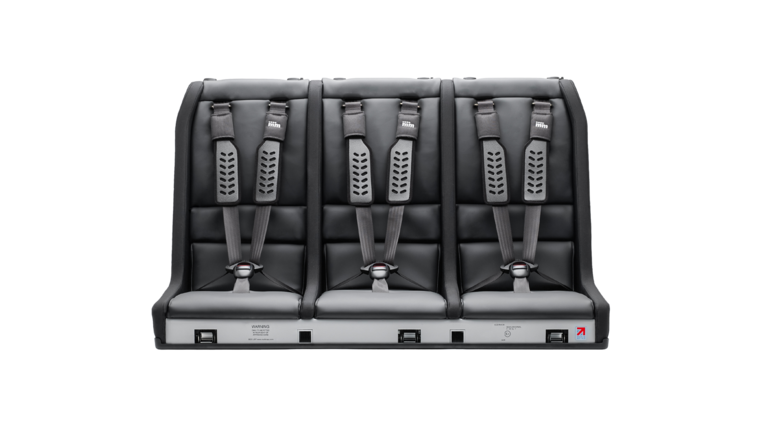
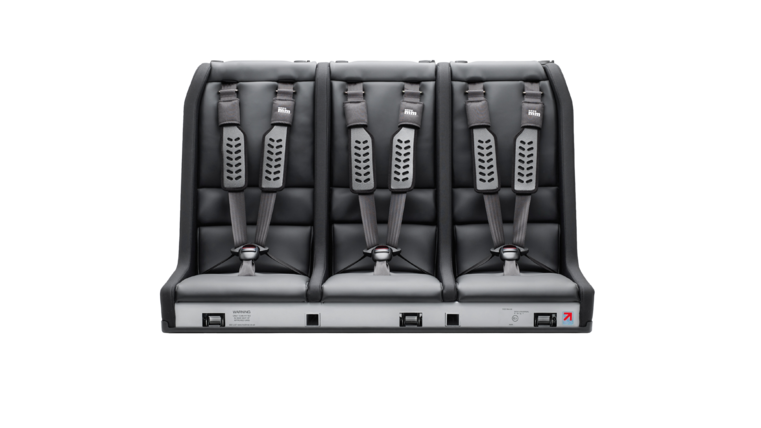
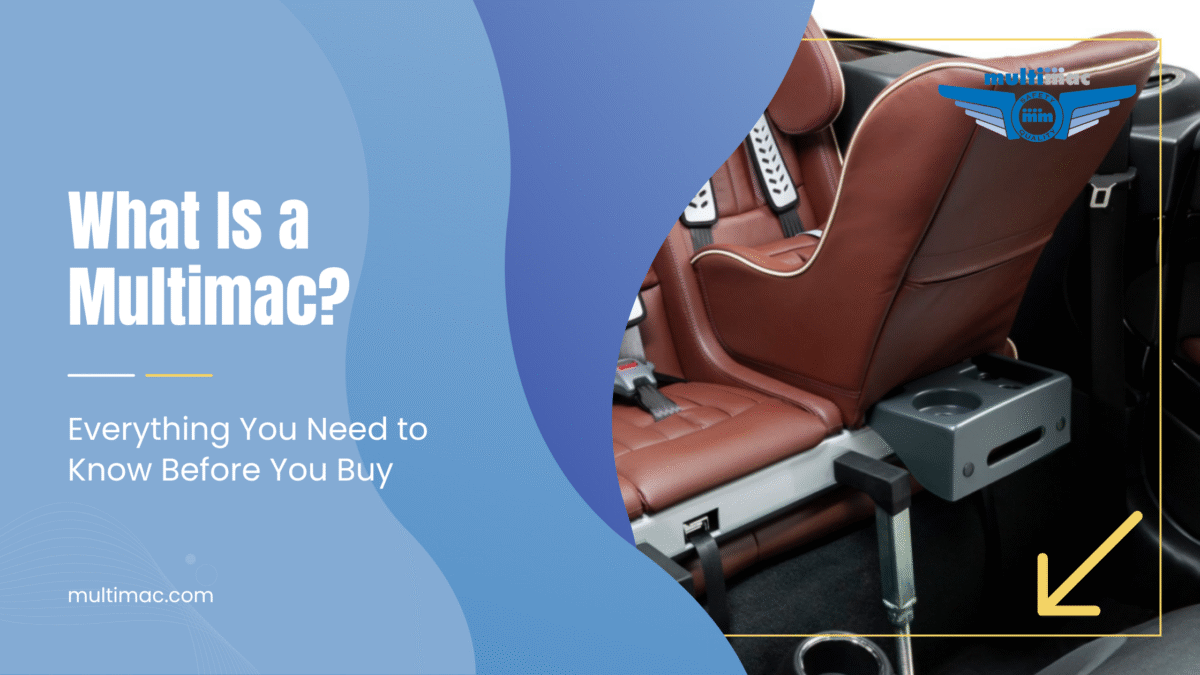
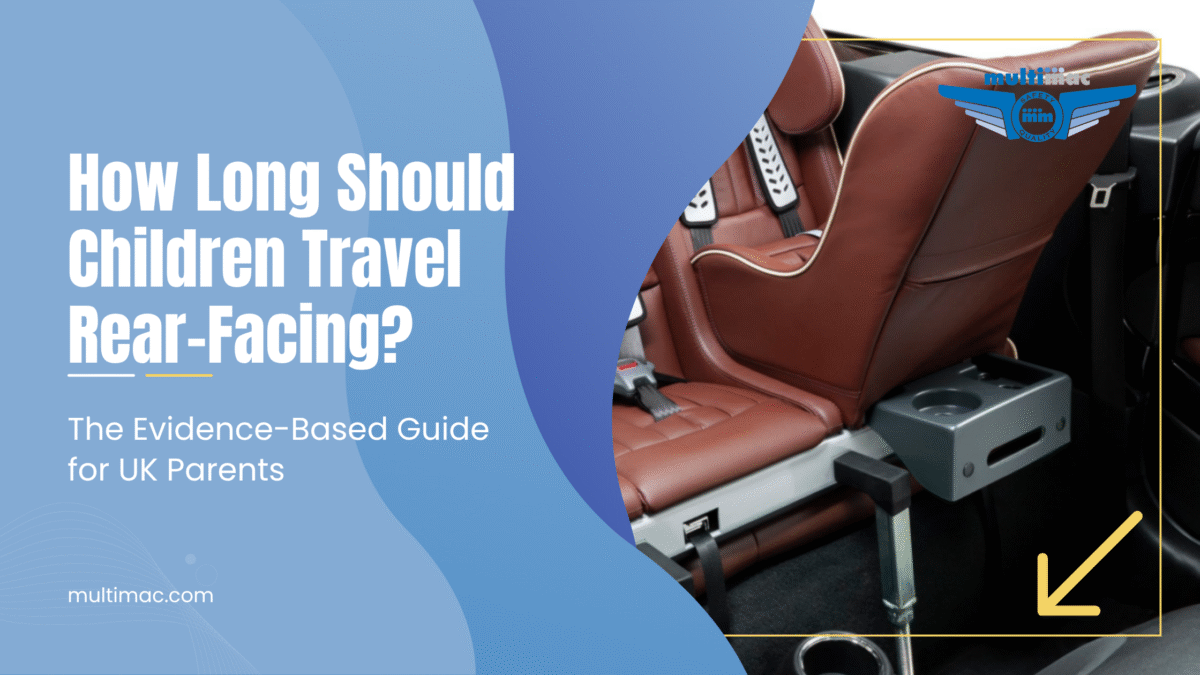
The Multimac doesn’t use ISOFIX. It anchors to the car’s chassis via tether straps bolted to the floor, which means it isn’t constrained by the individual seat-position anchor points that limit conventional seat arrangements.
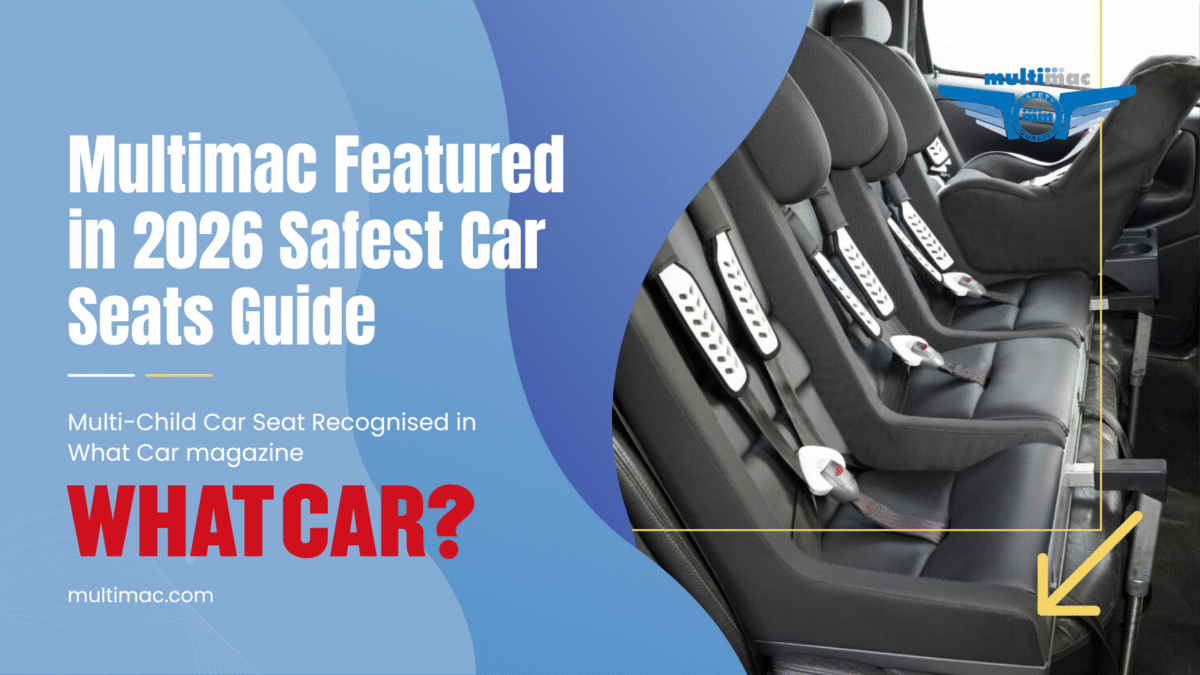
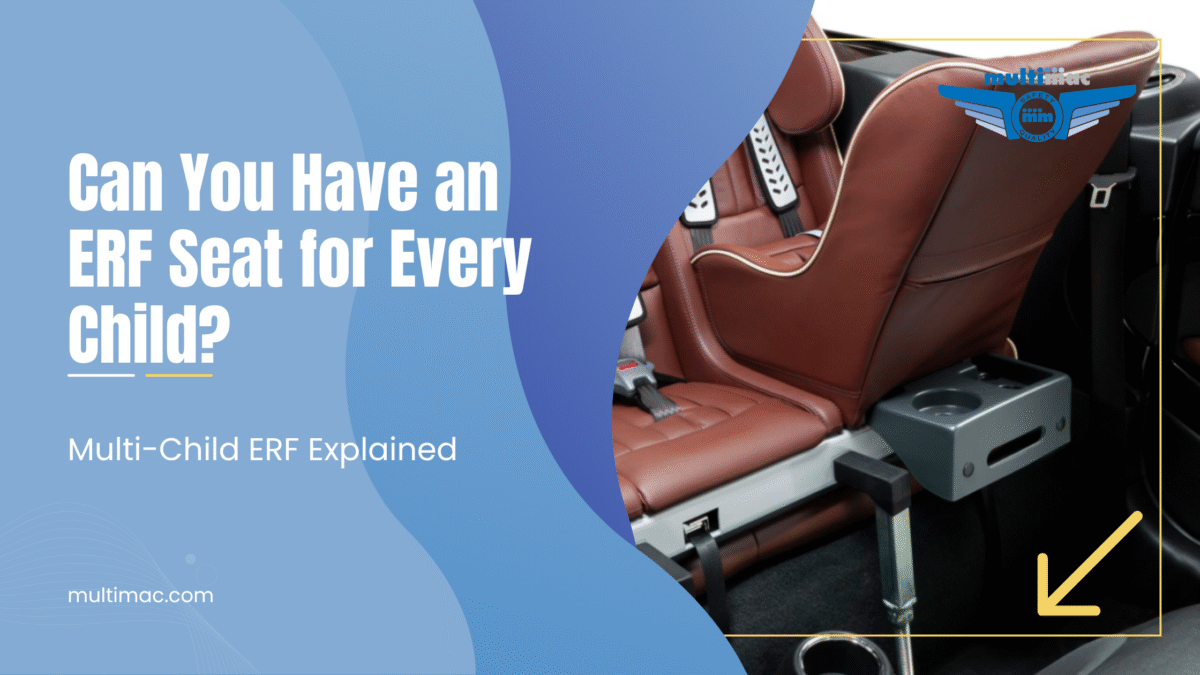
In a Q7, this means the Multimac can sit across the second row as a single unit, holding all three children within one frame, with each child in their own individually harnessed position. Access to each child is clear from either side of the car. There’s no competition between seat bases for the available width. And because the Multimac sits as a unit rather than three separate structures, the second-row seats don’t need to be adjusted to accommodate competing seat geometries.
The practical result is that the Q7’s third row remains accessible. You haven’t sacrificed it to make the car seat situation work. Whether you use it for additional passengers, occasional older children, or simply leave it folded for the boot space, the option exists in a way it often doesn’t when three conventional seats are installed.
From newborns to older children
One consideration that comes up for Q7-owning families with a mix of ages is how to handle a newborn alongside older children. Three individual car seats in the Q7 second row can manage older children reasonably well, but adding an infant seat into the mix changes the geometry considerably. Rear-facing infant seats are particularly bulky and push second-row positions back, which is where the third-row access problem becomes most acute.
The Multimac handles this differently because newborns use the Minimac, a rear-facing infant seat that clicks directly into the Multimac frame without adding to the lateral footprint of the unit. The frame dimensions don’t change when a Minimac is in use. The second-row seat position doesn’t need to move.
Is a Multimac compatible with the Audi Q7?
The Multimac fitting checker at multimac.com/fitting-checker will confirm compatibility for your specific Q7 and tell you which models suit the car’s dimensions. Given the Q7’s second-row width, there’s a good chance one of the range works well, but confirming this with the fitting checker is the right first step rather than assuming.
The quote builder then takes you through the model selection based on your car and the number and ages of your children.
The bottom line on the Q7
If you’re a Q7 owner with three children and you’re trying to make three conventional car seats work, the Q7 is better positioned for this than most cars thanks to the three-across ISOFIX in the second row. It can be done with the right seat selection, but it requires research, testing, and some acceptance that the result will be tighter than it looks on paper.
If you want all three children properly secured, clear access to each of them, and your Q7’s third row and boot space to remain genuinely usable, the Multimac is the more complete answer.