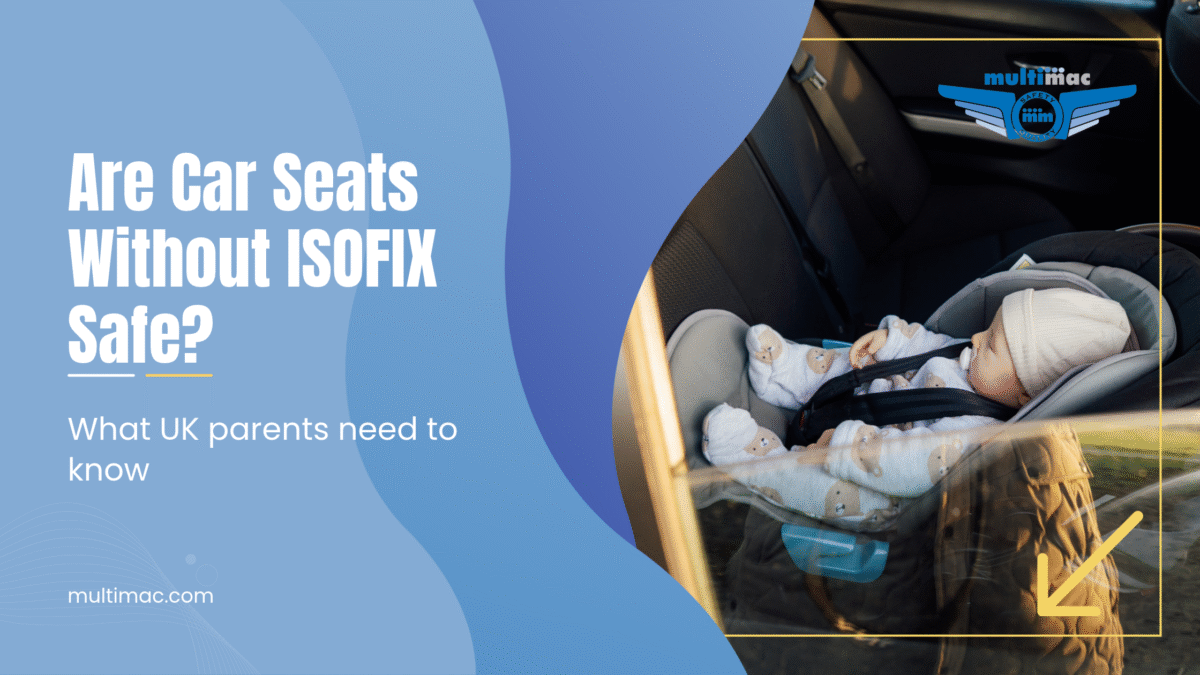
ISOFIX has had such consistent marketing over the past two decades that many parents now treat it as a proxy for safety itself. If a seat doesn’t have ISOFIX, the assumption goes, it must be less safe. That assumption is wrong. Some of the most thoroughly tested multi-child car seat solutions on the market don’t use ISOFIX.
What ISOFIX actually is
ISOFIX is a standardised connection method that links a car seat to brackets built into the car’s outer rear seat positions. It was introduced in the 1990s to solve a specific problem: incorrect installation. A significant proportion of car seats were being fitted wrongly, either with the seatbelt routed incorrectly or the seat not secured tightly enough. ISOFIX’s rigid, click-in connection removed much of that human error.
That’s it. ISOFIX is a fitting method designed to reduce installation mistakes. It isn’t a safety standard in itself, and a seat doesn’t have to use it to be safe.
How car seat safety is actually measured
Safety in the UK and across Europe is governed by UN ECE regulations, specifically R129 (i-Size) and ECE 44-04. A car seat approved under either standard has passed independent crash testing covering frontal, rear and side impacts. The test doesn’t care how the seat is connected to the car. What it measures is whether children are adequately protected in those crash scenarios.
A seat can pass these tests using ISOFIX, using a seatbelt installation, or using another anchoring method altogether. The certification is what matters, not the connection type.
When non-ISOFIX seats make engineering sense
ISOFIX has two structural limitations that rarely matter for families with one or two children, but become significant for larger families:
- Anchor points only exist on the two outer rear seats. The middle rear position doesn’t usually have them.
- ISOFIX points have a low certified strength, so child seats for children over 6 may locate on the ISOFIX points, but must use the adult seatbelt to ‘take the weight’.
For a family trying to fit three or four children across the rear bench, this creates an immediate problem. Even if the outer two positions use ISOFIX, the middle seat has to be belt-installed. And two ISOFIX seats on the outer positions often take up enough lateral space that fitting a third seat in the middle becomes impractical.
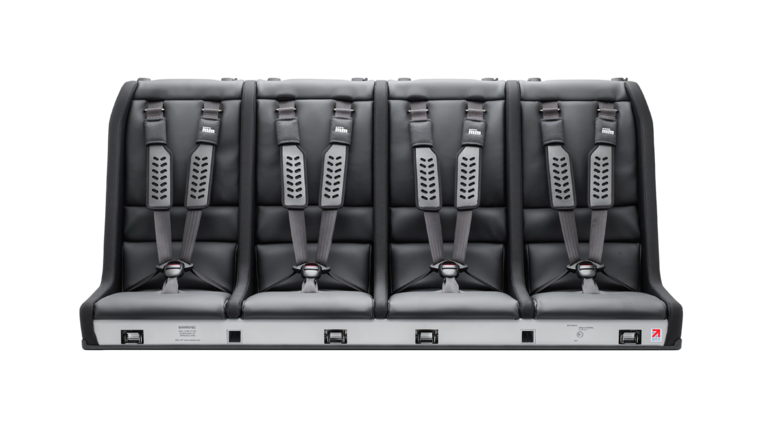
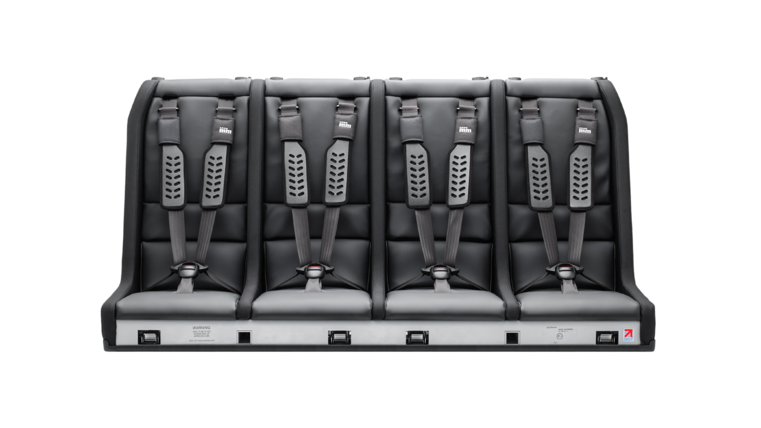
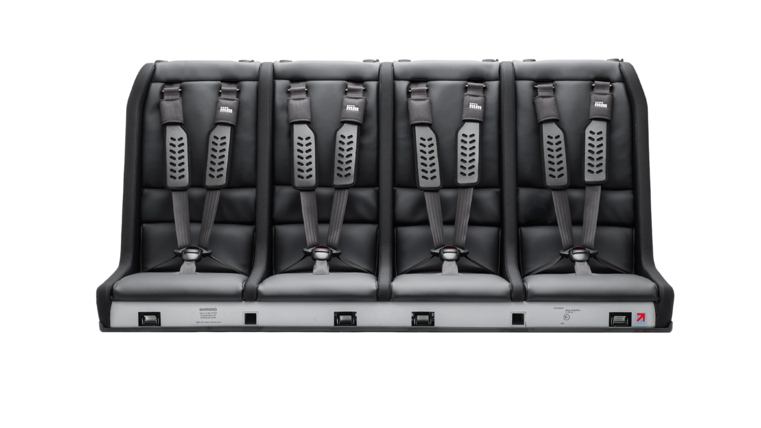
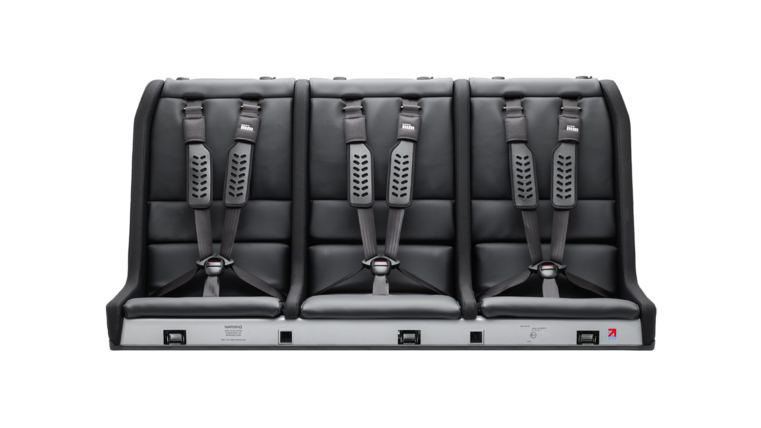
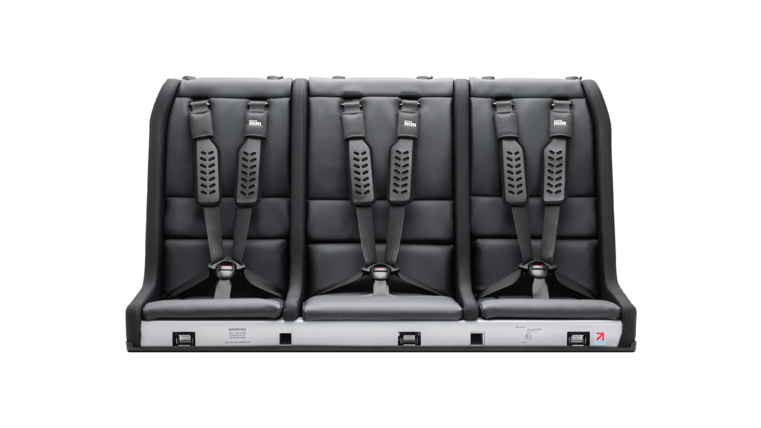
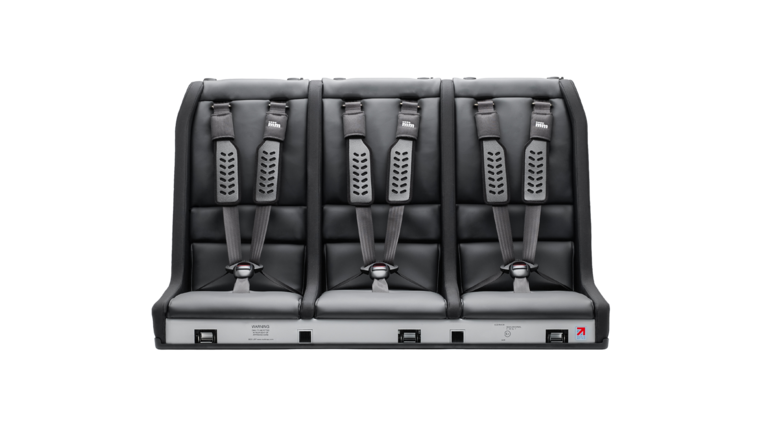
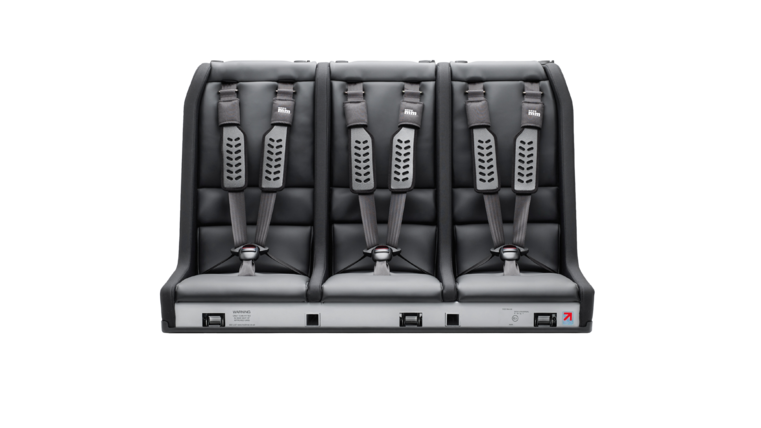
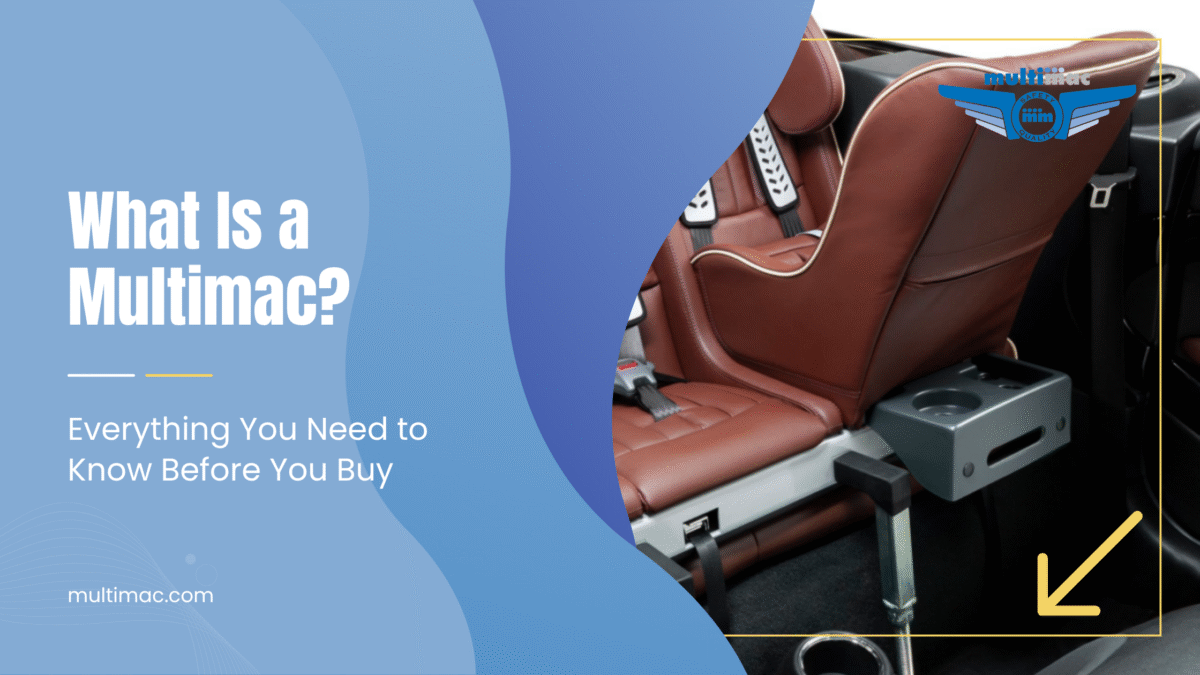
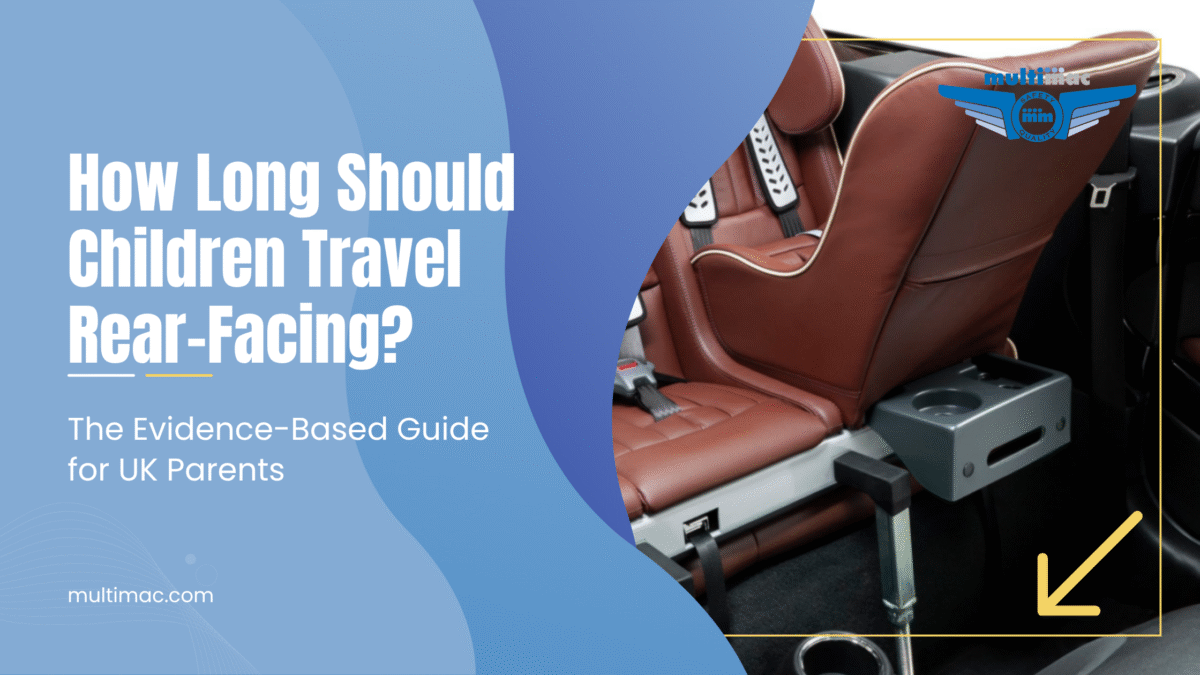
This is why the Multimac, a bench seat system designed to hold three or four children across the full width of the rear seat, uses chassis anchoring rather than ISOFIX. The tether straps bolt directly to the vehicle’s floor structure, both to provide sufficient strength and to allow the seat to span the full bench width without being constrained by the outer-only ISOFIX bracket positions. The Multimac is certified to R129 and ECE 44-04. It has passed the same independent crash testing that applies to every other certified car seat on the UK market.
The installation question
The main practical argument for ISOFIX is that it’s hard to fit incorrectly. The brackets either engage or they don’t. For a self-installed seat that parents fit and refit regularly, that simplicity matters.
Where a non-ISOFIX seat is professionally installed, the dynamic changes. The Multimac tether straps are fitted by a trained installer who locates the correct anchor points for your specific vehicle and bolts the tether system in correctly. Once installed, the Multimac can be removed and then refitted safely by the owner because the tether straps have only one unambiguous route.
The practical conclusion
A car seat without ISOFIX is not automatically less safe. What matters is whether the seat carries current certification (R129 or ECE 44-04) and whether it’s correctly installed for your vehicle.
For families with one or two children in standard seat positions, ISOFIX seats are a perfectly good choice. For families with three or four children who need a solution that spans the full rear bench, ISOFIX isn’t a viable option. And the alternatives that exist aren’t compromises.
If you’re looking at the Multimac specifically and want more detail on how its anchoring compares to ISOFIX, Why Multimac Doesn’t Use ISOFIX (and Why That Makes It Safer) goes through the technical comparison.
Want to see which Multimac fits your car? Build your quote here.
Related reading