There are two different answers to this question depending on whether you’re asking what’s legal or what’s safest, and they’re not the same thing.
The legal minimum for forward-facing travel in the UK is 15 months. The age safety experts and researchers recommend is at least four years old. Most UK parents switch somewhere in between, often without realising the gap between what they’re allowed to do and what the evidence supports.
Here’s how each age threshold actually breaks down.
0 to 15 months: rear-facing is a legal requirement
Under R129 (i-Size) regulations, all children must travel rear-facing from birth until at least 15 months. There are no exceptions and no flexibility on this.
Older R44 seats used weight rather than age as the threshold and permitted forward-facing from 9kg, which in practice allowed some parents to turn their child as early as six months old. R129 replaced that standard with an age-based minimum specifically because the 9kg threshold was too low.
If your child’s seat is R129 approved and they’re under 15 months, they must stay rear-facing.
15 months to 4 years: legal to go forward-facing, but experts say don’t
At 15 months, the law permits forward-facing travel. Most UK parents treat this as the natural point to make the switch. It isn’t, based on the safety research.
A child’s neck is still developing well beyond 15 months. Their head remains disproportionately heavy relative to their body, around 25% of total body weight compared to 6% in adults. In a frontal collision (the type most likely to cause serious injuries) a rear-facing seat distributes crash forces across the child’s back, head and neck together. A forward-facing seat stops the child at the harness, leaving the head to continue forward on its own.
The Rear Face for Safety campaign, launched in June 2026 and backed by RoSPA, the Child Accident Prevention Trust and Road Safety GB, recommends rear-facing travel until at least four years old. That recommendation is based on the Folksam research, which analysed every fatal crash in Sweden involving a child aged 0 to 6 between 1992 and 2024, and found that more than one in three child traffic deaths could have been prevented through rear-facing travel.
Children in this age group are not safer in a forward-facing seat just because they’ve passed the legal minimum. The minimum exists to prevent the worst outcomes. It isn’t a safety benchmark.
4 years: the expert recommended minimum
Safety researchers and organisations including the Rear Face for Safety campaign, In Car Safety Centre, and Sweden’s Axkid all point to four years as the minimum age at which forward-facing travel becomes a reasonable choice based on the evidence.
By this age, the head-to-body ratio has reduced somewhat, neck musculature is stronger, and the spine is more developed. The protection gap between rear-facing and forward-facing is not eliminated, but it narrows as children grow.
Sweden, which has recommended rear-facing until four to five years since the 1960s, has among the lowest fatality rates for young children in cars anywhere in the world. Only 22% of UK children aged two to four currently travel rear-facing, compared to 83% in Sweden, despite both countries following the same UN ECE regulations.
The difference is cultural, not legal. UK parents are permitted to go forward-facing earlier. Most do. Swedish parents are permitted to as well. Most don’t.
4 to 12 years: forward-facing with a harness, then adult belt
Once a child has genuinely outgrown their rear-facing seat (by height or weight limit, not by age alone) they move to a forward-facing seat with a five-point harness. UK law requires children to use an appropriate child restraint until they reach 12 years old, 135cm tall, or 36kg in weight, whichever comes first.
For most children, that means a forward-facing harnessed seat from somewhere around four years old through to approximately 10 to 12 years. After that, an adult seatbelt is appropriate, with or without a booster seat depending on the child’s height.
The question parents ask most: what about leg room?
Parents who are reluctant to keep children rear-facing beyond toddler age often cite leg room as the concern. It’s also the concern most consistently dismissed by the research.
Children’s leg anatomy at two, three and four years old is designed to accommodate bent or dangling legs without discomfort. Their joints don’t experience the same strain an adult’s would in that position. There is no documented evidence that rear-facing travel causes leg injuries in children. The risk from a crash is considerably higher when a child is in a forward-facing seat: in a frontal collision, a forward-facing child’s legs can strike the seat back in front with significant force.
If your child is complaining about their rear-facing seat, it’s worth checking whether it’s fitted correctly and whether there’s space to adjust it. Leg room alone is not a reason to bring forward-facing travel forward.
A note on height and weight limits
Age is a guide, not a rule. The actual determinant of when to switch is whether your child has outgrown their current seat by the manufacturer’s height or weight limit.
If a child reaches the limit of their infant rear-facing seat at 18 months, the right response is to find a larger rear-facing seat that fits them, not to go forward-facing because their current seat no longer works. Extended rear-facing seats are available for children up to 25kg and beyond.
Age gives you a rough framework. The seat’s limits give you the actual answer for your child.
Quick reference: age and rear-facing in the UK
| Age |
Legal position |
Expert recommendation |
| 0 to 15 months |
Must be rear-facing (R129) |
Rear-facing |
| 15 months to 4 years |
May go forward-facing |
Rear-facing where possible |
| 4 years and over |
Forward-facing permitted |
Rear-facing still beneficial if seat allows |
| 12 years / 135cm / 36kg |
Child seat no longer required |
Adult seatbelt appropriate |
For Multimac families
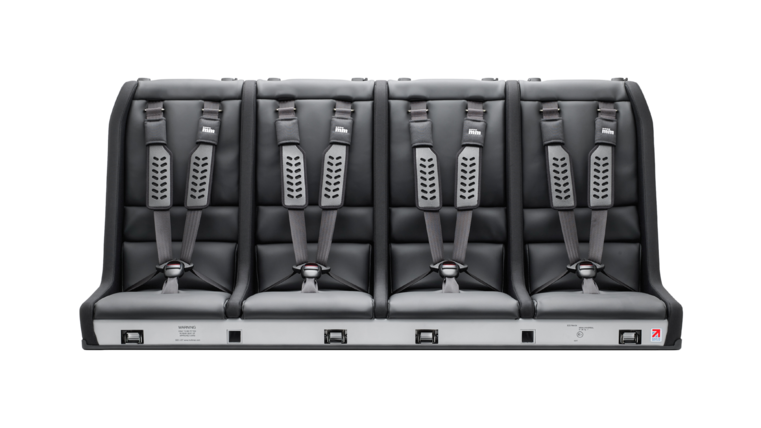
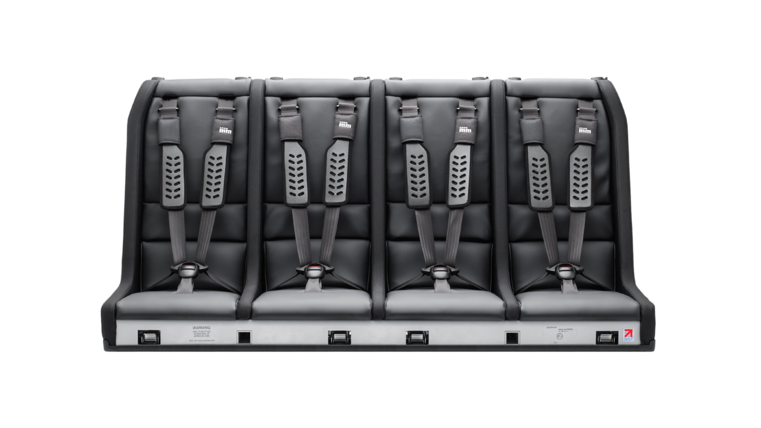
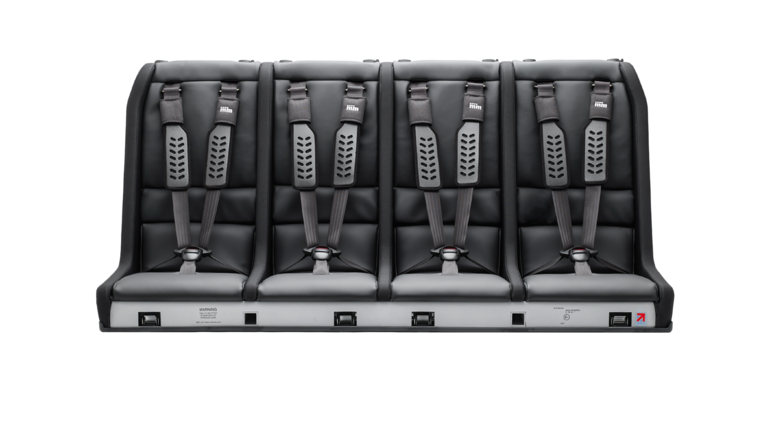
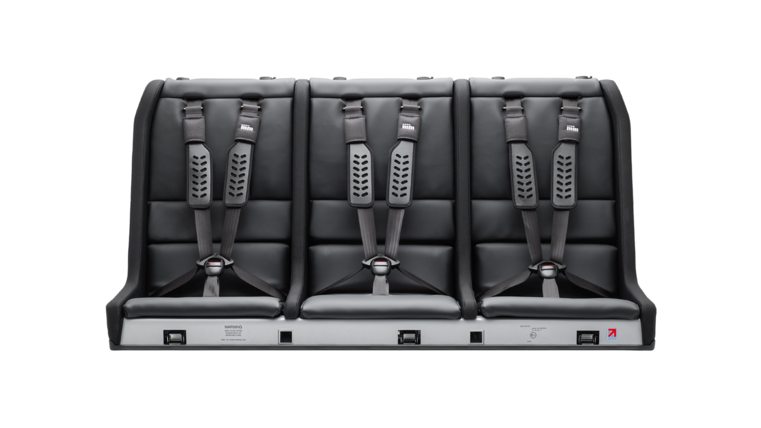
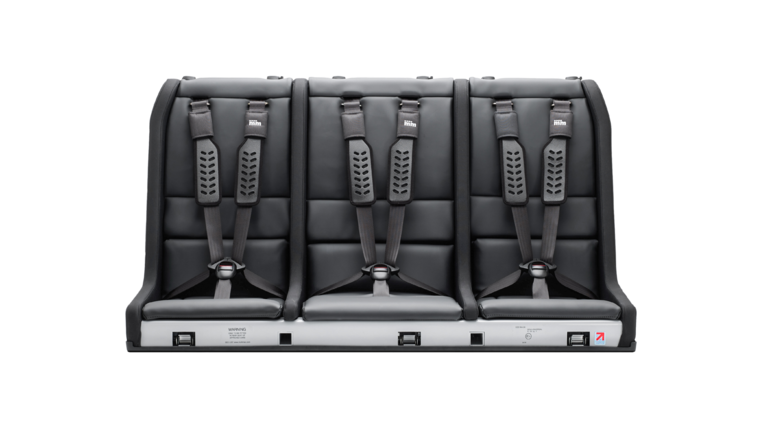
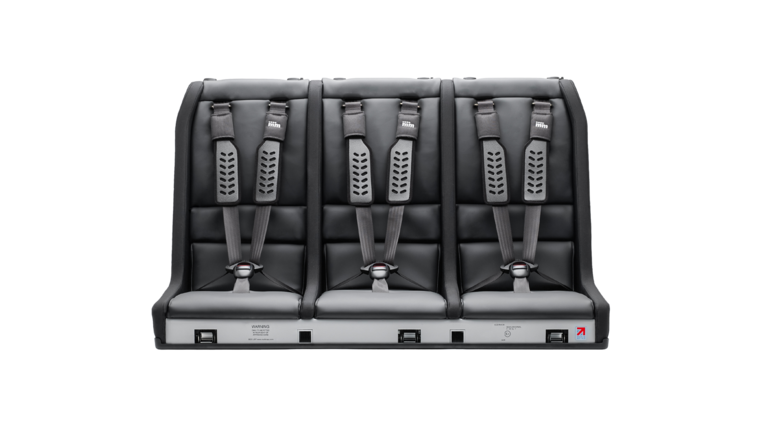
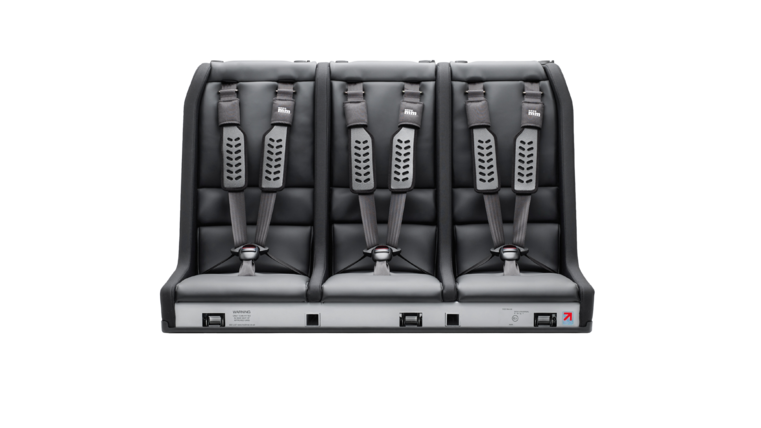
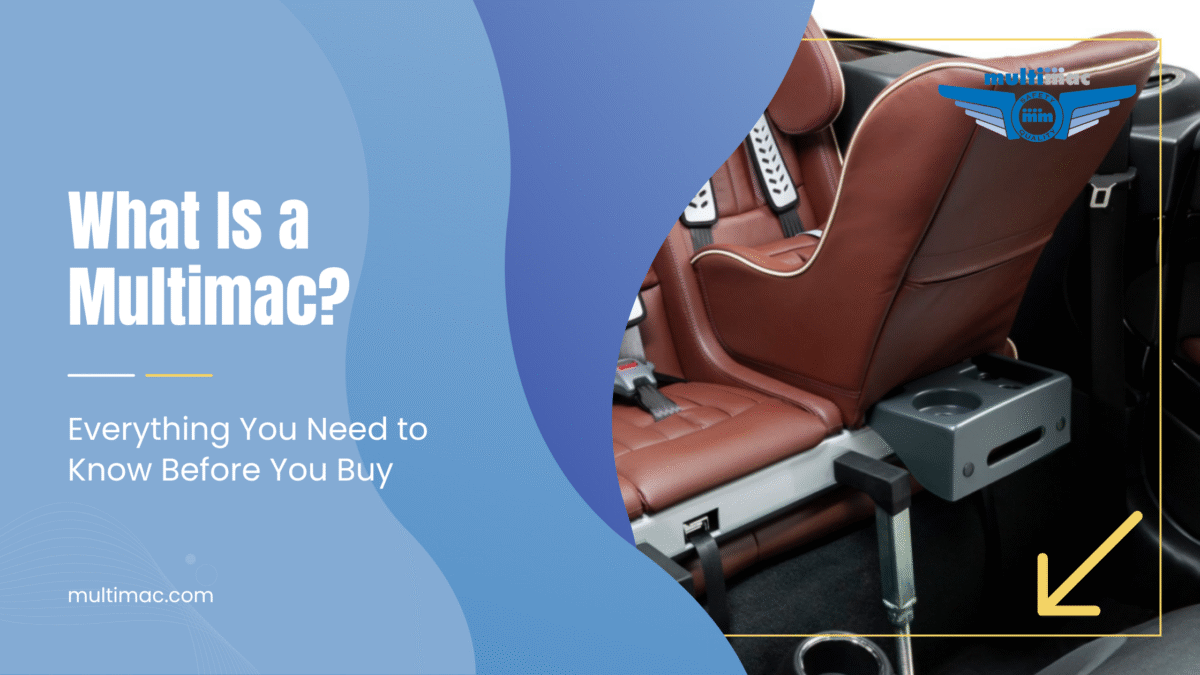
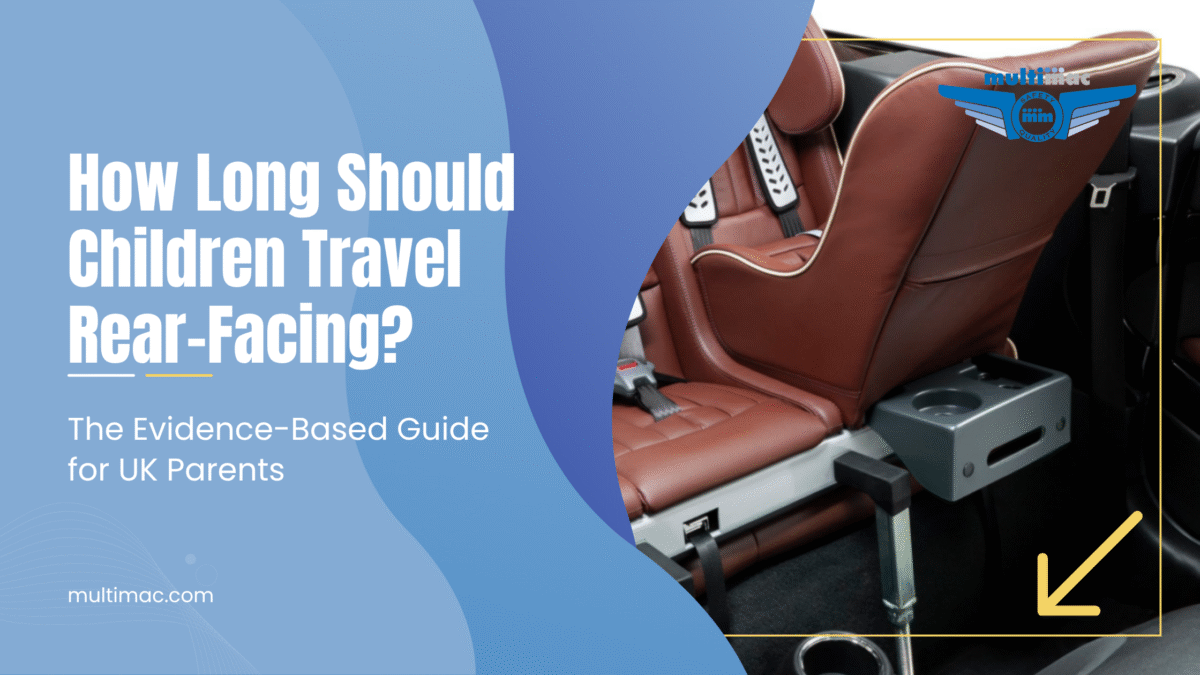
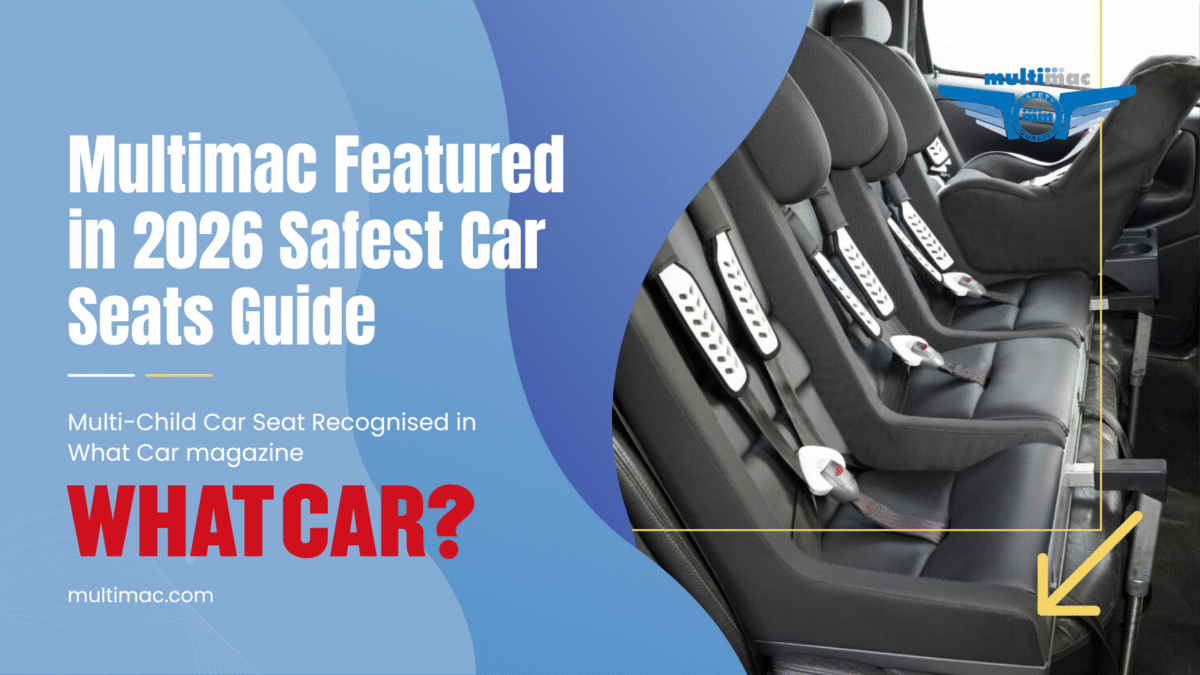
All Multimac models support rear-facing travel from birth through the Minimac, a rear-facing infant seat that integrates into the Multimac frame and covers children to approximately 4 years, 19.5kg or 104cm. A single Multimac can hold up to three or four Minimacs at once, which is particularly useful for families with twins or young children at similar stages.
For questions about how your family’s ages and sizes map to the right Multimac configuration, the team can advise when you request a quote.
Further reading:
Legal information in this post reflects UK R129 (i-Size) regulations as of 2026. Always check your specific car seat’s manual for model-specific age, height and weight limits.