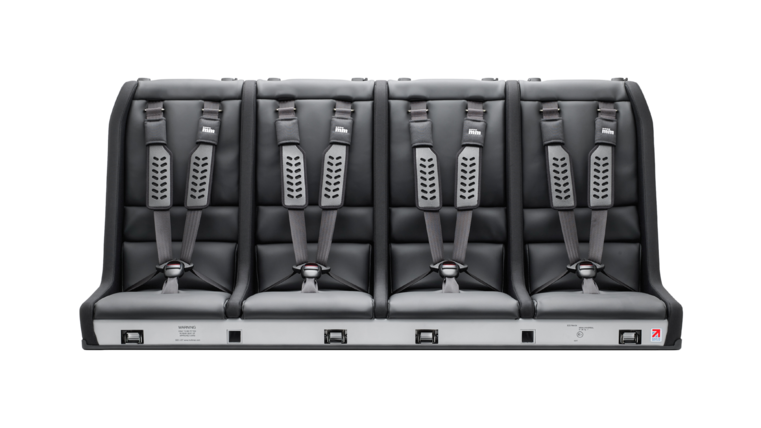
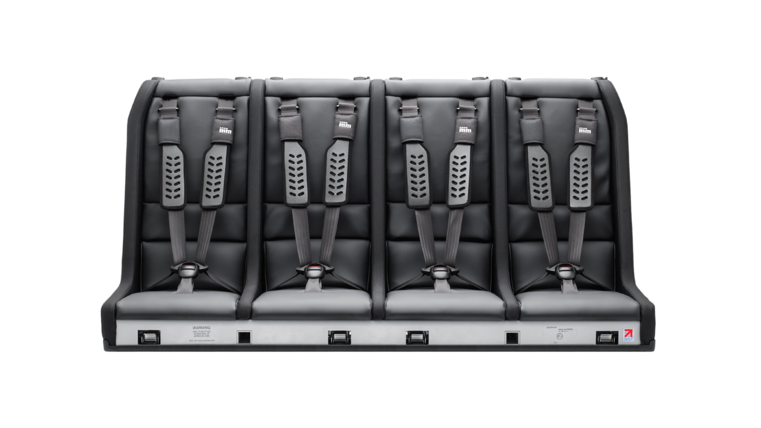
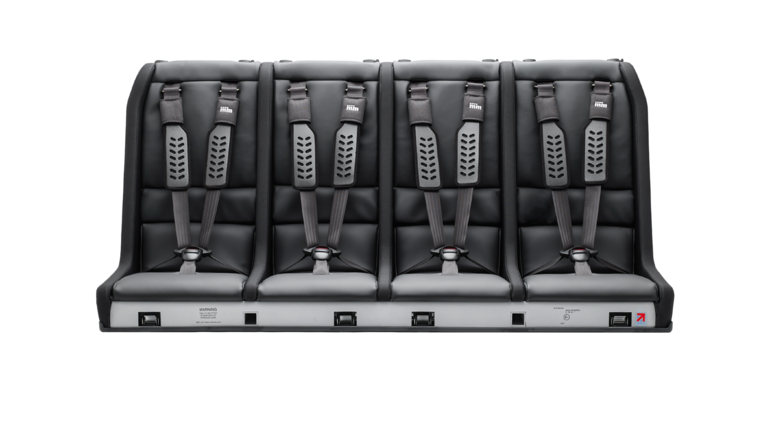
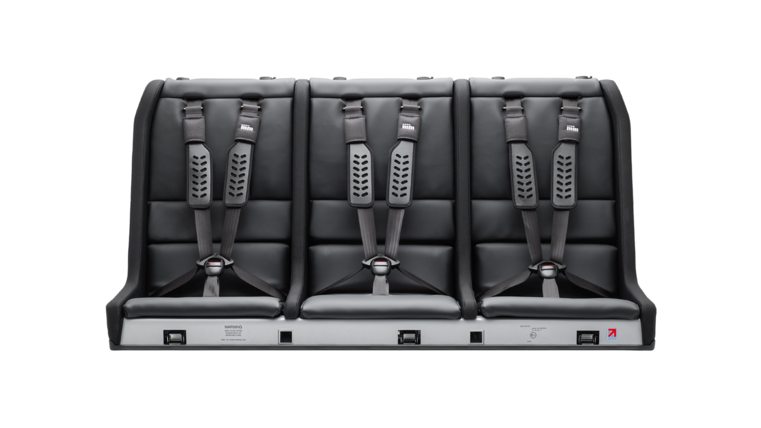
Yes. The Multimac is suitable from birth. But it doesn’t work for newborns straight out of the box, and understanding why makes the whole system a lot clearer before you buy.
The Minimac: the missing piece for babies
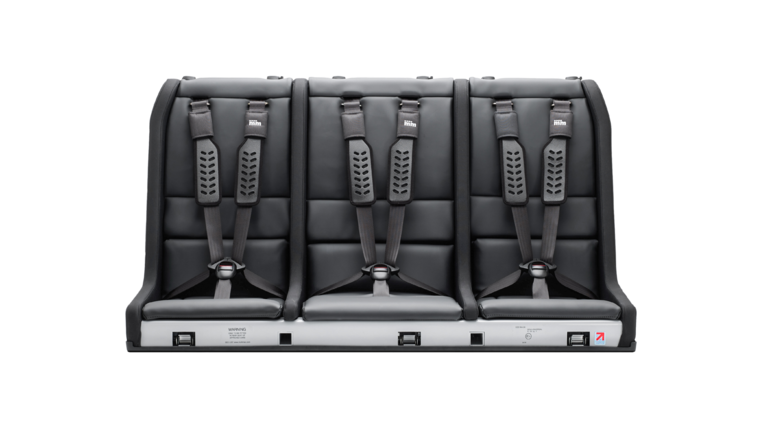
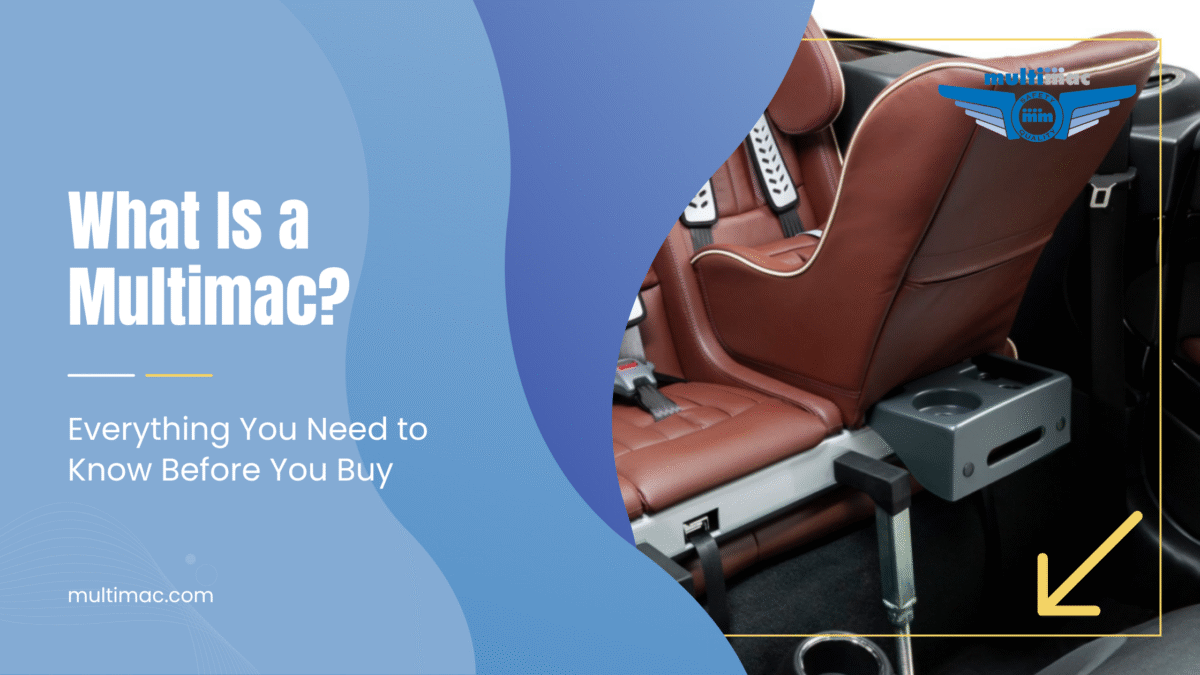
The Multimac itself is a forward-facing bench seat system. For newborns and young babies, who need to travel rear-facing and who aren’t yet ready for a forward-facing harness, Multimac makes a separate infant seat called the Minimac.
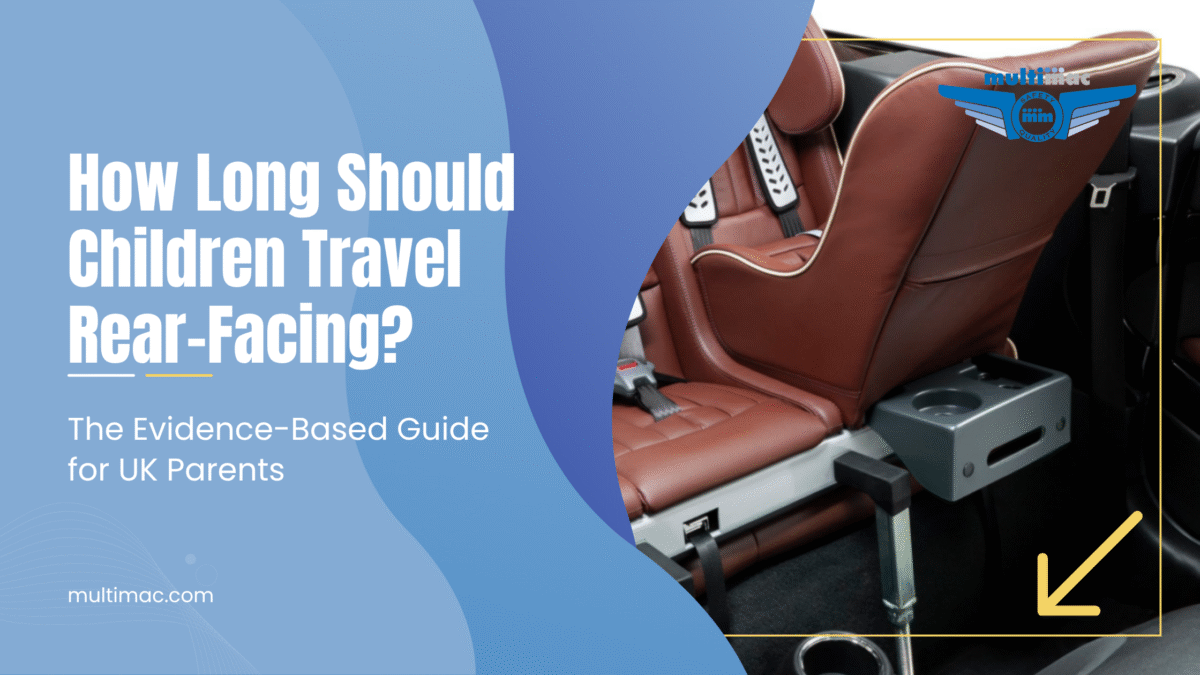
The Minimac is a rear-facing baby seat that clicks directly into the Multimac frame. It’s the only infant seat compatible with the Multimac, so there’s no question of which seat to buy or whether your existing infant carrier will work: it won’t. If you’re planning to use a Multimac from birth, you’ll need one or more Minimacs alongside it.
Once clicked in, the Minimac sits within the Multimac frame just like any other seat position, and the whole unit is secured by the same chassis-anchoring tether system as always. Your newborn travels rear-facing within the Multimac, while older siblings in the same unit travel forward-facing in their own harness positions.
What the Minimac covers
The standard Minimac is suitable for children from birth up to 18 months, 13 kg, or 84cm, whichever comes first. It includes a Head Hugger insert with foam padding to support a newborn’s head and provide the right fit for very young babies.
Those three limits (age, weight, height) don’t all hit at the same time for every child. Some babies are taller than average, and some are lighter. The rules [R129] are that a child must remain rear-facing until they are 15 months AND 82cm. So, if they are smaller than average, they must stay rear-facing for longer than 15 months.
Once a child has outgrown the Minimac, they move into the standard forward-facing position within the Multimac frame using the Ylva Headrest and the five-point harness. The frame doesn’t change. Nothing needs to be reinstalled. The Minimac comes out, the Ylva goes in, and the child continues in the same seat.
OPTION: EXTENDED REAR FACING
Some countries [Sweden] keep babies rear-facing until they are 3 or 4 years old, as it is proven to be safer in a crash, and a number of other families are now adopting this voluntarily.
Multimac also make a larger [more expensive] Minimac called ERF Minimac, and this takes babies up to 104cm or 19.5 kg. It fits exactly the same as the regular Minimac.
How many Minimacs can a Multimac hold?
This depends on the model. Each Multimac model is either a 3 or 4-seater and will take a regular Minimac in each berth. The Superclub and 4-seater MM-1320 will also take an ERF Minimac in each berth, but the smaller Multimac models will only take 2 ERF Minimacs.. The quote builder will confirm exactly which positions and how many Minimacs your chosen model supports based on your children’s ages and sizes.
If you have twins, or two children both under 18 months, this question matters a lot. It’s worth raising it specifically when you contact the team, as the right model choice for your family may depend on how many simultaneous Minimac positions you need.
Ordering the Minimac
The Minimac is sold separately from the Multimac. It’s not bundled in as standard, because not every family buying a Multimac has a baby or plans to. When you request a quote, the team will ask about your children’s ages and sizes and include the appropriate accessories, including Minimacs if needed, in the configuration they recommend.
If you’re planning a pregnancy or expecting a new baby alongside older children already in a Multimac, the Minimac can be added later. The frame stays in the car; you simply acquire the Minimac when you need it and click it into the relevant seat position.
Planning ahead: buying before the baby arrives
A lot of families come to the Multimac during a pregnancy, particularly when a new arrival would push them to three children and make their current car seat arrangement unworkable. Buying and installing the Multimac before the baby is born is completely normal and usually recommended. Installation of the tether straps takes a couple of hours and requires a trained Multimac fitter, and getting that sorted before you’re sleep-deprived with a newborn is sensible planning.
The Minimac can be ordered at the same time or separately. It clicks in and out of the frame in seconds, so there’s no need for another fitting appointment when your baby arrives.
A few practical notes for newborn use
The Head Hugger insert matters. The Minimac includes foam inserts for newborn support. These are not optional for very young babies — they’re part of what makes the seat appropriate from birth rather than from a few months in. Keep them in until your baby has grown enough that they’re no longer needed.
Rear-facing is a feature, not a compromise. Newborns in the Minimac travel rear-facing, which is where the safety evidence sits clearly. It’s the legally required direction for children under 15 months in the UK and the recommended direction for considerably longer. The Minimac keeps your newborn rear-facing within the Multimac while their siblings face forward, without requiring any changes to the rest of the seat’s configuration.
Loading a newborn into the Multimac is different from a travel system. The Minimac doesn’t detach and carry like a conventional infant carrier or click into a pushchair. It’s a fixed-function seat that generally lives within the Multimac frame, but can be taken out with the baby in it, if they are asleep.
Getting started
If you’re working out whether the Multimac makes sense for your family with a newborn in the mix, the fitting checker will confirm which models suit your car, and the quote builder will produce a configuration based on your children’s ages, including how many Minimacs you’ll need and where they’ll sit within the frame.
The team are used to these questions and can talk through the newborn setup specifically if you’d rather have a direct conversation before committing.