When you’re expecting triplets, or you’ve just had them, the car seat question comes up very quickly. You need three infant seats. You have one back seat. And when you search for answers, you find forum threads full of parents who’ve been through exactly this, trying a combination of seats, measuring their car obsessively, and in many cases concluding there isn’t a good solution.
They’re not wrong that there isn’t a conventional one. But there is a solution, and it’s worth knowing about before you spend time and money on approaches that won’t work.
Why three car seats won’t fit the usual way
A standard infant car seat with its base is not a narrow object. It’s designed to absorb crash energy, which means it’s built with depth, structure and width that a slimline aesthetic would undermine. Two side by side in a rear seat is tight but achievable in most family cars. Three is a different problem entirely.
The width issue is one part of it. The other is ISOFIX. Most cars have ISOFIX anchor points on the two outer rear seats only. The middle position typically has a standard seatbelt and nothing else. Individual infant car seats that rely on ISOFIX bases — which is most of them — can’t be used in the middle seat. The one that goes in the middle has to be belt-installed, which not only limits which seats are compatible but raises further questions about whether the middle seat is even the safest position for a small baby in an ill-fitting seat.
And then there’s the physical reality of getting three children in and out. Even if you find three seats that technically span the bench, the middle child’s seat will be sandwiched between the other two. Buckling it, reaching the harness, lifting a baby in and out without disturbing the seats either side: it’s not impossible, but it’s not something you want to be doing multiple times a day for the first year of your children’s lives.
Most triplet families who try the three-separate-seats route either give up and decide one parent and two children go in the car while the other parent takes the third, or they end up changing cars. Neither is a satisfying answer.
What about a 7-seater?
The logic is understandable. More seats means more space, and surely a 7-seater solves it. In practice, it’s more complicated.
A 7-seater’s third row is smaller than the second row, often significantly. It’s there to add occasional seating capacity, not to function as the primary seating row for three infants and their seats. ISOFIX points in the third row are rare. Space is tight. Access is awkward. And once the third row is in use for child seats, boot space is substantially reduced at exactly the stage of family life when you’re transporting the most stuff.
Some triplet families do end up in a 7-seater and make it work across the second row, but they’re still dealing with the same three-seats-in-a-row problem, just in a larger car they’ve paid more to buy, insure and run.
The one thing that actually solves it
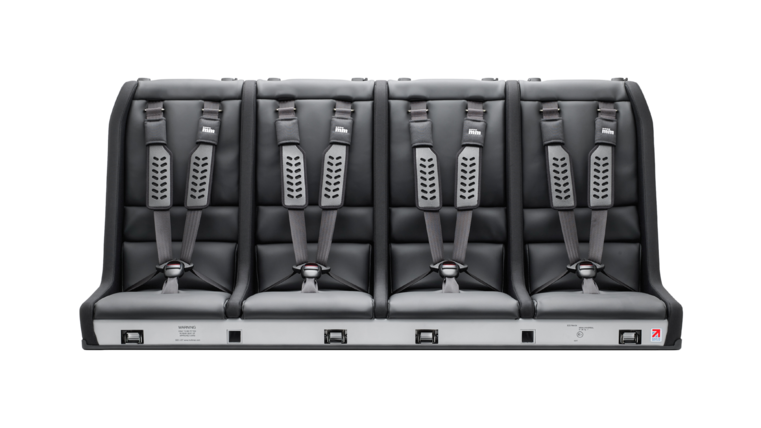
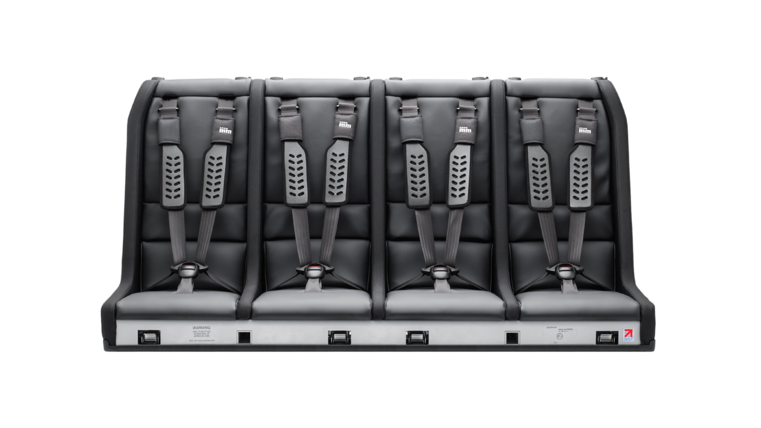
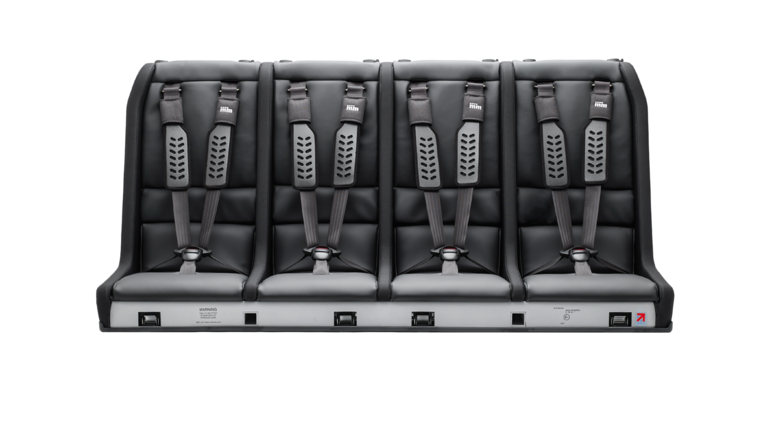
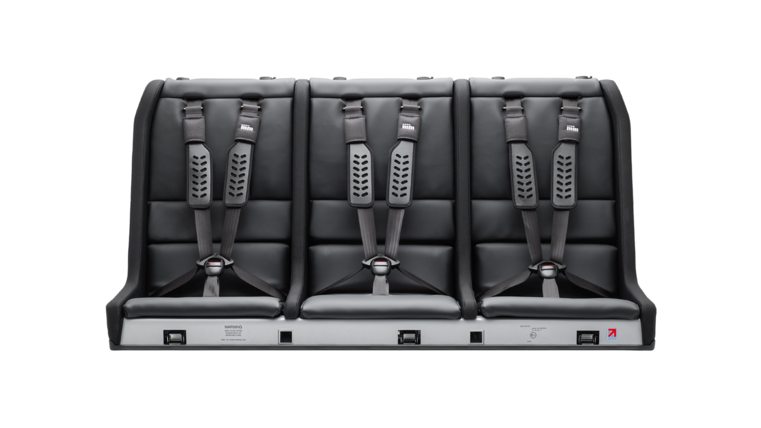
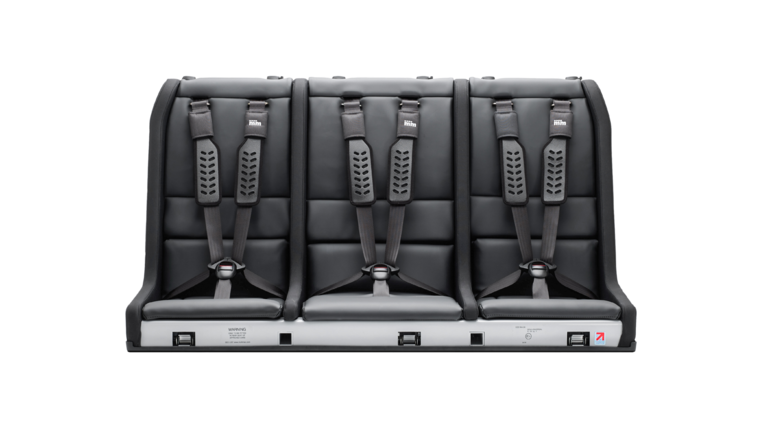
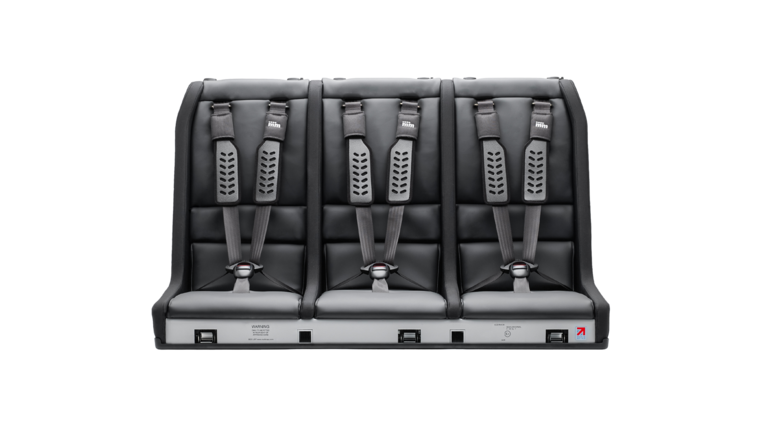
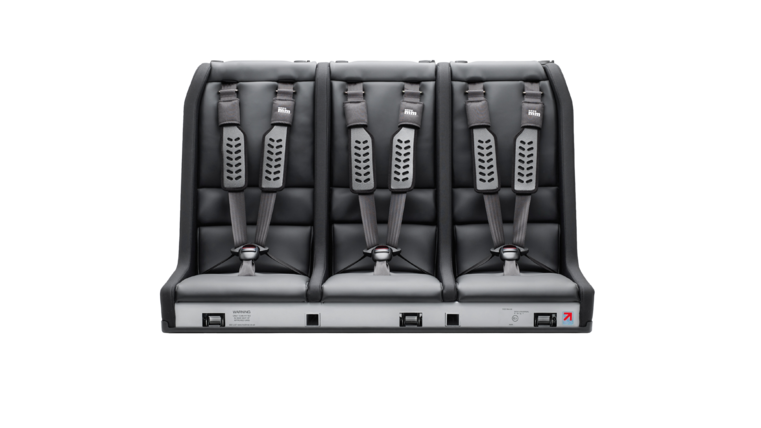
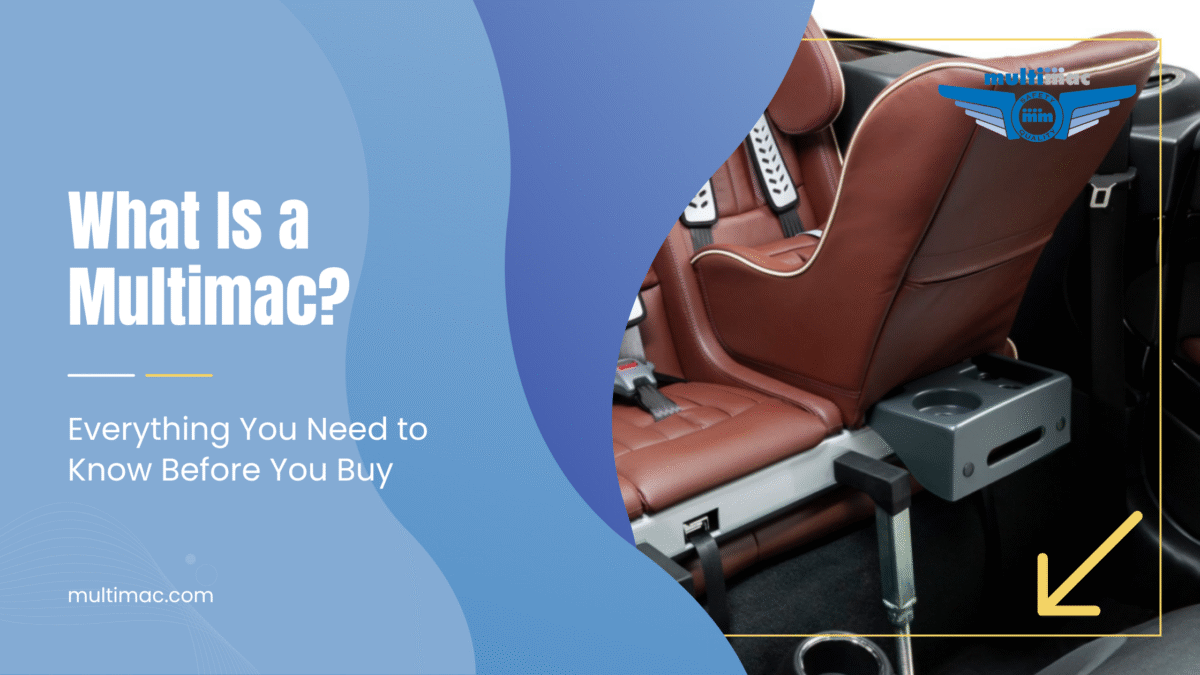
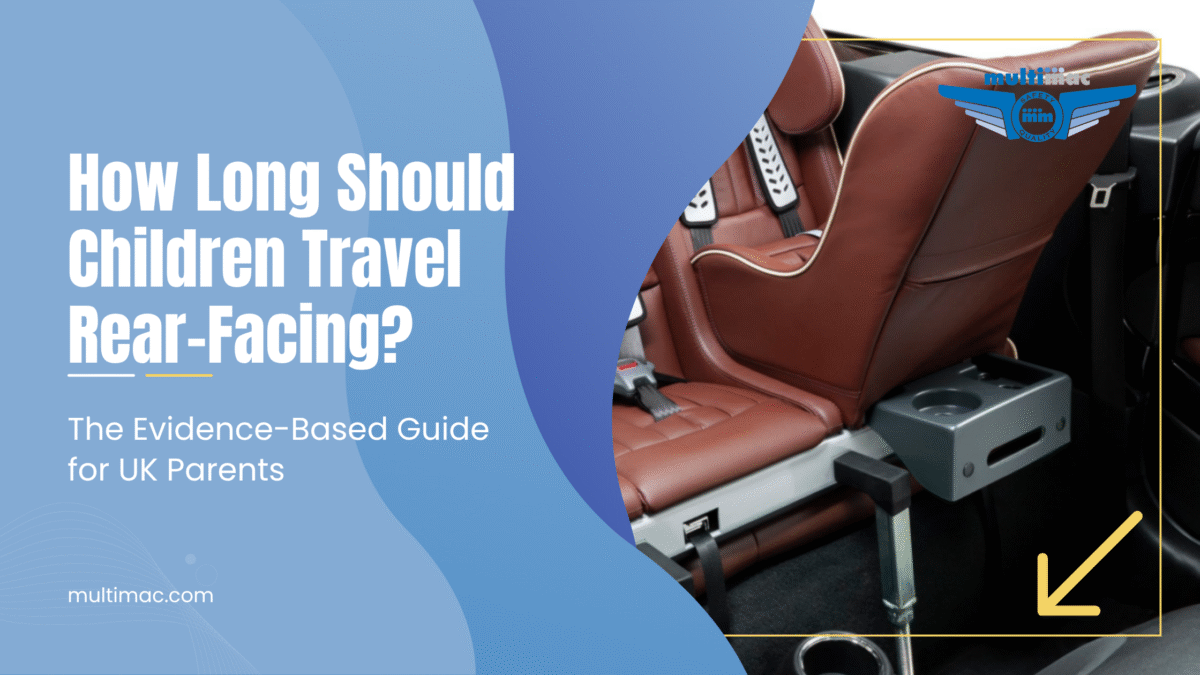
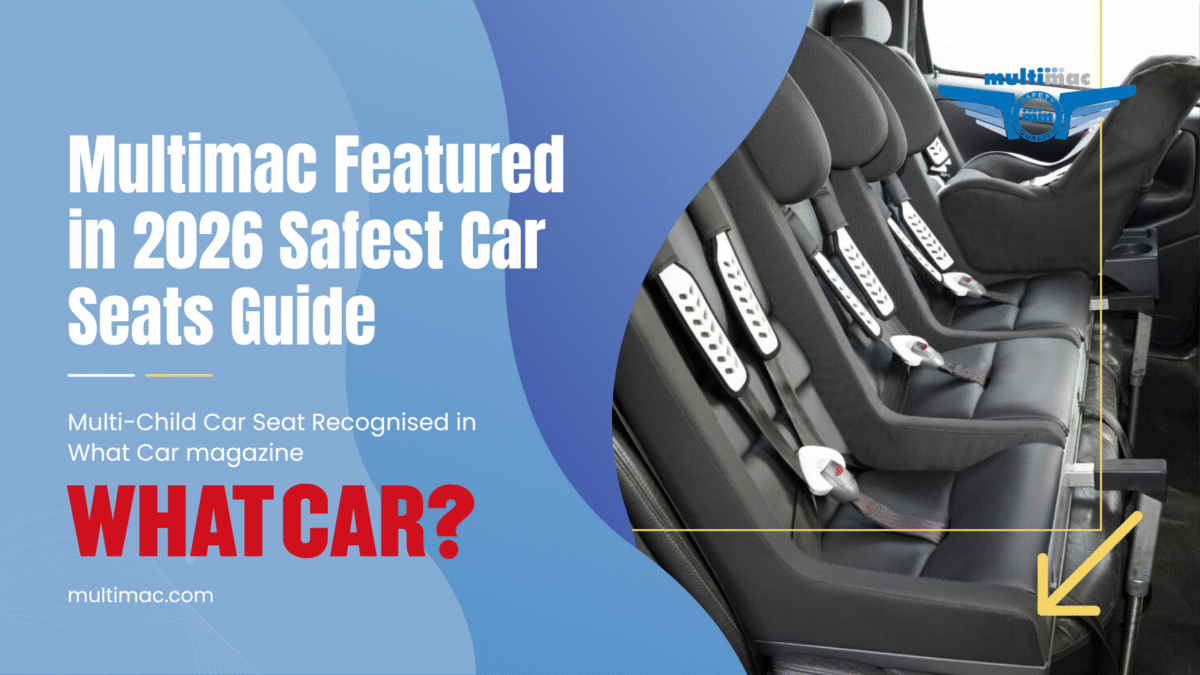
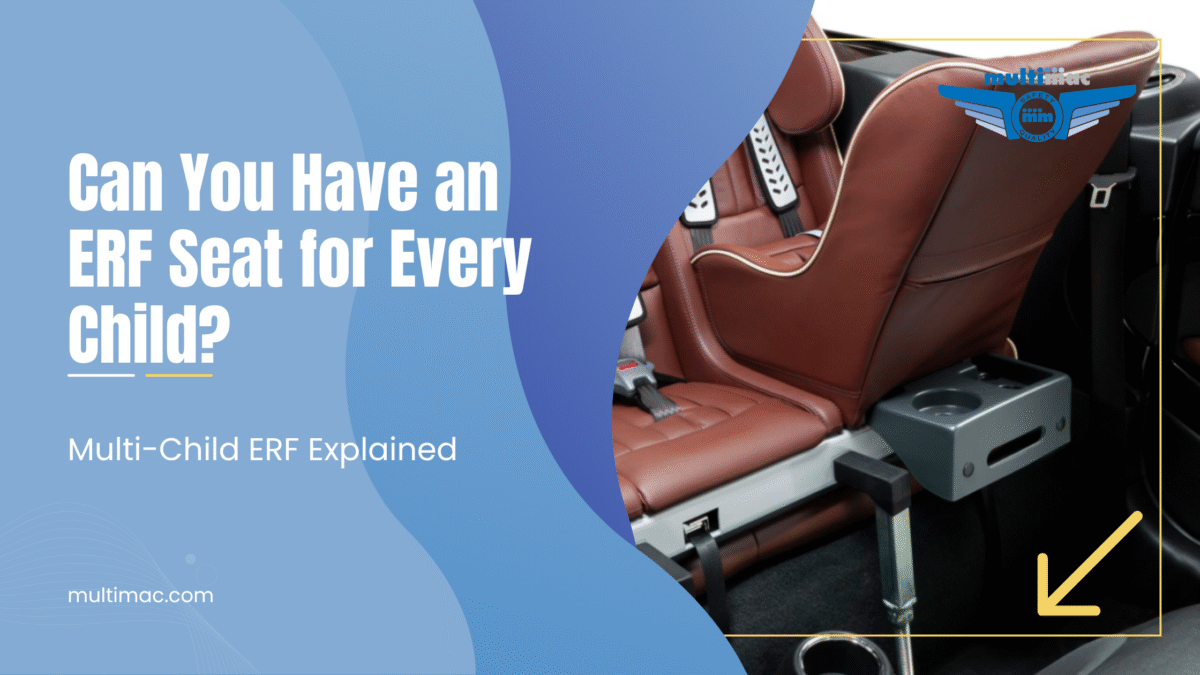
The Multimac is a bench seat system that fits across the rear of a standard car and holds two, three or four children within a single aluminium frame. Each child sits in their own individual position with their own harness, their own headrest and their own crash protection. The frame anchors directly to the car’s chassis rather than using ISOFIX, which means it isn’t constrained by the two-outer-seats-only limitation that catches out every conventional multi-seat arrangement.
For triplet families, this means three children can travel in the rear of a standard 5-seat car, all correctly secured, in a unit that was engineered to do exactly this. It isn’t a workaround. It isn’t three seats wedged together and hoped for. It’s one product designed from the start to seat multiple children simultaneously, installed by a professional fitter who confirms it’s correctly anchored to your specific vehicle.
How it works for very young triplets
For newborns and babies, each child uses a Minimac: a rear-facing infant seat that integrates directly into the Multimac frame. Up to three Minimacs can be fitted into a single Multimac at once, which is precisely the scenario triplets present.
The Minimac covers children from birth to approximately 18 months, 13kg or 82cm (whichever comes first). So from day one, all three triplets travel in their own rear-facing Minimac positions, within the same frame, in the same car you already have.
This matters beyond the logistics. Extended rear-facing travel is considerably safer than forward-facing for young children, and three individual infant seats across a rear bench (even if you could fit them) would still leave you with the ISOFIX and middle-seat problems described above. The Multimac puts all three children in rear-facing positions without any of those compromises.
As the triplets grow
At around 18 months, as each child approaches the Minimac’s limits, they transition into a forward-facing position within the same Multimac frame using the Ylva Headrest and the five-point harness. The frame doesn’t change. The installation doesn’t change. The accessories for each child position update as they grow, but the seat in your car stays exactly where it is.
The Multimac covers children up to 36kg and approximately 135cm, which in practice means it stays in the car from birth until somewhere around age 10 to 12. For triplets, you’re looking at one installation that handles the entire childhood of all three children simultaneously, with individual accessories updated as each child moves through each stage.
When they do finally outgrow it, the Multimac Pre-Loved scheme means the seat can be bought back, refurbished and sold on to the next family. It holds its value well.
The car question
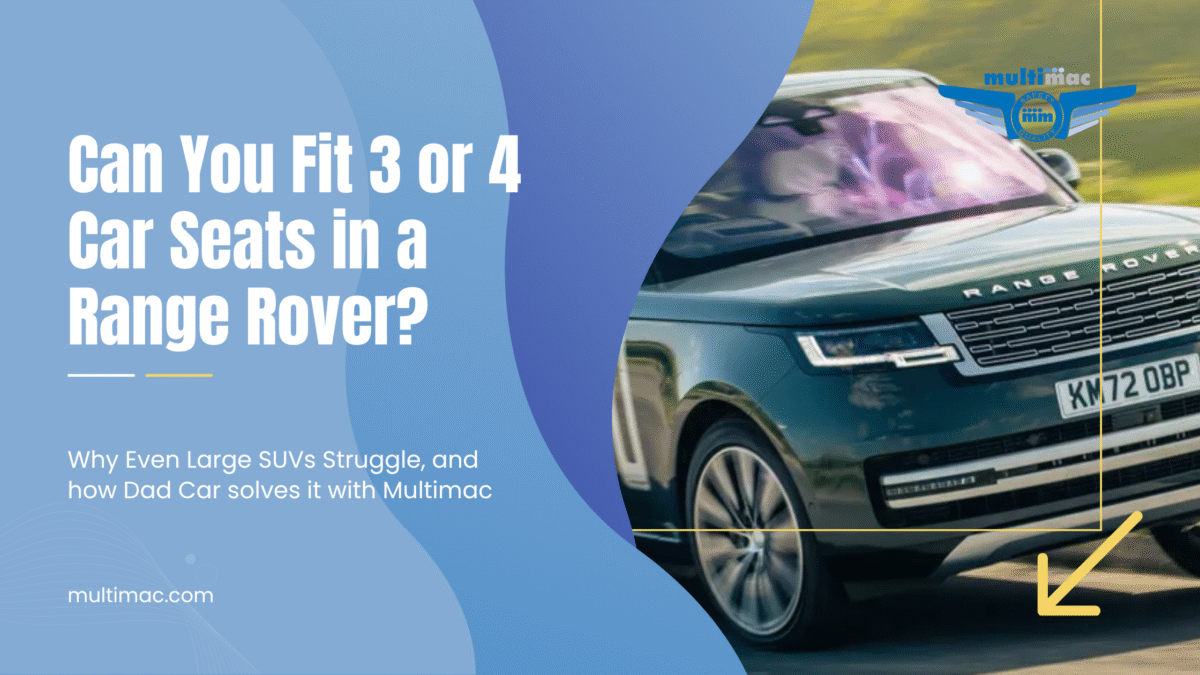
Triplet families often assume they need a specific car to make a Multimac work, or that their current car won’t be compatible. In practice, the Multimac fits the majority of standard 5-seat cars with a rear bench seat. The fitting checker at multimac.com will confirm compatibility for your specific vehicle in a couple of minutes, without you needing to speak to anyone first.
If your car is compatible, the installation is carried out by a trained fitter. It’s not something you do yourself. The fitter locates the chassis anchor points specific to your car, installs the frame correctly, and configures each child position for the children who’ll be using it. The installation typically costs between £150 and £250 depending on the vehicle.
What families actually say
Multimac users with triplets or multiple young children consistently describe the same shift: the daily logistics of getting children in and out of the car become routine rather than an ordeal. Each child has a defined position. Access from either side of the car is clear. There’s no competition for buckles, no seat jammed against another that makes reaching the harness an awkward reach, and no middle child who’s harder to load than the other two.
That last point is worth sitting with if you’re currently imagining what multiple daily trips with three babies actually looks like. The middle position in a three-separate-seats arrangement is the hardest to access every single time. With a Multimac, it isn’t.
How to get started
The process is straightforward. Check compatibility with the fitting checker, then use the quote builder with your car details and the number and ages of your children. The team will confirm the right configuration, including how many Minimacs you’ll need, and arrange the installation.
If you’re still in pregnancy and planning ahead, it’s worth contacting the team early. The Multimac is not a last-minute decision for most families, and having the installation confirmed before the triplets arrive is considerably less stressful than sorting it out afterwards.