If you’ve got a newborn, a toddler and a five-year-old, the back of the car stops being a seat and turns into a puzzle. Three separate car seats rarely fit side by side in a normal five-seater, and when they do, you’re left fishing for buckles you can’t see.
A multi-child car seat seats all your children on one system across the rear bench. But “will it take three kids?” is only the first question. The better one is whether it’ll still work in three years, when the baby’s walking, the eldest is on the school run and you might have changed cars.
Three things decide whether a multi-child car seat suits your family: age fit, daily usability and vehicle compatibility. This guide goes through each one.
What is a multi-child car seat?
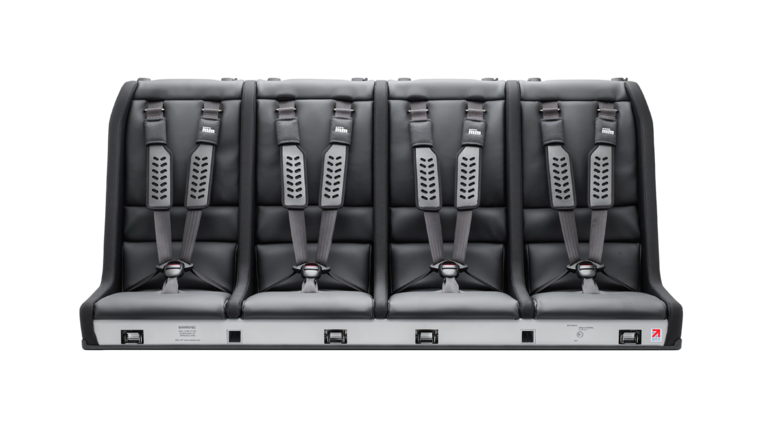
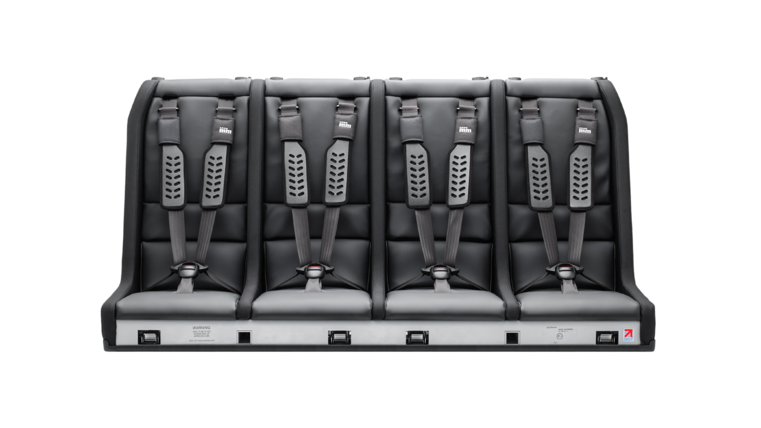
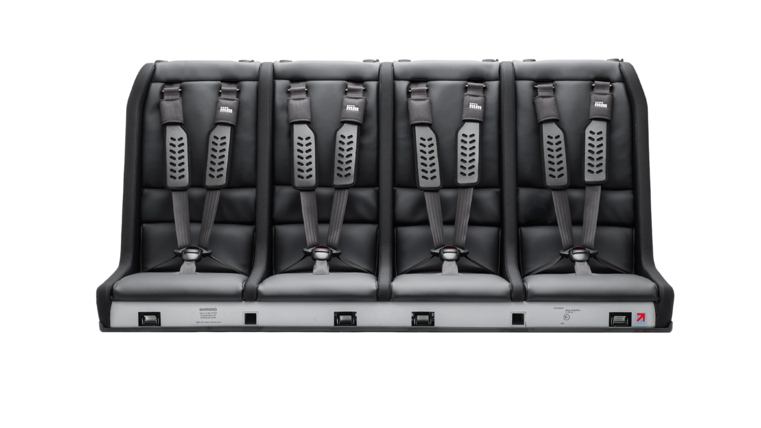
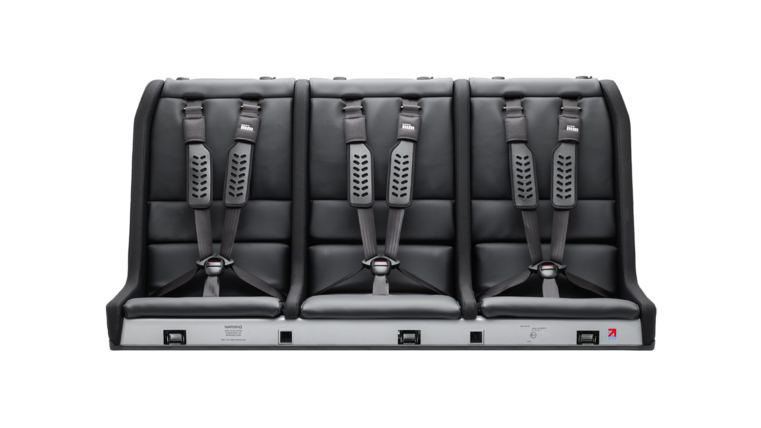
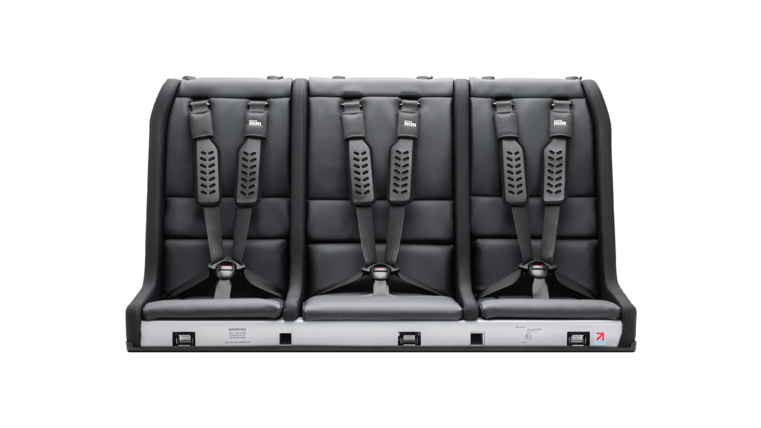
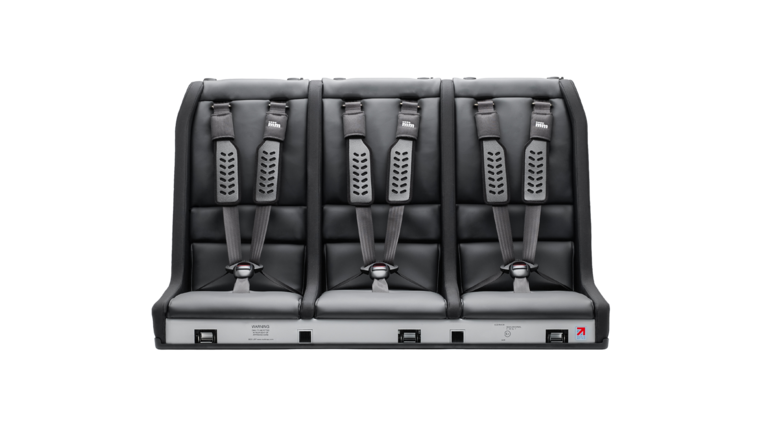
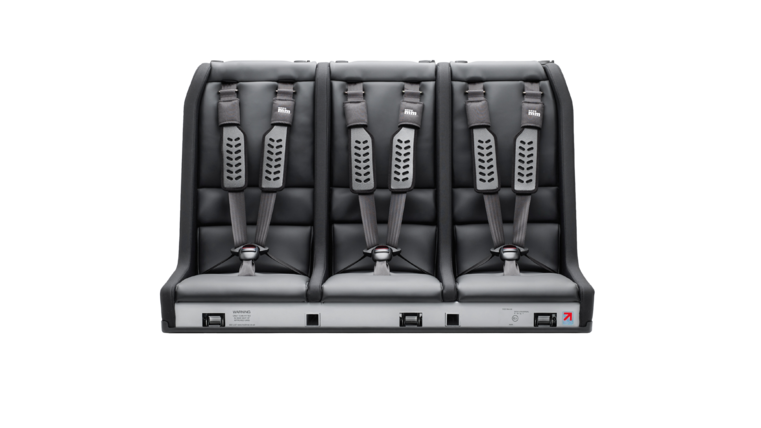
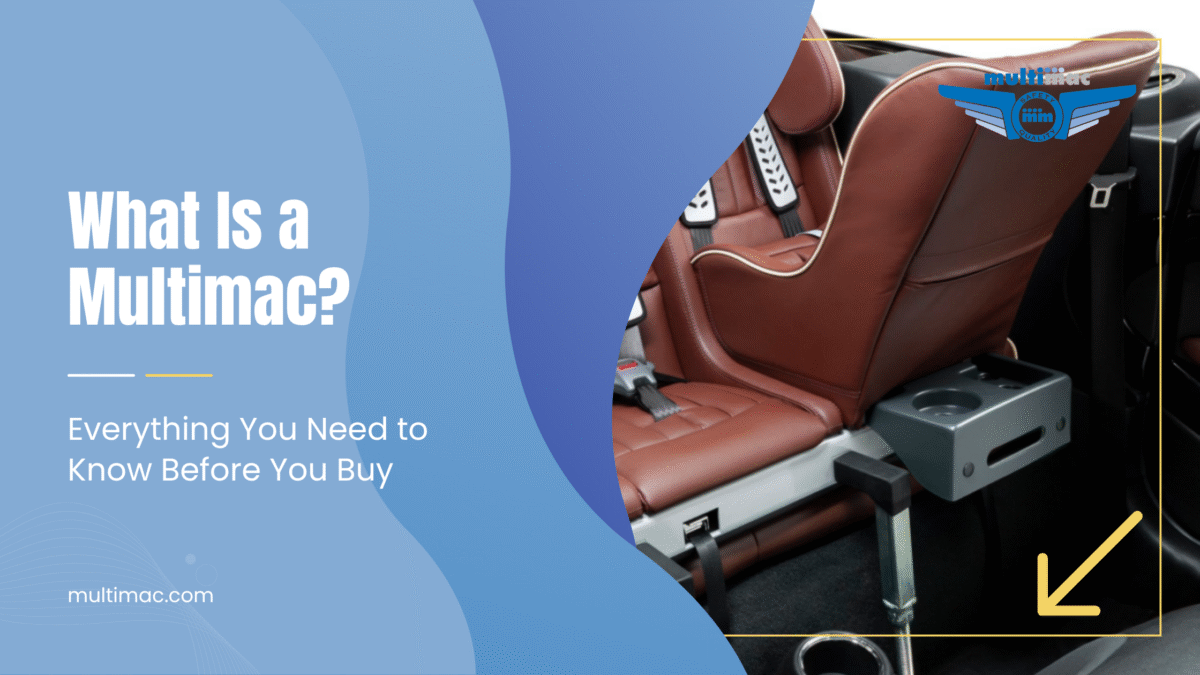
It’s a single bench-style seat that fits across the back of your car and seats three or four children side by side, each with their own harness. The Multimac, made in Birmingham since 2008, uses one aluminium frame that’s anchored to the car’s chassis. Each child has their own seat position within that frame, and the set-up for each position changes as they grow.
The reason it fits where three separate seats won’t is simple. Individual car seats each have their own moulded shell and side wings, and those sides eat up width. A shared frame doesn’t need them between every child, so you get three or four proper seats in the space most cars give you. If you’re new to the idea, our explainer on what a Multimac is covers the basics.
Age fit: will it work from newborn through the school-run years?
Most families don’t buy one car seat per child. They buy a baby carrier, then a toddler seat at around nine months, then a high-back booster somewhere around four. With three children at different stages, you end up doing that in staggered cycles for the best part of a decade.
So the first thing to check with any multi-child car seat is how much of that range it covers.
UK law requires children to use a child car seat until they’re 12 years old or 135cm tall, whichever comes first. Seats approved to R129 (i-Size) also require babies to travel rear-facing until at least 15 months. Our R129 guide explains what that regulation means in practice.
The Multimac is designed for children from birth to around 12, with a maximum of 36kg per child. Here’s how that breaks down.
Newborns and babies (birth to around 18 months)
Newborns travel in the Minimac, a rear-facing baby seat that clicks into the Multimac frame. It’s suitable up to approximately 18 months, 13kg or 82cm, whichever comes first, and comes with a Head Hugger and foam inserts to support a newborn.
One difference to be aware of: the Minimac is made for the Multimac only. It isn’t a travel system carrier, so it won’t click onto a pushchair. Some parents miss being able to lift a sleeping baby out in their seat. Others are glad there’s one less heavy carrier to haul about. Our post on using a Multimac from birth covers this in more detail.
If you want to keep your baby rear-facing for longer, the ERF Minimac is coming. It’s an extended rear-facing seat designed for use from birth up to four years, and it won Platinum for Best Car Seat Design at the Junior Design Awards 2026. You can join the ERF waitlist to hear first when it launches. For the case for rear-facing, read how long children should travel rear-facing.
Toddlers and young children (around 18 months to 6 years)
Once a child outgrows the Minimac, they move to a forward-facing position in the Multimac with the Ylva Headrest. It gives side-impact protection and has a fully adjustable five-point harness. The headrest is height-adjustable, and taller children can add the Ylva Back Pad for extra head and neck support.
Age is a rough guide here. Height and weight matter more than birthdays.
School-age children (around 6 to 12 years)
As children get taller, the Tommy Headrest takes over. It’s lower-profile, which helps in cars with lower rooflines, and children carry on using the five-point harness.
That harness typically fits children up to around 135cm. For taller children, a Low Profile Seat Cushion lowers the seat height and can extend the harness stage a little further. Once a child has properly outgrown the harness, a Plug-In Buckle lets that position use the car’s adult seatbelt instead. So the same frame can carry a baby rear-facing, a toddler in a harness and an older child on the adult belt, all at once.
The full detail is in our guide to Multimac age, weight and height limits, and what happens when your children outgrow it.
The practical takeaway: choose a multi-child car seat around your youngest child’s needs, and check it still covers your eldest until they’re legally out of a car seat.
Daily usability: what the school run actually asks of a car seat
Spec sheets don’t tell you what it’s like at 8:20am in the rain with three children and a book bag. These are the questions worth asking.
How easy is it to strap everyone in? With separate seats, the middle child is usually the hard one. You lean across a shell, find a buckle wedged into the seat cushion and do it by feel. On a bench system, every harness sits in the same plane with nothing between the seats, so reaching the middle position is far easier.
Does it stay put? Yes. A Multimac is anchored to the car’s chassis, so there’s no checking ISOFIX indicators and no seat creeping loose over time. Once it’s fitted, it stays put until you choose to take it out, and that takes minutes.
What about the older child who wants to do their own belt? In a Multimac, older children stay in a five-point harness until around 135cm, which some families see as one more harness to do up. If that’s a sticking point, the Plug-In Buckle lets an older child use the adult belt in their position once they’ve outgrown the harness.
Who else drives the children? Moving a Multimac between cars is possible, but it takes planning. It can be removed in minutes, and many families have tethers fitted in two cars so they can move it between them. If grandparents do the Wednesday pick-up in their own car, you could have tethers fitted there too, otherwise they’ll need their own seats. Fitting parts have a lead time of 7-10 days, so order ahead. Most families find their main car is where the multi-child problem actually lives, but it’s worth thinking through before you buy.
A few other things to settle before you choose:
- Do you need a third row or full boot space, or are you trying to avoid a seven-seater?
- Are you planning another baby, and would that mean three or four seats?
- How long do you expect to keep your current car?
If school mornings are your main headache, our school run guide for multiple children has more practical tips.
Vehicle compatibility: will it fit your car?
Width is the main constraint, and it’s why most families end up looking at seven-seaters. A multi-child car seat is often the alternative to changing car altogether. Our Multimac vs seven-seater cost comparison puts numbers on that.
The Multimac range comes in seven models across two sizes:
| Model |
Seats |
Width |
| Multimac 930 |
3 |
965mm |
| Multimac 1000 |
3 |
1020mm |
| Superclub Junior |
3 |
1140mm |
| Superclub |
3 |
1230mm |
| Multimac 1200 |
4 |
1240mm |
| Multimac 1260 |
4 |
1290mm |
| Multimac 1320 |
4 |
1350mm |
The narrowest three-seater fits a surprising number of family hatchbacks and estates. The four-seaters suit wider cars, and that’s how some families get six people into a five-seat car. See the full child seat range for details on each.
A Multimac doesn’t use ISOFIX. It anchors to the car’s chassis using a fitting kit made for your specific make, model and year. We explain why Multimac doesn’t use ISOFIX and why that’s a deliberate safety choice.
Fitting is done by one of our fitting agents, or by a local garage following our instructions (the garage will charge for the installation). If you change cars, you’ll need a new fitting kit, because different cars need different parts. The fitting page has the details.
Want to see whether your car is likely to work? Start with which cars take three child seats in the back and our guide to fitting three car seats in popular UK cars. When you get a quote, the team will confirm which model fits your car and your family’s set-up.
Safety: what to check
Whatever multi-child car seat you look at, check what it’s approved to and how it’s fitted. The Multimac is approved to R129 and ECE R44/04, with an aluminium frame anchored to the vehicle’s chassis rather than to ISOFIX points. Our safety page sets out the testing and approval details.
Correct fitting matters as much as the seat. That’s why we recommend a fitting agent wherever possible, with car-specific parts that have been safety tested, not off-the-shelf bolts.
Multi-child car seat FAQs
Can a newborn use a multi-child car seat?
Yes. In a Multimac, newborns travel rear-facing in the Minimac, which clicks into the frame and is suitable up to approximately 18 months, 13kg or 82cm. The ERF Minimac, coming soon, is designed for rear-facing travel from birth up to four years.
How many children can a multi-child car seat hold?
A Multimac seats three or four children, depending on the model. The three-seaters range from 965mm to 1230mm wide, and the four-seaters from 1240mm to 1350mm.
Does a multi-child car seat need ISOFIX?
Not a Multimac. It anchors to the car’s chassis with a fitting kit made for your specific car, rather than using ISOFIX points.
What age range does a Multimac cover?
From birth to around 12 years old, with a maximum of 36kg per child. The five-point harness typically fits children up to around 135cm.
Can I move a multi-child car seat between cars?
Yes. A Multimac can be removed in minutes, and many families have tethers fitted in two cars so they can move it between them. Each car needs its own fitting parts, with a lead time of 7-10 days, so plan ahead.
When can a child stop using a car seat in the UK?
UK law requires a child car seat until a child is 12 years old or 135cm tall, whichever comes first.
Get a quote for your car
Tell us your car and your children’s ages, and we’ll tell you which Multimac fits. Build your quote in a couple of minutes.