Winter driving with children asks more of you than the rest of the year. The roads are slower to grip, the days are short, and you’ve got small passengers who can’t do much to help if something goes wrong. Most of what keeps them safe happens before you turn the key, though, and none of it takes long once it’s a habit.
Here’s a practical checklist for UK parents, from frosty school runs to the drive you hope you never have to make in a snowstorm.
Before you set off
Clear the whole car, not just a porthole
Scraping a small gap in the windscreen and hoping for the best isn’t just risky, it goes against the Highway Code. Rule 229 says you must be able to see out of every window, and your lights must be clean and your number plates readable. Clear the mirrors, demist properly, and brush snow off the roof too, so it doesn’t slide down over the windscreen when you brake or fly off onto the car behind.
Give yourself an extra ten minutes on frosty mornings. Rushing the scrape is how the porthole habit starts.
Don’t leave the car running unattended
It’s tempting to start the engine, pop back inside and let the car warm up. Unattended cars with the engine running are an easy target for thieves, and many insurers won’t pay out if your car is taken that way. Never leave children in the car while it’s running and you’re not in it.
If snow has built up around the exhaust, clear it before you start the engine. A blocked exhaust can push fumes back into the car, which is the last thing you want with children inside.
Check the basics
- Tyres. The legal minimum tread depth is 1.6mm, but grip drops off well before that, especially in wet and icy conditions. Check pressures too, as they fall when it’s cold.
- Screenwash. Use one rated for low temperatures so it doesn’t freeze in the bottle or on the glass.
- Lights. Walk round the car and check every bulb. You’ll be using them on most journeys from now until spring.
- Battery. Cold weather is hard on batteries. If yours has been slow to start, get it tested before it lets you down on a dark morning.
Check the forecast and your route
Look at the Met Office weather warnings before any journey that isn’t routine. If there’s an amber or red warning for snow or ice, ask yourself whether the trip really needs to happen today.
Getting the children in safely
Load children from the pavement side wherever you can, especially in the dark when drivers are less likely to spot a small person by an open door.
Then the coat question. Thick, padded coats compress in a crash and leave the harness too loose, so they need to come off before the straps go on. Lay the coat or a blanket over the top once your child is buckled in. Our post on bulky coats and car seat safety explains why. If taking coats off and on four times a day is wearing you down, the Road Coat is designed to be worn in a car seat, so the harness still fits properly with it on.
Whatever they’re wearing, do the harness check every journey: straps flat, buckle clicked in, no more than a finger’s width of slack at the collarbone.
On the road
Ice changes everything about how a car behaves. The Highway Code warns that stopping distances can be up to ten times longer on ice than on a dry road, so leave a much bigger gap to the car in front than feels natural.
- Brake, steer and accelerate gently. Sudden movements are what break traction.
- Use a higher gear when pulling away on ice to reduce wheelspin.
- Watch out for quiet tyres and light steering. Both can be signs you’re on ice.
- Use dipped headlights when visibility is seriously reduced, and switch fog lights off as soon as it improves.
- Expect black ice under bridges, on shaded roads and on rural routes that haven’t been gritted.
And keep in-car distractions to a minimum. If a sibling squabble kicks off on an icy road, it can wait until you’ve found somewhere safe to stop.
If you break down with children in the car
This is the one most parents haven’t thought through, and it’s worth five minutes now so you’re not working it out on a dark hard shoulder.
The Highway Code’s breakdown advice for motorways is:
- Try to get off the motorway or into a service area. If you can’t, move into the left lane, an emergency area or onto the hard shoulder.
- Put your hazard lights on.
- If it’s safe, everyone gets out through the doors away from the traffic and waits well away from the car, behind the barrier if there is one. Keep children close and under control, away from the carriageway.
- Don’t go back to the car, even if it’s cold, dark or raining.
- If you can’t get out safely, stay in the car with seatbelts on and hazards on, and call 999.
That “don’t go back to the car” part is why winter breakdowns with children are tricky. You might be standing on a verge for a while. Keep coats, hats and a blanket in the car where you can grab them as you get out, not buried under the shopping in the boot.
What to keep in your winter car kit
- Ice scraper and de-icer
- A torch with spare batteries
- Blankets, plus a spare hat and gloves for each child
- A charged power bank and charging cable for your phone
- Water and some long-life snacks
- A basic first aid kit
- A hi-vis vest
- A small shovel and something for grip, like an old mat or a bag of grit, if you live somewhere rural
- Nappies, wipes and a change of clothes for younger children
Most of it fits in one bag that lives in the boot from November to March.
The quick version
Clear the whole car. Check your tyres, lights and the forecast. Coats off or a car seat coat on before the harness goes on. Leave big gaps and be gentle on icy roads. Know what you’d do if you broke down, and keep warm layers within reach. That covers most of what keeps children safe in the car this winter.
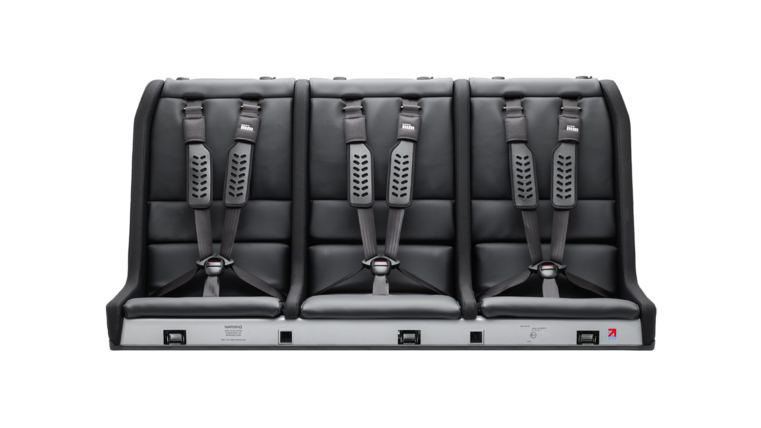
If you’re looking at fitting more children safely in the back of your car this year, get a Multimac quote for your car. You can also read more about how Multimac seats are tested.