Which Cars Take 3 Child Seats in the Back? A Complete UK Guide
If you have three or more children, you’ve almost certainly Googled this question. It sounds like it should have a simple answer. And yet, despite the automotive industry filling showrooms with so-called “family cars”, precious few of them can actually fit three child seats across the rear bench simultaneously.
It is a genuine gap in the market and one that catches families off guard. UK law requires children to use a child car seat until they reach 12 years old, 135cm tall, or 36kg in weight (whichever comes first). That means for most families with three or more children, you’re dealing with multiple car seats for a decade or more. The car you’re sitting in right now may simply not be up to the job.
This guide covers the cars that can accommodate three child seats, what to look for when you’re choosing, and an alternative solution that many families haven’t considered.
Why Is Fitting 3 Child Seats So Difficult?
The core problem is seat width. A standard rear bench in most family cars measures somewhere between 130cm and 145cm across. A typical child seat is 40 to 50cm wide. Do the maths and you’re already struggling before you factor in the hard plastic sides, headrests, and the fact that ISOFIX anchorage points are usually only present on the two outer seats.
There are a few practical rules worth knowing before you start shopping. ISOFIX points matter: most cars have ISOFIX on the two outer rear seats only, and cars that offer three ISOFIX points across the middle row are specifically what you’re looking for. The middle seat is often narrower too, even in larger cars. And even if a seat physically fits, the seatbelt positioning needs to be compatible with the specific car seat you’re using. Always check the combination before you commit.
It is also worth noting that ISOFIX is not a legal requirement. You can use a child seat secured by seatbelt alone, but ISOFIX is strongly recommended, particularly for younger children.
Cars That Take 3 Child Seats in the Back
The following cars have been selected because they offer genuine space and, in most cases, three ISOFIX points across the second-row seats.
1. Citroën Grand C4 Space Tourer (formerly Grand C4 Picasso)
One of the strongest choices in this category. The Grand C4 Space Tourer has three full ISOFIX points across the middle row, which is rare in a car of this size. The three individual second-row seats each slide independently, making it easier to position children and car seats precisely.
The panoramic windscreen gives the interior an unusually airy feel, and the tray tables on the back of the front seats are a practical bonus for longer journeys. The hands-free power boot (opened by waving your foot under the rear bumper) sounds gimmicky until you’re standing in a car park with a buggy, two bags, and a toddler under your arm.
Best for: Families who want MPV practicality without compromise on child seat flexibility.
2. SEAT Alhambra
A traditional MPV that does the fundamentals exceptionally well. All three second-row seats have ISOFIX points, and the third-row seats also have ISOFIX, making this one of the most child-seat-friendly cars on the UK market.
The large sliding doors make getting children in and out straightforward, even in a tight car park. Boot space is excellent with all seven seats up, and the Alhambra earned a five-star Euro NCAP rating. Note that it was discontinued in 2022, but used examples remain plentiful and well-regarded.
Best for: Families who need seven genuine seats alongside three secure child seat positions.
3. Ford S-Max (2015 onwards)
The S-Max has always been the more driver-focused sibling to the Galaxy. From the 2015 second generation, the three individual middle-row seats each accommodate a child seat, and ISOFIX points are present on both outer positions (the centre uses a belt-only connection).
Folding the middle row flat is done with a single button press, which is useful when you need the load space. The S-Max is no longer in production, but the used market is strong and there are plenty of well-specced examples available.
Best for: Families who want MPV space but don’t want to feel like they’re driving a van.
4. Vauxhall Combo Life
A van-based people carrier that punches above its weight for family use. The Combo Life offers all three second-row seats with ISOFIX points. Sliding doors on both sides make it easy to get children buckled in regardless of where you’ve parked, and headroom is excellent throughout.
The optional Child Pack adds side window blinds and a rear-view mirror for keeping an eye on the children. The trade-off is that the rear seats cannot be reclined or slid fore and aft, which some families find limiting on longer journeys.
Best for: Families prioritising maximum practicality and value, particularly around town.
5. Volkswagen Sharan
The Sharan is one of the most respected MPVs ever made, winning What Car?’s MPV of the Year award multiple times. Five ISOFIX points in total, including across the full second row, make it one of the most capable cars on this list. The sliding doors (with an optional electric function) are a genuine quality-of-life improvement, the middle-row seats slide and recline, and the interior quality is a clear step above many rivals.
Like the Alhambra (with which it shares its underpinnings), the Sharan was discontinued in 2022. Used examples are plentiful and represent strong value.
Best for: Families who want premium MPV quality with maximum ISOFIX flexibility.
6. Land Rover Discovery (5th Generation, from 2017)
The Discovery is the aspirational choice, and an expensive one, though used prices have softened considerably. It seats seven and has ISOFIX on four of the rear seats. The third row is genuinely usable for children rather than the token rear seats found in many SUVs.
It does not have ISOFIX on the second-row centre seat, which means fitting three seats across the middle row requires the centre position to use a seatbelt-only installation. The technology and comfort specification on higher trims is impressive, and it makes long journeys noticeably more manageable.
Best for: Families who want luxury SUV presence without having to compromise on their current car choice.
7. Peugeot 5008 (Second Generation, from 2017)
The 5008 reinvented itself as a stylish SUV in 2017. The three second-row seats each have ISOFIX points and can slide and recline individually, which is a meaningful practical advantage for adjusting the fit of different car seats. The third row can be removed entirely to free up boot space. The foot-activated boot sensor is genuinely useful when your hands are full.
Best for: Families who want a modern, stylish SUV rather than a traditional MPV.
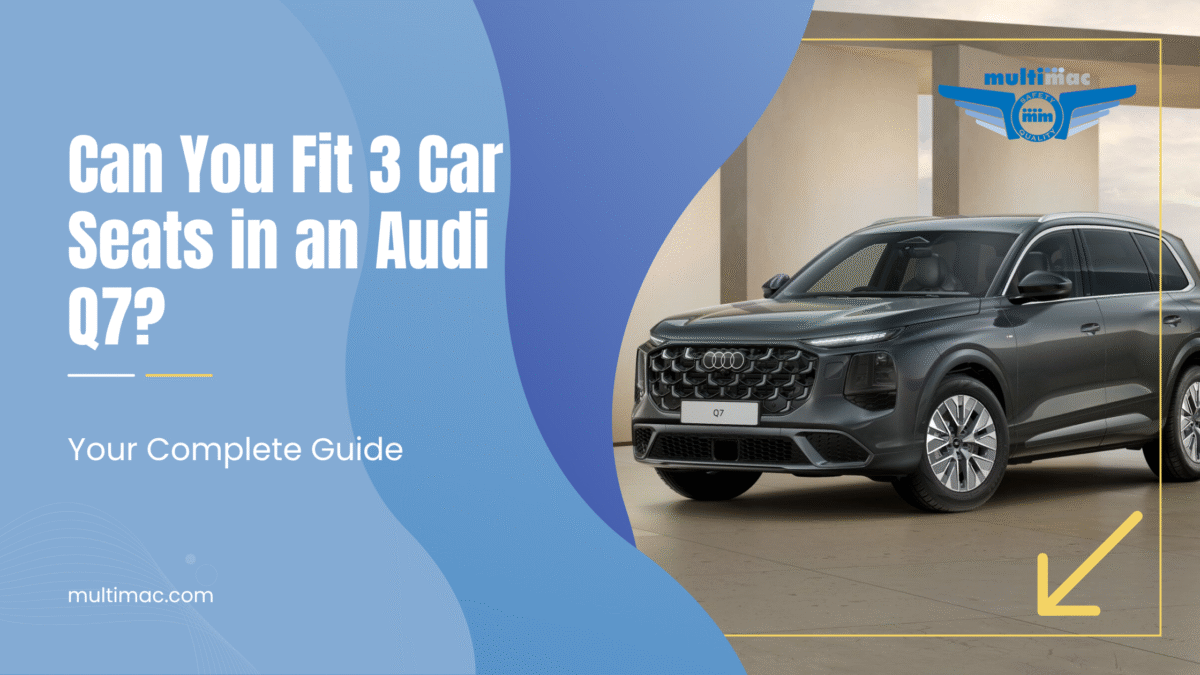
8. Audi Q7
Six ISOFIX points across the full vehicle, including three across the second row, make the Q7 one of the most capable cars on this list from a child seat perspective. The third row is spacious enough for older children on a regular basis. It drives with the composure and refinement you would expect from Audi, and the combination of seven seats with serious long-distance capability makes it genuinely versatile.
Best for: Families who want a premium, long-distance family SUV and have the budget to match.
9. BMW 2 Series Active Tourer (U06, from 2022)
A more compact option worth considering for families who want something smaller. The second-generation Active Tourer is genuinely family-friendly, with optional ISOFIX across all three rear seats on higher trim levels. It is front-wheel drive (or available as a plug-in hybrid), which gives it a flat rear floor that makes fitting car seats side by side more straightforward.
More detail on fitting three child seats in BMWs and other popular UK cars is covered in our separate guide: Can You Fit 3 Car Seats in a BMW 3 Series? (And Other Popular UK Cars).
Best for: Families who want a premium compact option without stepping up to a full-size SUV or MPV.
10. Kia Carnival
For families who need genuine eight-seat capacity alongside three child seat positions, the Kia Carnival deserves a mention. The second-row captain’s chairs are wide and comfortable with ISOFIX points, though fitting three car seats requires moving one child to the third row. It offers strong value relative to equivalent European alternatives and is increasingly popular in the UK.
Best for: Larger families who need maximum capacity and are open to alternatives to European MPVs.
What to Check Before You Buy
Finding a car that can physically accommodate three child seats is the first step. Before you commit to anything, there are a few things worth doing.
Check your specific seat combination. Use the manufacturer’s car seat compatibility checker to confirm that your chosen seats work in the specific car and positions you need. Sit in the back with the seats installed if at all possible, particularly if you’re relying on a third row. Pay attention to the belt buckle positions, especially on the centre rear seat, where the buckle angle can make it difficult to route seatbelts correctly depending on the car seat being used. And if you’re regularly moving car seats between vehicles, think about how long installation and removal actually takes day to day.
An Alternative Worth Knowing About: Multimac
If you have three or four children and are considering buying a larger car specifically to accommodate their seats, it is worth pausing before you do.
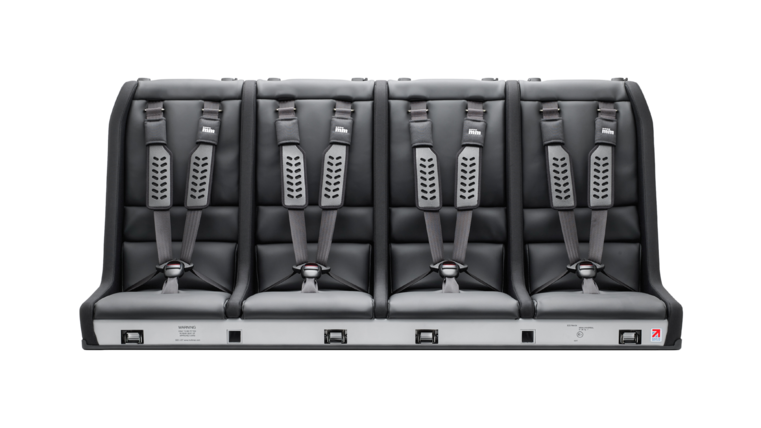
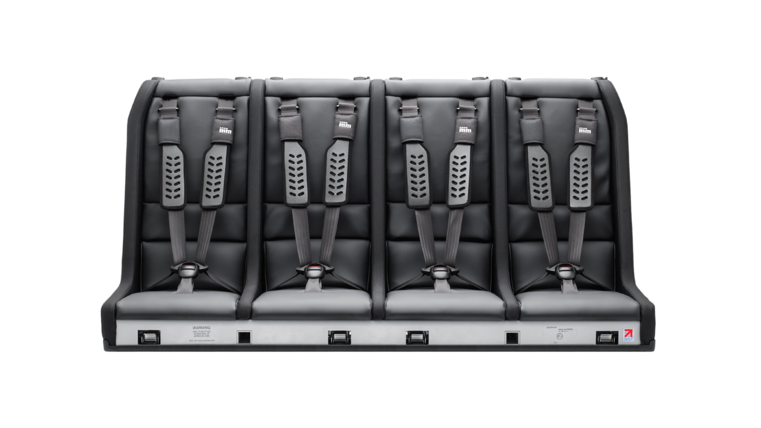
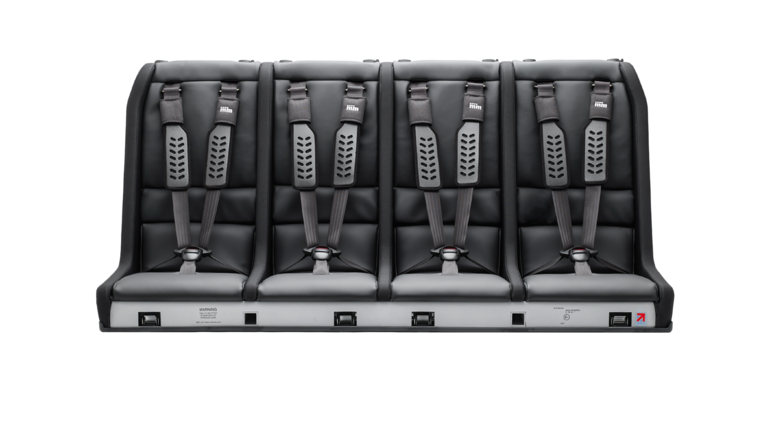
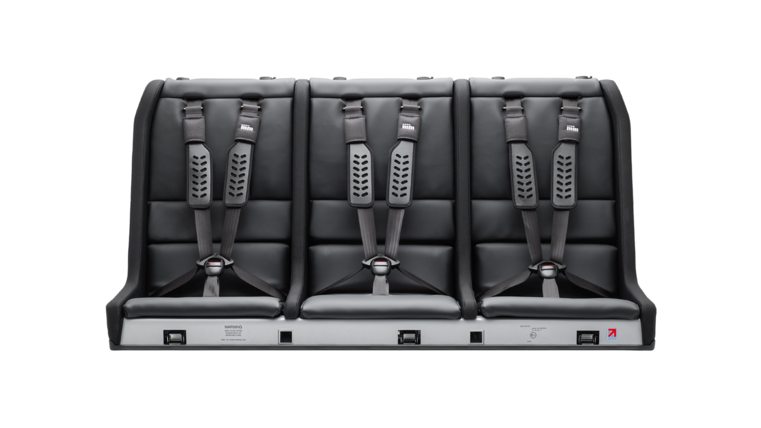
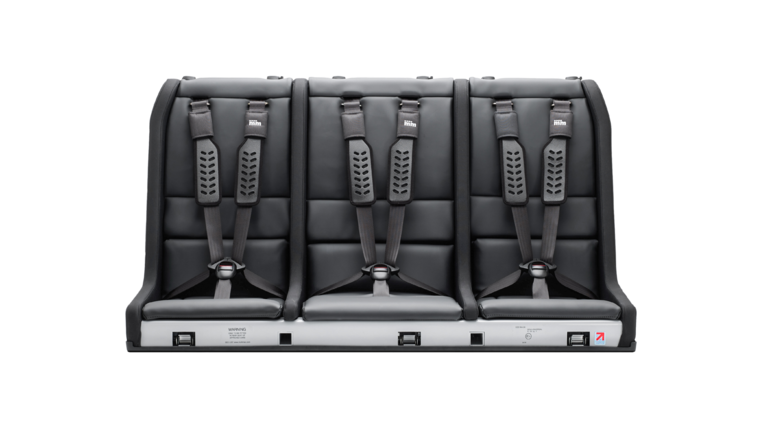
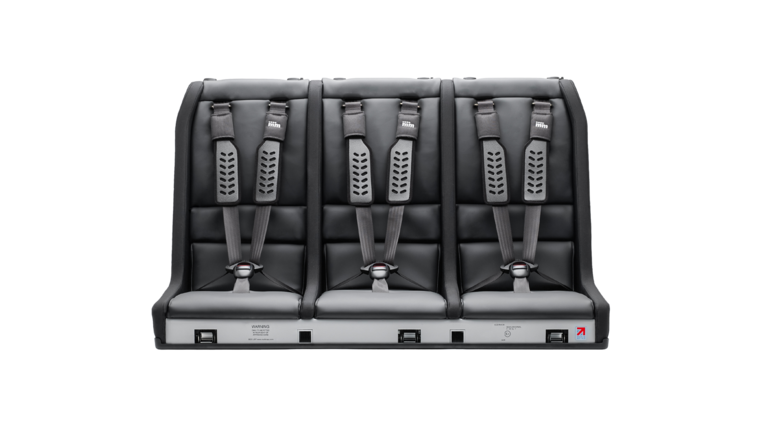
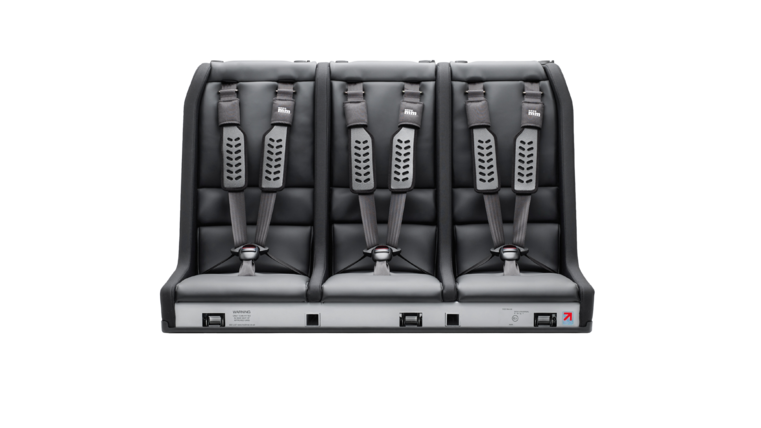
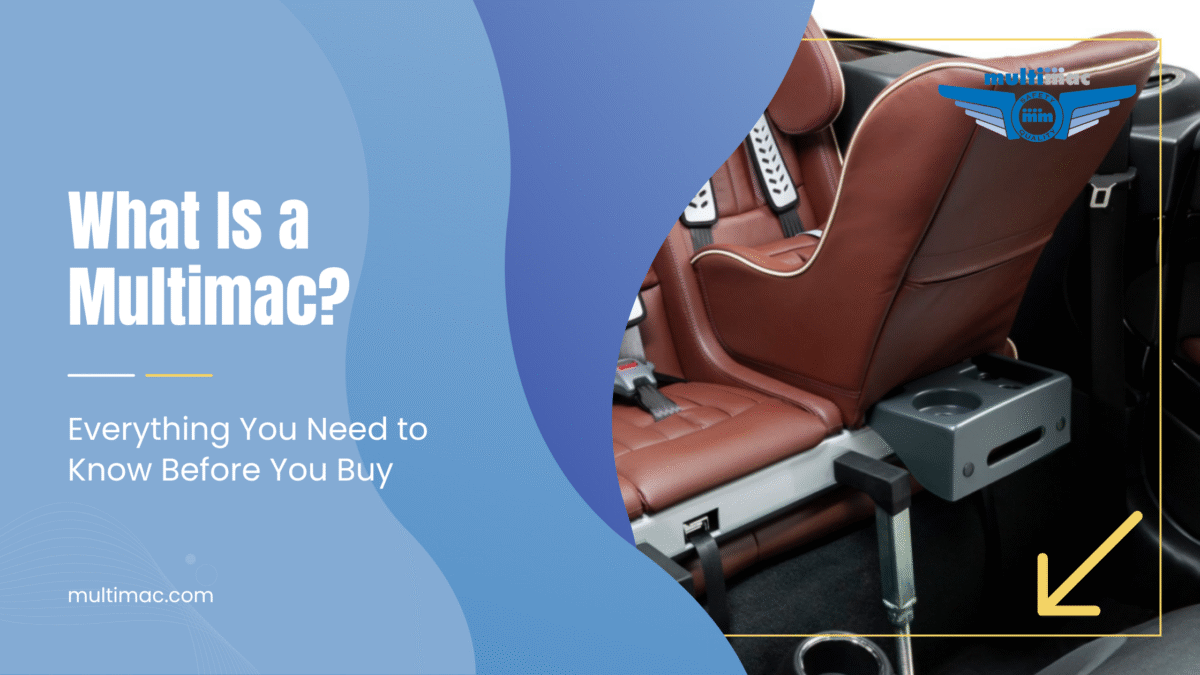
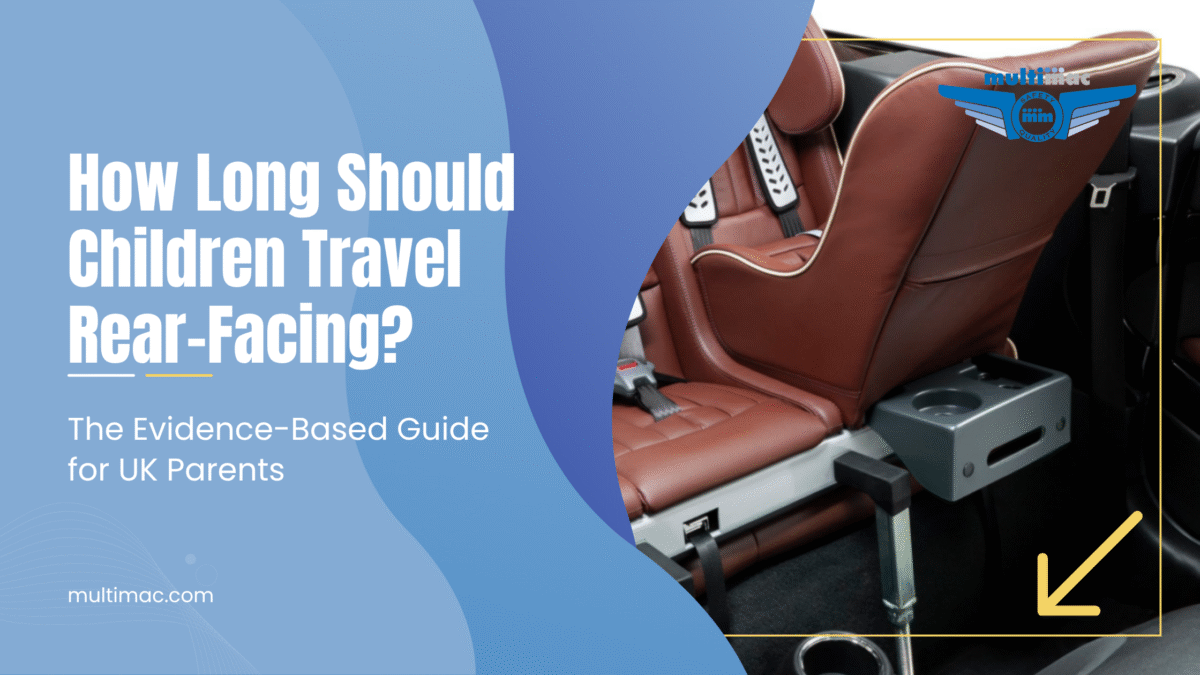
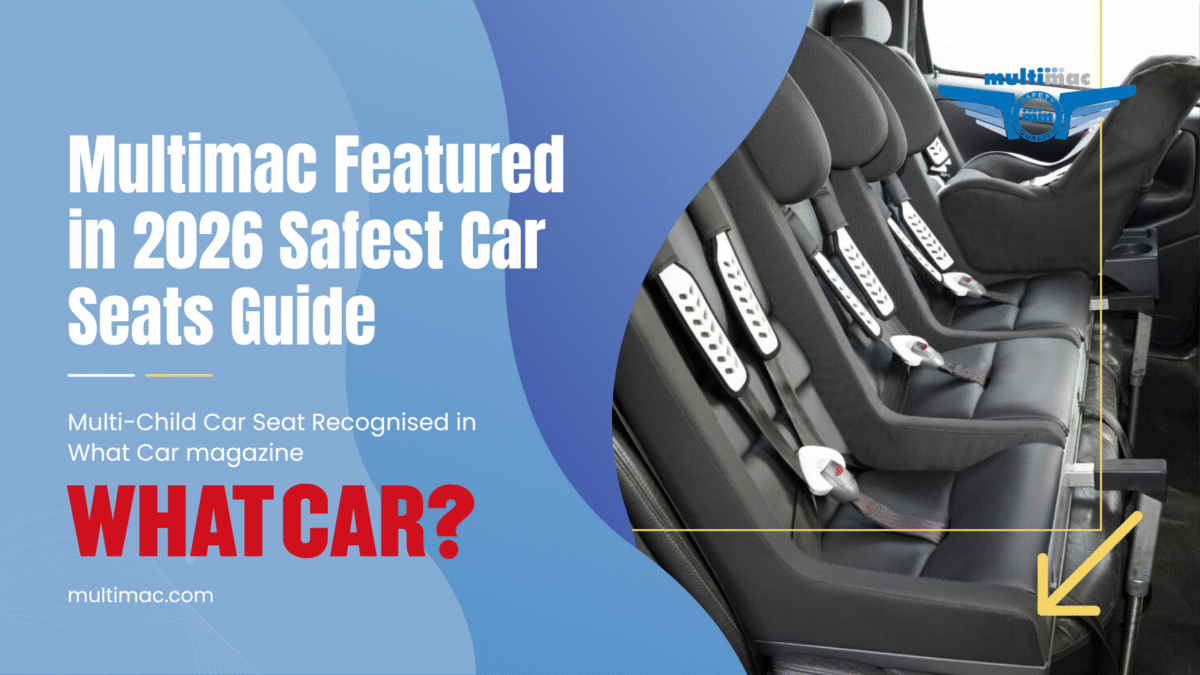
Multimac is a British-made multi-child car seat system that fits 3 or 4 children side by side in a single bench-style unit, installed in most standard family cars. It anchors directly to the car’s chassis via an aluminium frame, is certified to R129 (i-Size) and ECE R44 standards, and covers children from birth to 12 years old using the same seat.
What this means in practice is that a family with three children in a standard Golf, Volvo XC90, or Range Rover can fit all three children safely in the rear, without buying a new car, without switching to an MPV, and without spending years driving something they didn’t want.
Multimac has been designed and manufactured in Birmingham since 2008. It requires professional installation (typically £150 to £250) and is priced at approximately £2,000 to £3,000 including fitting. For many families, that compares very favourably to the cost and disruption of changing vehicles.
You can read more about how it works and whether it fits your current car in our guide: Alternatives to Buying a 7-Seater: How to Fit 3 or 4 Children in Your Car.
Or if you’re ready to find out whether Multimac works for your car, use the quote builder to get started.
Multimac is manufactured in Birmingham and professionally installed across the UK and Europe. Find out more at multimac.com or call 0121 44 22 007.