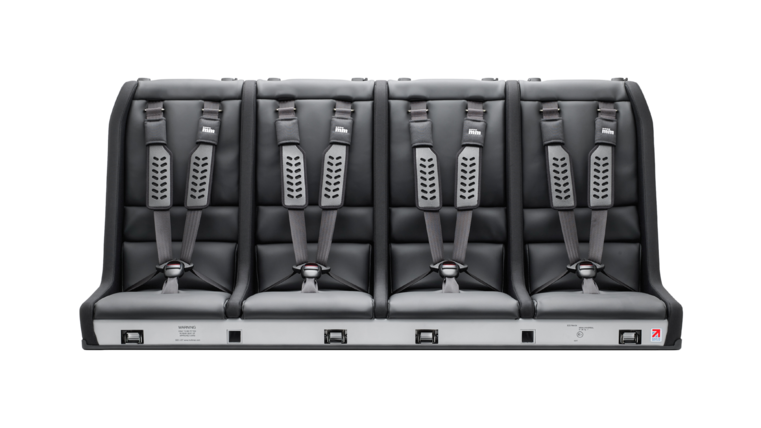
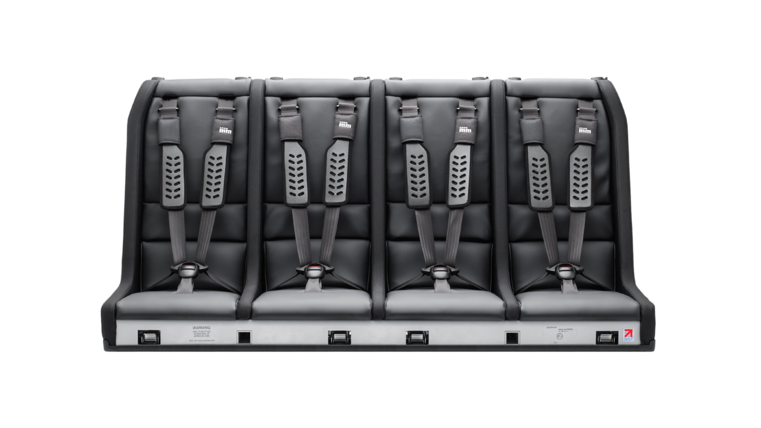
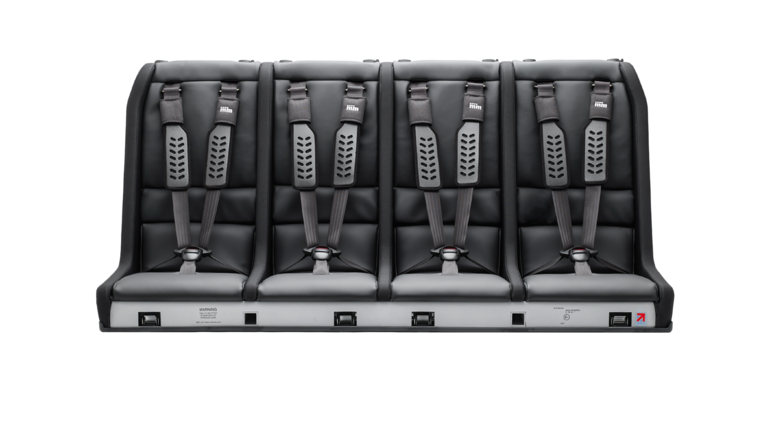
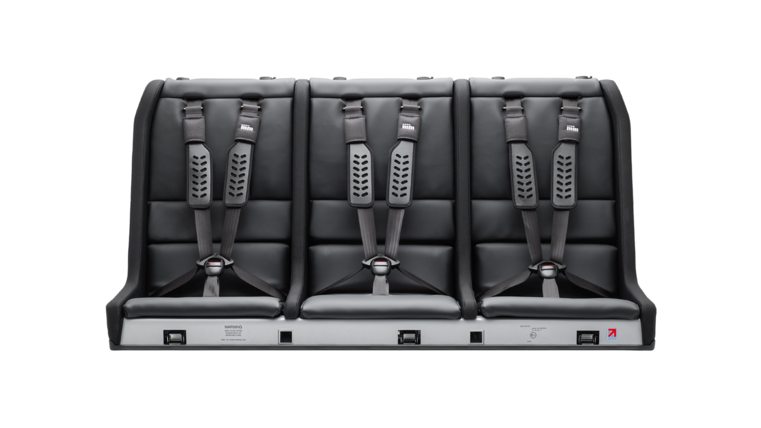
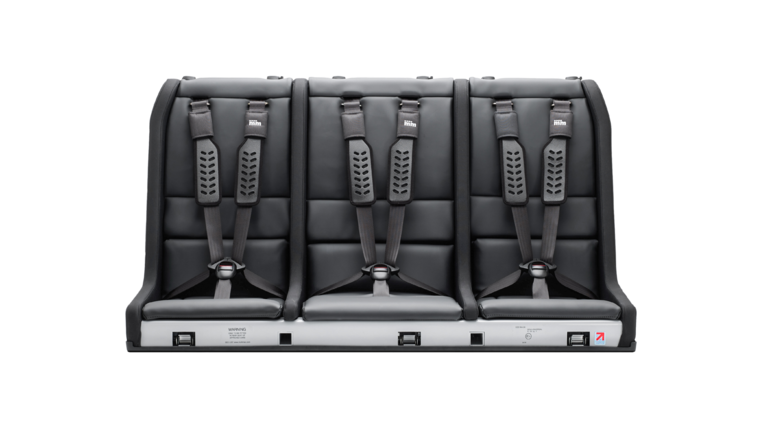
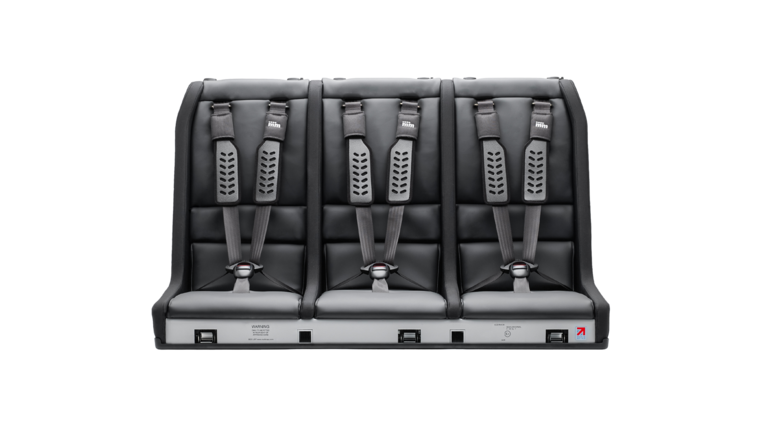
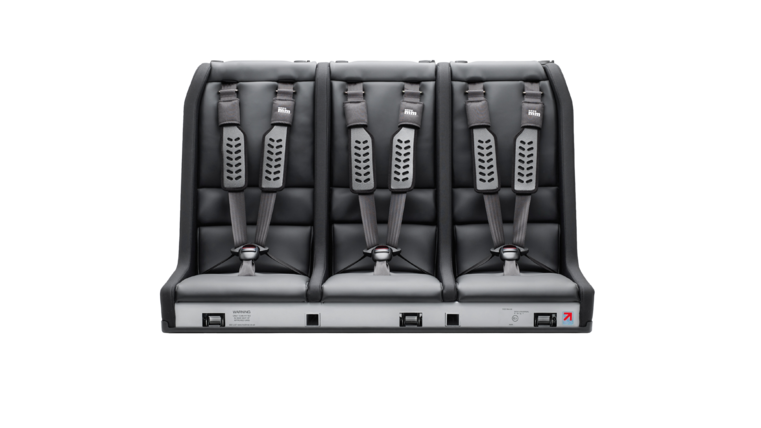
Once the Multimac is in your car, daily life with three or four children gets noticeably simpler. But holidays raise a different set of questions. What happens when you’re flying and need to hire a car at the other end? Does it work across Europe? Is it easy enough to remove and reinstall, or is it effectively a permanent fixture? And if you’re driving to France, does your R129 certification still hold up?
These are the things families ask before their first trip away with a Multimac, so here’s the practical answer to each of them.
Is the Multimac easy to remove and reinstall?
Yes. Removing the Multimac takes around five minutes with two adults. It’s not a permanent installation — the frame comes out cleanly, and going back in is the same process in reverse. Most families find a rhythm with it after the first couple of times and don’t give it much thought.
The tether kit that anchors the frame to the car does stay in when the seat is removed. So if you’re taking the Multimac out to free up space for a long drive without children, or to move it temporarily between cars, the connection points remain in the car and reinserting the frame is straightforward.
If you’re planning to remove it specifically for holiday travel, that’s worth factoring into your departure morning. It’s not something most families do at the last minute.
Can you use a Multimac in a hire car?
This comes up a lot. The short answer is: it depends on the hire car, and it requires some preparation.
The Multimac anchors to the car’s chassis using a tether system rather than ISOFIX, which means it needs specific tether anchor points to be present in the vehicle. Most modern European family cars have these, but not all. Before you travel, it’s worth contacting the hire company to confirm the make and model of car you’ll be allocated, then checking with Multimac whether the fitting parts are compatible.
Some families who travel regularly use a hire car tether kit, which allows the Multimac to be fitted in a wider range of vehicles than the standard kit covers. If this applies to your situation, the team can advise when you contact Multimac directly.
One practical reality: even if compatibility is confirmed, fitting a Multimac into an unfamiliar hire car in a busy airport car park with tired children isn’t the same as doing it at home on your own driveway. Families who do use it in hire cars tend to allow extra time and, if possible, do a test fit somewhere calm before the journey starts.
Does R129 approval cover European travel?
Yes. R129 (also known as i-Size) is a United Nations regulation adopted across all EU member states and a number of other European countries. A Multimac approved under R129 is legally compliant in every country that recognises the regulation — which covers the vast majority of European holiday destinations UK families visit, including France, Spain, Portugal, Italy, Germany, the Netherlands, Switzerland, Austria, and Scandinavia.
If you’re travelling to a country outside this list, the UNECE website has the definitive list of countries that have adopted R44 and R129 regulations. For most European road trips, this won’t be a concern.
What R129 approval also means is that if you’re ever stopped or asked to demonstrate compliance at a border or checkpoint, the certification is recognised and standardised. You’re not presenting a UK-only document.
What about boot space on long trips?
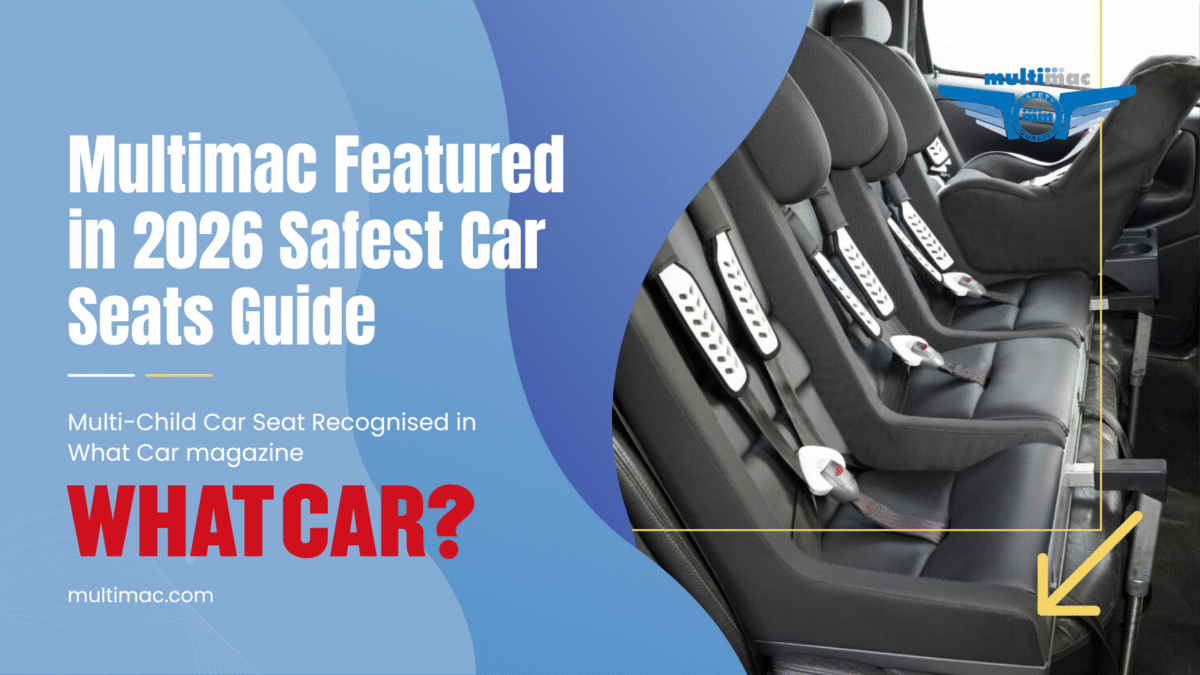
This is one of the quieter advantages of the Multimac for holiday travel that families often only appreciate once they’ve used it. With three or four children secured across the back seat in a single integrated frame, the boot stays exactly as it was. There’s no loss of space, no compromising the boot to fit an extra seat, and no luggage going in the footwells because the back is full of seat hardware.
For comparison: a 7-seater with the third row in use typically loses between 60% and 80% of its boot capacity. With a Multimac in a 5-seat car, the boot is entirely free. For a family of five or six heading away for a week, that’s a meaningful practical difference.
What about taking it on a plane?
Most families don’t take the Multimac itself on a plane — it’s designed to be used with a specific tether setup in a compatible vehicle, so it’s not in the same category as a standalone child car seat that you’d gate-check and then clip into any aircraft seat or hire car on the other side.
If you’re flying and hiring a car at the destination, the hire car question above applies. If you’re driving to the ferry or Eurotunnel and continuing by road throughout, the Multimac stays in your own car throughout and none of the hire car considerations apply.
Driving to Europe in your own car
For road trips across Europe — France, Spain, Italy, further — this is the straightforward option. The Multimac is already fitted, the children are already used to it, and R129 certification means you’re covered throughout the journey.
A few things worth checking before you go:
Child seat law by country: Regulations on booster seats and the minimum age for forward-facing vary slightly between countries. The key rules for Multimac users are generally well within the standard R129 framework, but if you’re travelling through multiple countries, a quick check of the specific rules for each one is worth doing. The RAC and AA both publish country-by-country guides that are regularly updated.
Tether integrity after a long drive: The Multimac is designed to stay in place across any reasonable journey, but if you’ve been driving for several hours and stopped, it doesn’t hurt to check the tether connections before continuing — the same way you’d check tyre pressures or oil on a long trip.
Spare harness parts: If you’re travelling for two weeks and something minor on a harness gets damaged, being in rural France doesn’t make getting a replacement easy. Multimac sells spare parts, and a quick call to the team before you leave can identify anything worth having with you.
A note on hire cars and the Resto-Mac scheme
If you’re specifically considering buying a Multimac before a holiday and are unsure about committing to one, it’s worth knowing that the Multimac Resto-Mac scheme means a well-maintained unit holds resale value well. Some families buy before a holiday, use it for the trip, and then either keep it or sell it on through the scheme. It’s not the typical path, but it does come up.
Planning a trip and want to confirm compatibility? The fitting checker confirms which models work with your own car. For questions about hire cars, travel-specific tether kits, or European travel, get in touch with the team directly — they can talk through your specific situation rather than giving you a generic answer.