There’s a particular kind of panic that sets in somewhere around the twelve-week scan. You’re expecting twins. You’ve got a toddler at home already. And before you’ve even processed the first piece of news, you’re doing maths in your head about your car.
Two infant car seats. One toddler seat. One back seat. It doesn’t take long to work out that this is tighter than it sounds, and a quick search confirms it: parents in exactly this position end up on forums comparing measurements, asking whether a particular hatchback or SUV will take three seats side by side, and getting answers that amount to “maybe, if you’re lucky, and good luck getting the middle one’s straps done up.”
This is a genuinely common problem, and most of the advice out there is about working around it rather than solving it.
Why three seats in one row is harder than it should be
A standard infant car seat with an ISOFIX base is not a narrow object. Twins mean two of them, side by side, and infant seat bases are designed for stability, not for sharing space. Add a forward-facing toddler seat into the only remaining position and you’re often looking at a middle seat that’s either too narrow to take the seat properly, or one where you physically can’t reach the buckle once the seats either side are in.
Even when three seats technically fit, “fits” and “is usable every single day with a toddler who wants to do their own seatbelt and a baby who’s just been sick” are different things. Getting one child in and out while keeping the others secured becomes its own small ordeal, multiple times a day.
The usual suggestions are to buy a bigger car, fit one seat in the front (rarely advisable and often not permitted depending on the seat), or accept a car that technically holds three seats but is miserable to use. None of these are satisfying answers when you’re already managing a newborn twin pregnancy and a toddler who hasn’t slept through the night since 2024.
A different way to think about the problem
The reason this feels so hard is that you’re trying to combine three separate products that were never designed to share a back seat. Each one is built to be the best version of itself in isolation. None of them are built with the other two in mind.
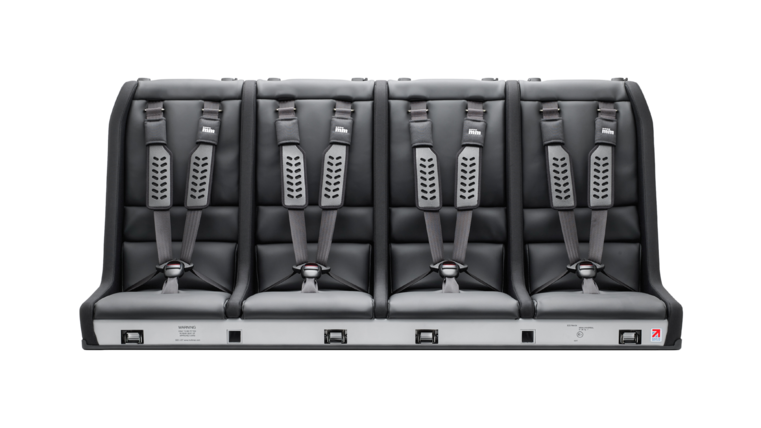
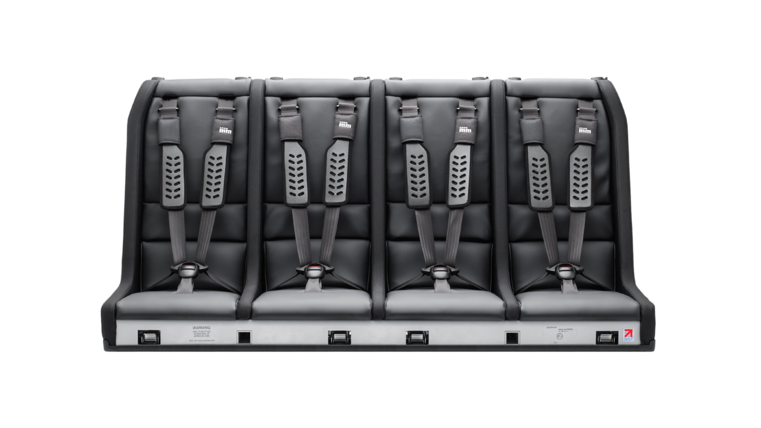
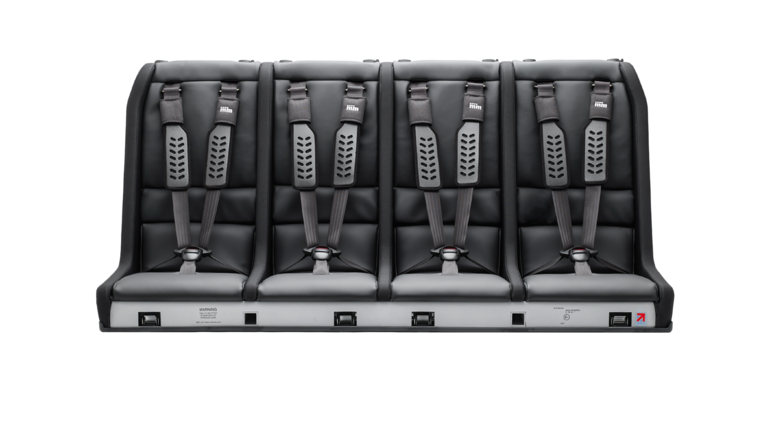
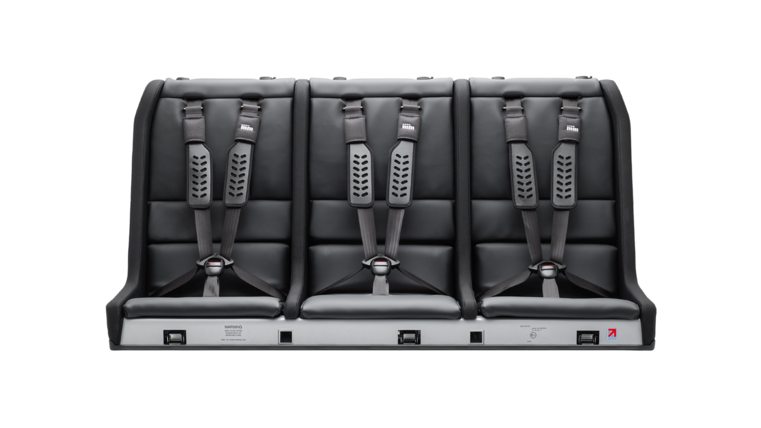
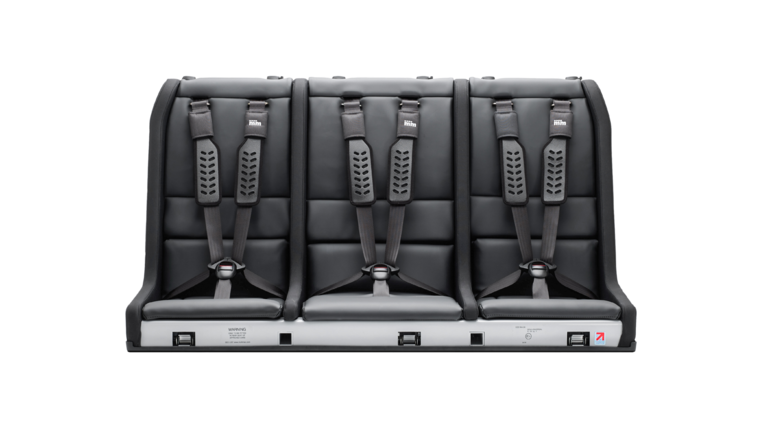
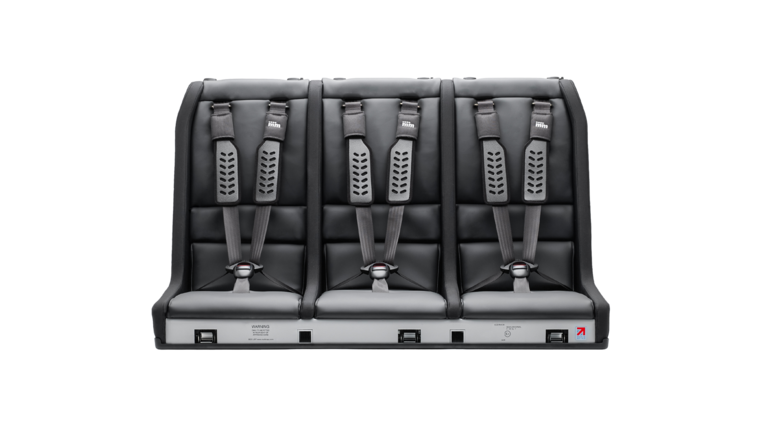
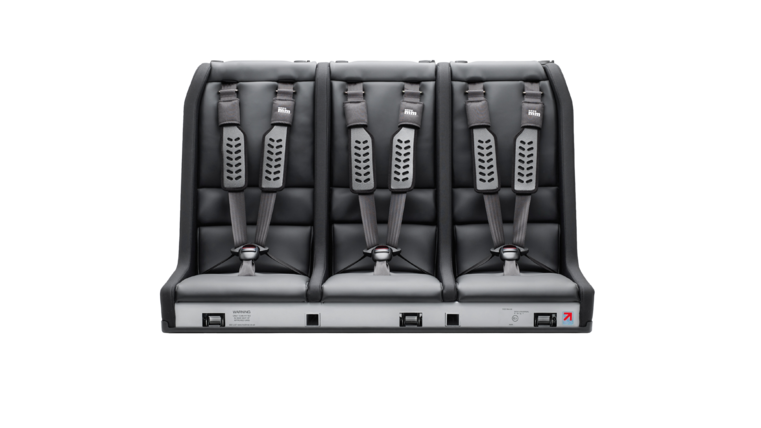
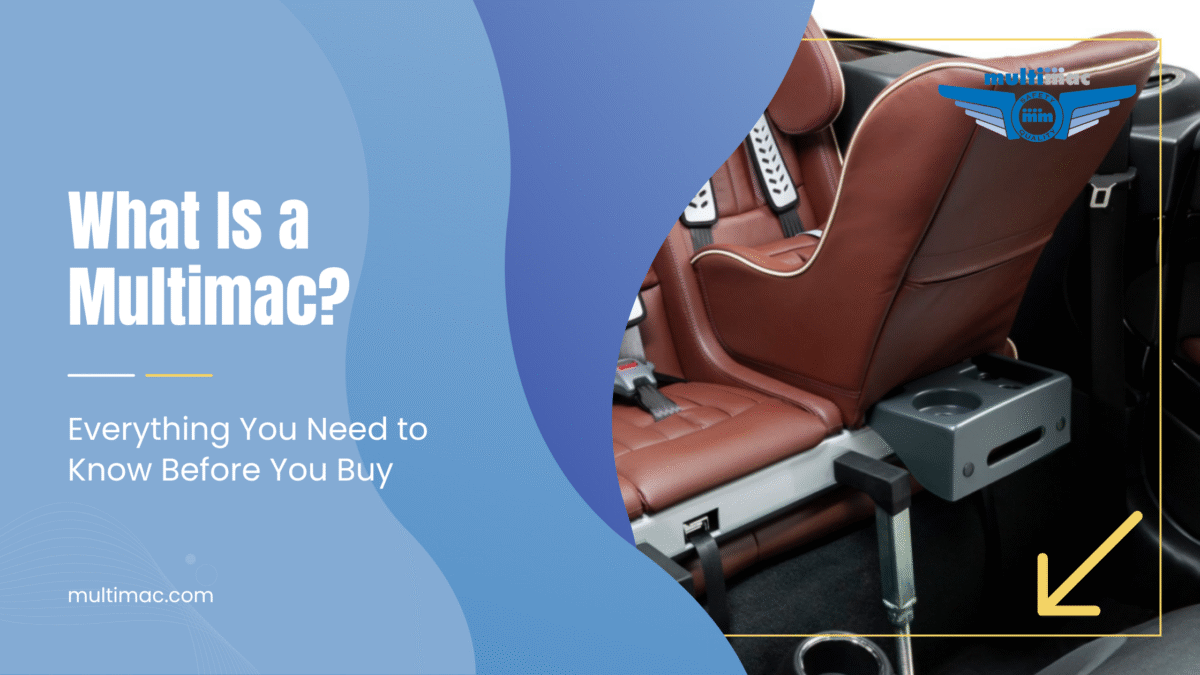
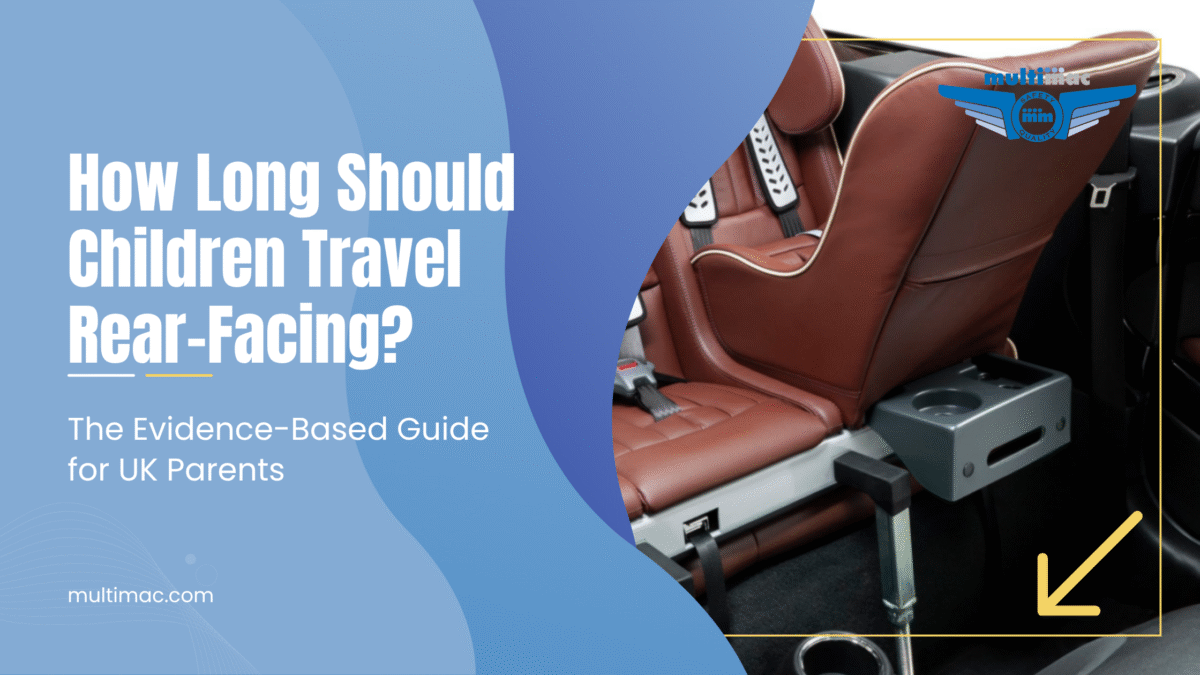
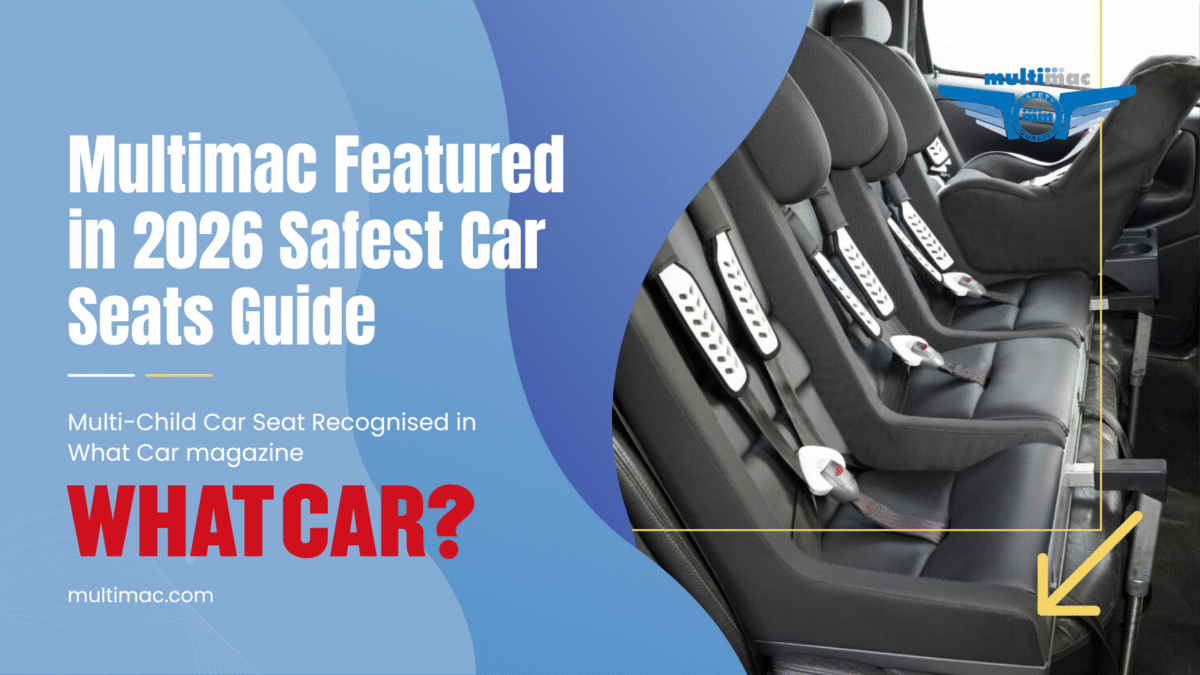
Multimac approaches it differently. Instead of three independent seats competing for space, it’s one frame that spans the back seat and holds all three children within it, each in their own properly secured position. It anchors directly to the car’s chassis rather than relying on ISOFIX, which is part of why it doesn’t run into the same width problem that three separate ISOFIX bases create.
What this actually looks like for twins plus a toddler
For a family in this situation, a three-seat Multimac (the 930, 1000, Superclub Junior or Superclub, depending on your car) typically works like this:
Each twin travels in their own Minimac — a rear-facing baby seat that clicks into the Multimac frame, suitable from birth up to around 18 months, 13kg or 82cm. The Multimac is specifically designed to take multiple Minimacs at once, which is precisely the twins scenario it was built to handle.
Your toddler takes the third position. If they’re still within Minimac age and size, they can use one too, sitting rear-facing alongside their younger siblings. Once they’re past that stage, they move into the forward-facing position using the Ylva Headrest, with the same five-point harness and side-impact protection, in the same frame, without anything needing to be refitted.
The result is three children, three secured seats, one installation. No working out whether the middle one will physically fit. No squeezing past two infant seats to reach a buckle.
As they grow, the seat doesn’t need replacing
This matters more for twins-plus-sibling families than almost any other configuration, because you’re not dealing with one transition at a time. You’re potentially managing two children moving out of infant seats around the same point, plus an older one moving through their own stages, often within a fairly short window of each other.
With three separate seats, that’s three replacement purchases, three rounds of research, and three installations. With a Multimac, the frame stays exactly where it is. Individual accessories change as each child grows, but the seat itself doesn’t get swapped out and refitted every time someone hits a new milestone.
Getting started
If you’re at the stage of trying to work out whether this is even possible in your car, the honest answer is that it depends on your specific vehicle and seating configuration. The Multimac fitting checker is the quickest way to see which models suit your car, and the team can talk through the twins-plus-toddler configuration, specifically when you request a quote.
You don’t need to have all the answers before you ask. Most families in this exact position are doing exactly what you’re doing now: trying to work out if there’s a version of this that doesn’t involve replacing the car.
There usually is.