Every parent who looks into extended rear-facing eventually hits the same wall. You’ve read that ERF is safer, maybe seen it mentioned in a parenting group, or spotted a seat in a shop. But the gap between “this is safer” and actually understanding why (and whether the difference is meaningful enough to change what you do) is bigger than most articles bridge.
This post tries to do that properly. What the safety case for ERF actually rests on, how the physics work, what the common objections get wrong, and why the question gets more complicated when you have more than one child to seat.
What the research shows
The safety case for rear-facing isn’t new. Swedish researchers have been studying it since the 1970s, and the data have been consistent enough that Sweden has recommended rear-facing until around four years old for decades. The UK caught up slowly. Legally, children only had to stay rear-facing until 9 months until relatively recently, and the current R129 regulation raised that to 15 months. But 15 months is the legal floor, not the safety ceiling.
The British Medical Journal published a statement as far back as 2009, concluding that rear-facing was the safest way to travel for all children under four. RoSPA’s own research has found that rear-facing child seats reduced the likelihood of injury by 90% compared with being unrestrained. For context, forward-facing seats with a correctly positioned belt reduced risk by 77% for children aged four to ten. Both represent significant protection, but the rear-facing advantage in the early years is substantial.
The “five times safer” figure you’ll see cited across car seat retailers and safety organisations comes from this body of research. It’s worth treating that specific number as a general indicator rather than a precise multiplier. Crash conditions vary too much for a single figure to apply universally. But the directional evidence is clear and consistent: rear-facing protects young children better, particularly in frontal collisions, which are the most common type.
Why the physics matter
Understanding why rear-facing is safer makes the research easier to trust.
In a forward-facing seat, the harness stops the child’s body during a crash. The head (which in young children can be up to a quarter of their total body weight, with neck muscles not yet developed enough to support that load) continues moving forward. That sudden deceleration puts severe strain on the neck and spine.
In a rear-facing seat, the crash forces are distributed across the back of the seat shell, which acts as a cradle. The child’s head, neck, and spine move together as a unit, with the seat absorbing and spreading the energy rather than the child’s body absorbing the stop. There’s no single point of failure.
This is the core reason that rear-facing seats perform better in frontal impacts. The child’s body isn’t fighting against the crash. It’s being carried through it.
The common objections
“Their legs will be cramped.”
Children’s legs being bent or resting against the back of the seat isn’t a comfort issue or a safety risk. Children’s joints are genuinely more flexible than adults’, and research has found that leg injuries in rear-facing seats are uncommon. Most children who travel rear-facing past the age of two are perfectly comfortable. They fold their legs, cross them, and rest them on the seat back. Watch any child in a rear-facing seat, and you’ll see they don’t seem to notice.
“They’ll be bored or miserable facing backwards.”
This one tends to come from projecting adult experience onto small children. Rear-facing seats sit high enough that children can see out of the rear window, and they have the same field of vision for the back of the car as forward-facing children have for the front. Many parents who’ve switched report their children showing no preference either way.
“They seem absolutely fine forward-facing.”
Most journeys end without an incident. The question isn’t whether your child is comfortable on the school run. It’s what protection they have if the journey goes wrong. A forward-facing child in a correctly fitted seat is well protected. An ERF child is better protected, particularly in the first four years of life when the neck and spine are most vulnerable.
“They’re past the legal minimum age.”
15 months is the threshold below which an i-Size seat must be rear-facing by law. It isn’t the point at which forward-facing becomes the safer choice. Most car seat safety organisations and independent experts recommend staying rear-facing until around four years old, or until the child reaches the height or weight limit of the seat, whichever comes first.
Age and weight guidance for ERF
Most ERF seats allow rear-facing up to 18 kg or more, which typically covers children up to around four years old, and in some cases considerably older depending on the child’s size. The key thresholds are set by the individual seat’s specifications, not by a universal age rule. Checking the label and manual matters more than going by birthday.
Under the R129 (i-Size) standard, rear-facing is mandatory until 15 months. Under ECE R44-04, classification is by weight rather than age. Neither regulation sets an upper limit on how long a child can stay rear-facing. They set minimums, not maximums.
The practical answer for most families: keep children rear-facing until they reach the seat’s height or weight limit. There’s no safety reason to turn them forward earlier.
The multi-child complication
Here’s where the conversation shifts for a lot of families, and where most ERF content falls short.
If you have one child, the path to ERF is relatively straightforward. You buy a compatible ERF seat, check it fits your car, and keep your child in it until the limits are reached. There are plenty of seats on the market, a reasonable range of prices, and the process is well documented.
If you have two, three or four children to seat, the calculation changes completely.
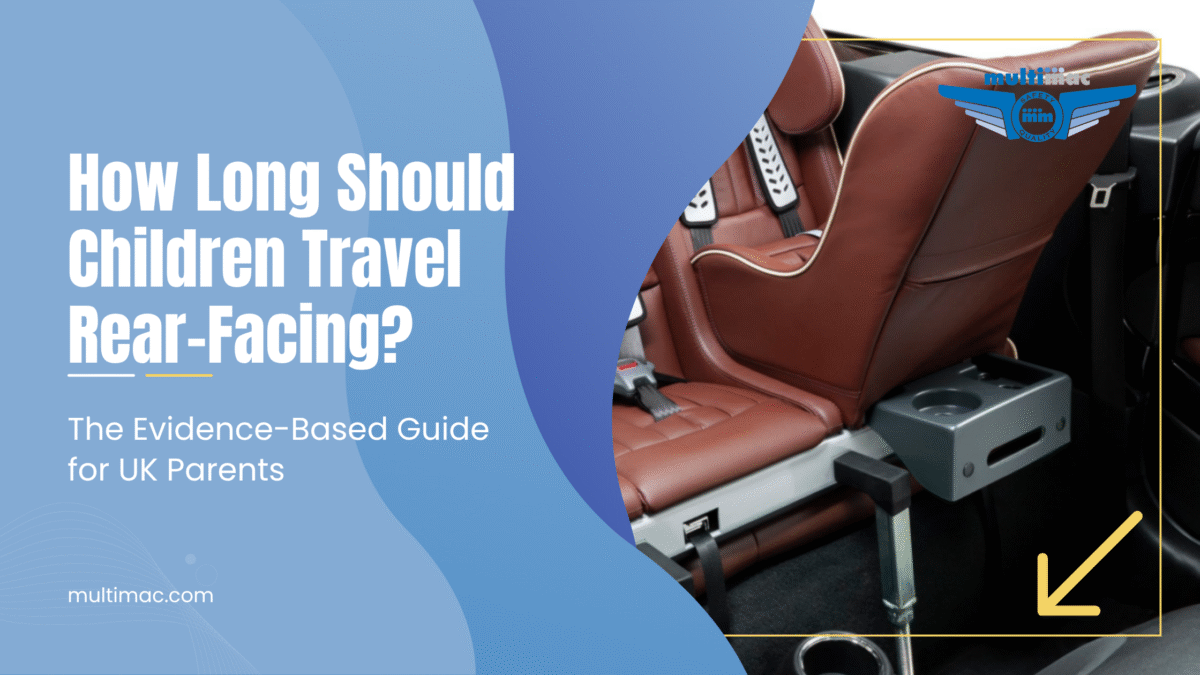
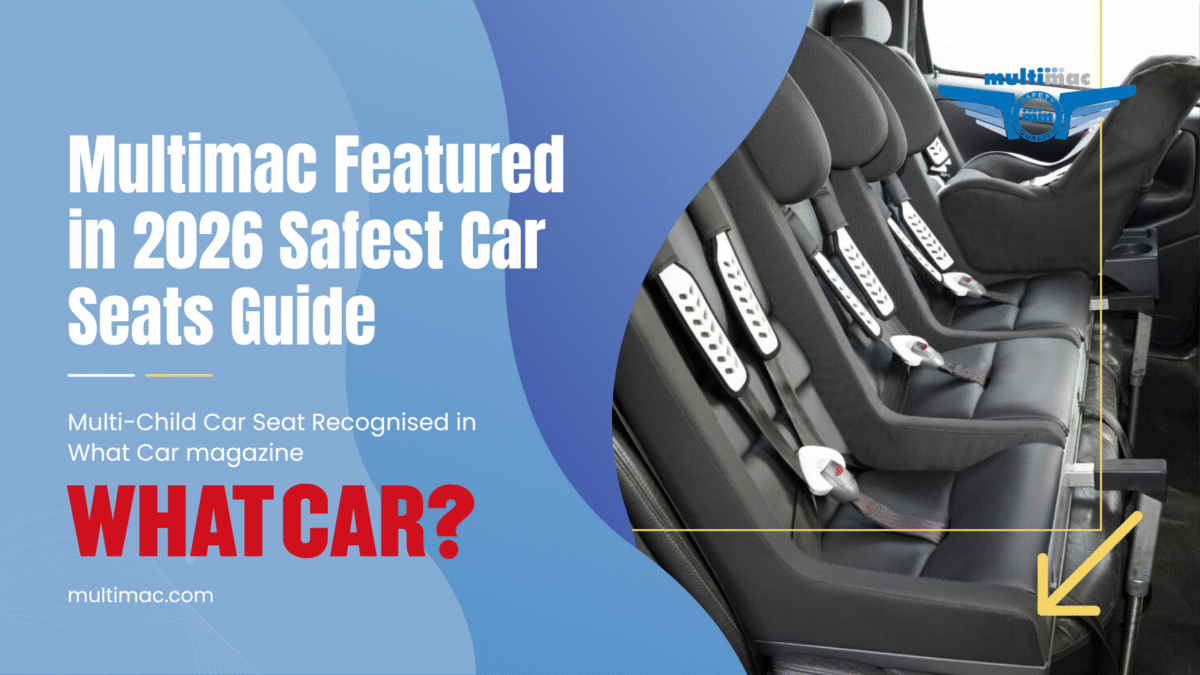
ERF seats are larger than most forward-facing equivalents. They’re deeper, they require more legroom, and fitting three of them across a standard back seat is, in most cars, simply not possible. Parents in this position are typically faced with a choice between keeping one child rear-facing while others face forward, or turning everyone around to make the seating work. Neither is ideal.
A 7-seater solves some of this by moving children around the vehicle, but it introduces its own complications and costs, and it doesn’t resolve the ERF question for the back row.
Children are often placed in the crumple zone of the car in standard car seats, compromising their safety should a crash happen.
This is a gap that almost no current ERF product addresses. The seat market has been built around individual children rather than families with multiple children at different stages who all benefit from rear-facing protection simultaneously.
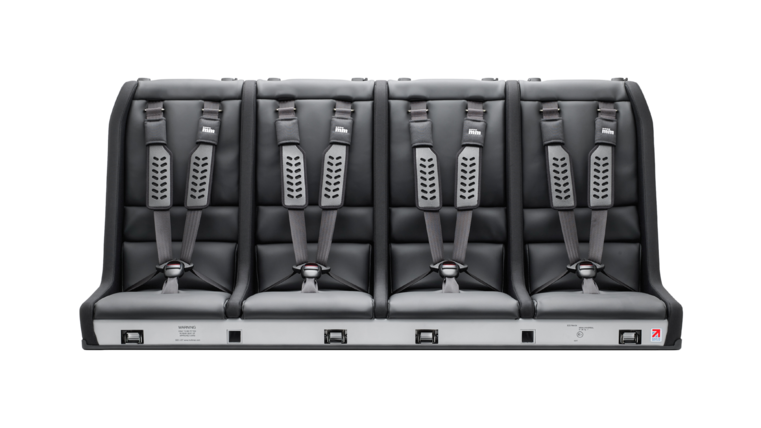
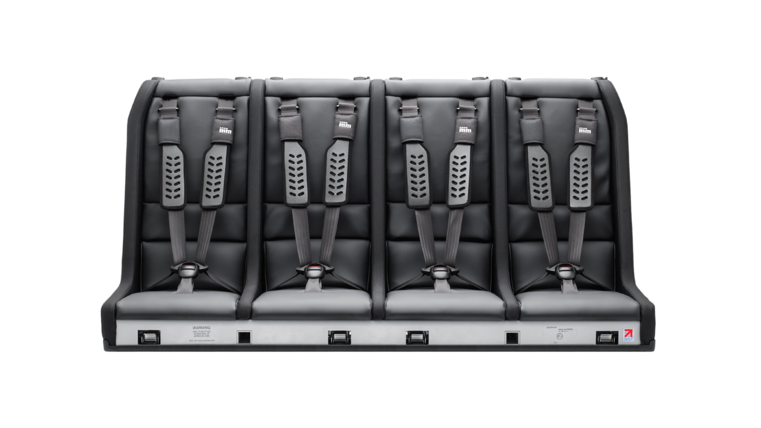
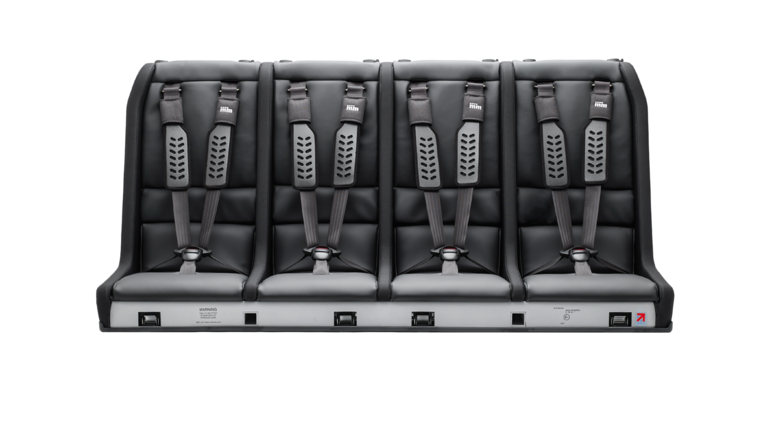
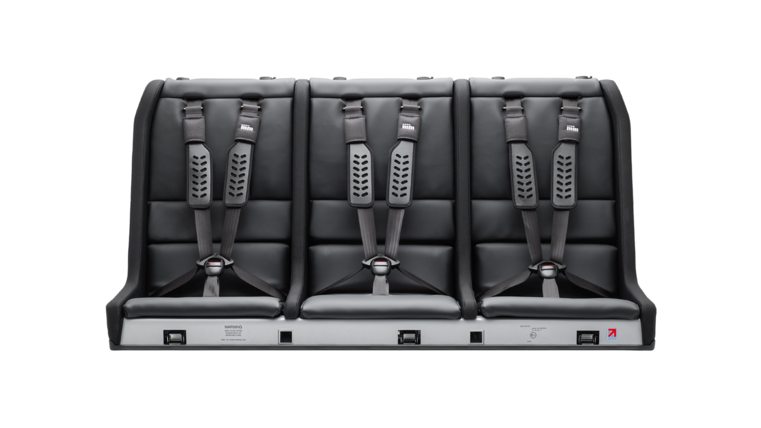
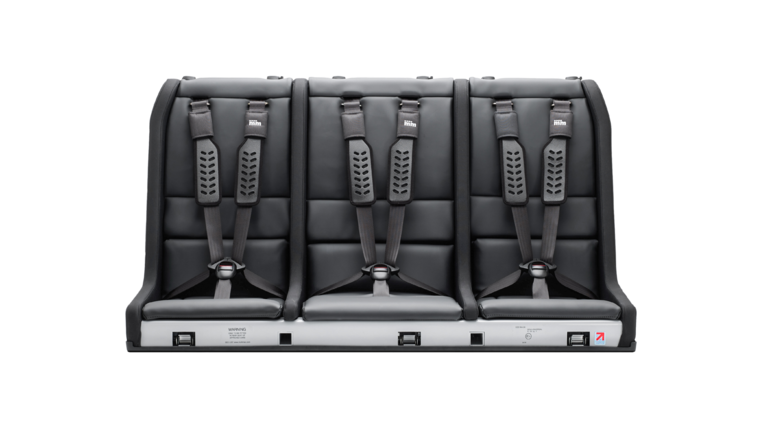
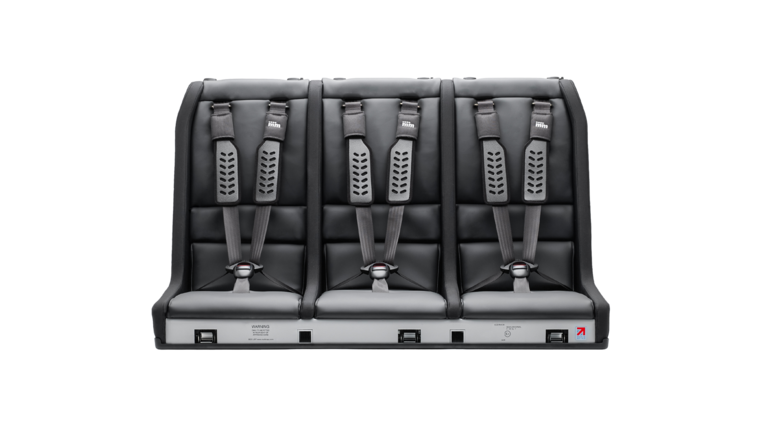
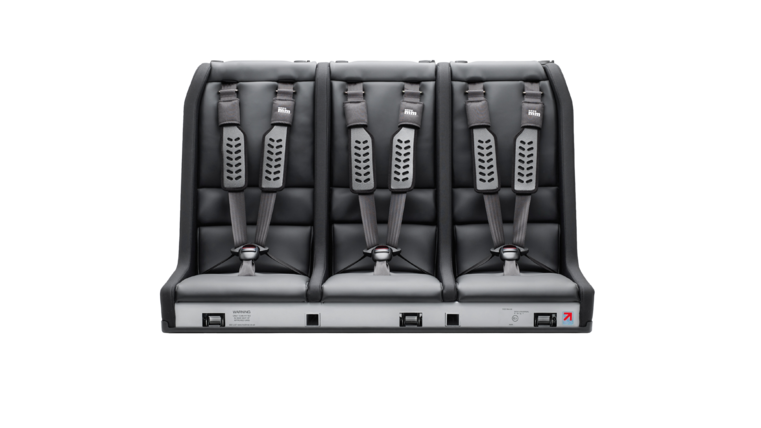
Multimac is working on a solution to exactly this problem: an ERF product designed specifically for families who need to seat more than one child, without the compromises that currently make multi-child ERF practically impossible. We’ll have more details to share soon.
Keeping children as safe as possible in the car is one of the areas where the evidence genuinely points in a clear direction. If you have questions about Multimac’s current range or want to know more about the ERF product when it launches, get in touch with the team or explore the Multimac range.