You love your car. Maybe it’s the BMW 3 Series you worked hard to afford, the VW Golf that’s been utterly reliable for years, or the Mini Cooper that perfectly suits your urban lifestyle. But now you’re expecting your third child, and suddenly everyone’s telling you that you need a “proper family car” – code for a hulking 7-seater MPV.
Before you resign yourself to trading in the car you love for something sensible and soul-crushing, let’s look at the actual data about fitting three car seats across popular UK vehicles. The answer might surprise you.
The Short Answer: It’s Complicated
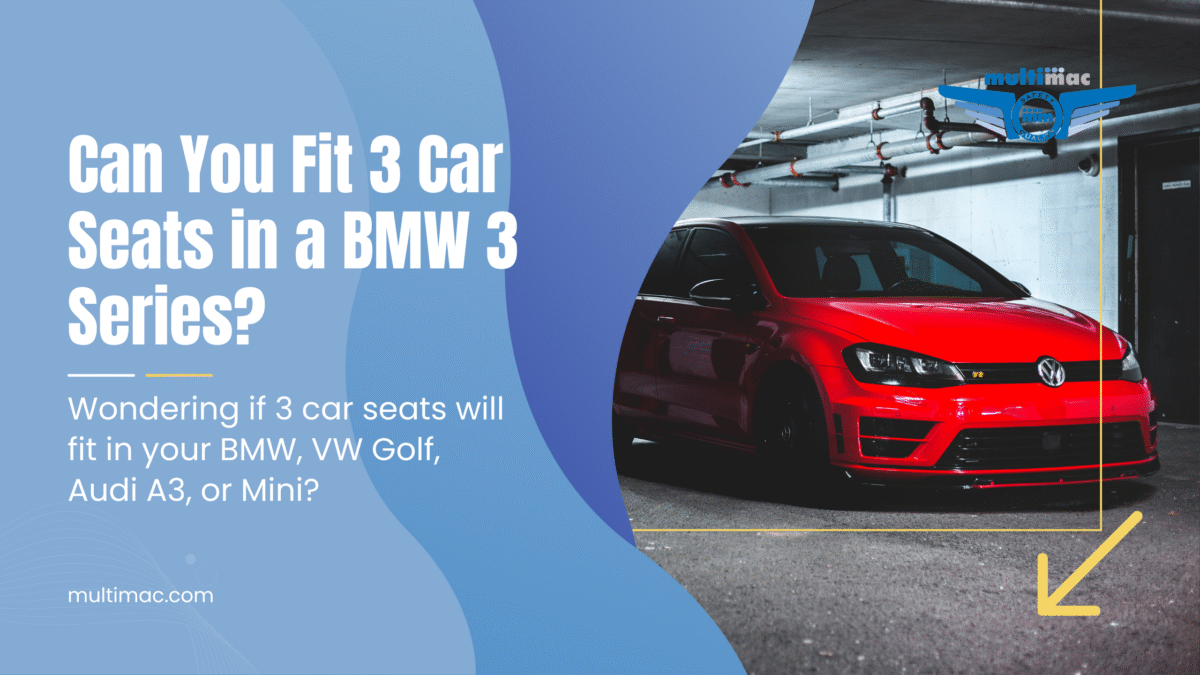
Can you fit three car seats in a BMW 3 Series? Technically yes, but practically no – not with standard individual car seats anyway. The same applies to most compact and mid-size cars popular in the UK. The middle seat in these vehicles is simply too narrow, the ISOFIX points (when present) are too close together, and the overall back seat width doesn’t accommodate three standard car seats side by side.
But here’s what the car seat industry doesn’t advertise: this isn’t a car problem. It’s a car seat problem.
Why Three Individual Car Seats Don’t Fit
Let’s look at the BMW 3 Series as our example, since it’s one of the UK’s most popular executive cars and a vehicle many families desperately want to keep.
The current generation BMW 3 Series (G20, produced from 2019 onwards) measures approximately 71 inches wide externally. However, the usable back seat width is considerably narrower once you account for the door panels, armrests, and seat bolstering. Industry testing shows the practical rear seat width is closer to 50-52 inches.
A standard R129-approved car seat measures approximately 17-18 inches wide at its widest point. Simple maths tells us that three seats at 17 inches each would require 51 inches minimum, and that’s assuming perfectly square seats with no curves or edges protruding. In reality, car seats have curved sides, buckle guards, and various protrusions that add several inches to their practical footprint.
Add to this the fact that BMW (like most manufacturers) positions the middle seat ISOFIX points quite close together, and you face a geometric impossibility. The seats physically cannot fit side by side, regardless of how determined you are or how many YouTube tutorials you watch.
The UK’s Most Popular Cars: A Fitment Reality Check
Let’s examine how three car seats fare in the vehicles UK families actually drive.
Compact Hatchbacks
VW Golf (2020-onwards)
- External width: 70.9 inches
- Rear seat width: Approximately 50 inches
- ISOFIX points: Two sets on outer seats only
- Verdict: Theoretically possible with ultra-narrow seats (like Clek Fllo or Diono Radian), but extraordinarily tight. Front passenger legroom severely compromised.
Audi A3 Sportback
- External width: 70.8 inches
- Rear seat width: Approximately 50 inches
- ISOFIX points: Two sets on outer seats, third on front passenger seat
- Verdict: Nearly impossible. The A3 shares the platform with the Golf and faces identical constraints. Many owners report that even two rear-facing seats make front seat positioning uncomfortable.
Mini Cooper (5-door)
- External width: 66.4 inches
- Rear seat width: Approximately 47 inches
- ISOFIX points: Two sets on outer seats only
- Verdict: Absolutely not with individual seats. The Mini’s charming compact dimensions become a significant limitation with multiple children.
Executive Saloons
BMW 3 Series (G20 2019-onwards)
- External width: 71.2 inches
- Rear seat width: Approximately 51 inches
- ISOFIX points: Two sets on outer seats, centre seat belt installation only
- Verdict: Possible with ultra-narrow seats and belt installation, but buckle access becomes nearly impossible. Front seat passengers will be cramped.
Mercedes C-Class (W206 2021-onwards)
- External width: 71.3 inches
- Rear seat width: Approximately 51 inches
- ISOFIX points: Two sets on outer seats only
- Verdict: Marginally better than the BMW thanks to slightly less aggressive seat bolstering, but still extremely challenging with standard seats.
Audi A4 (B9 2015-onwards)
- External width: 72.8 inches
- Rear seat width: Approximately 52 inches
- ISOFIX points: Two sets on outer seats only
- Verdict: The widest of the executive saloons, offering the best chance of fitting three seats, but still requires very narrow seat models and significant compromise.
Compact SUVs
BMW X3 (2018-onwards)
- External width: 74.4 inches
- Rear seat width: Approximately 53 inches
- ISOFIX points: Two sets on outer seats, centre improved from previous generation
- Verdict: The 2018 redesign widened the centre seat by 3 inches, making three-across more feasible than the 3 Series, but still tight with standard seats.
Audi Q5 (2017-onwards)
- External width: 74.5 inches
- Rear seat width: Approximately 53 inches
- ISOFIX points: Two sets on outer seats, third on front passenger seat
- Verdict: Similar to the X3. Possible with narrow seats, but the third ISOFIX point being in the front limits practical configurations.
VW Tiguan (2016-onwards)
- External width: 73.4 inches
- Rear seat width: Approximately 52 inches
- ISOFIX points: Two sets on outer seats, optional third in centre
- Verdict: Slightly more accommodating than the Golf, but three-across still requires careful seat selection and may impact boot space due to rear-facing installation depth.
What About “Narrow” Car Seats?
You’ve probably seen articles recommending “narrow” or “slim-line” car seats designed specifically for three-across installations. These include models like:
- Clek Fllo (approximately 17 inches wide)
- Diono Radian series (approximately 17 inches wide)
- Cybex seats (approximately 17.5 inches wide)
These seats certainly improve your chances, and in larger vehicles like the Audi Q7 or BMW X7, they work brilliantly. However, in compact and mid-size cars, you’re still facing:
- Buckle access issues – Even if the seats physically fit, children (and adults) struggle to reach the buckles sandwiched between seats
- Installation complexity – Achieving proper tension and angle with belt installations becomes extremely difficult
- Front seat compromise – Rear-facing seats push front seats forward, reducing legroom significantly
- Daily practicality – Getting children in and out of tightly-packed seats is genuinely challenging, particularly in car parks
The narrow seats solve one problem whilst creating several others. They’re a compromise, not a solution.
The Alternative Nobody Tells You About
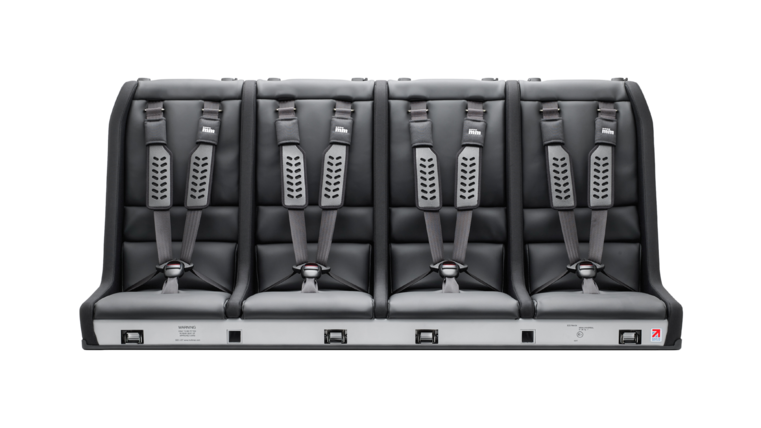
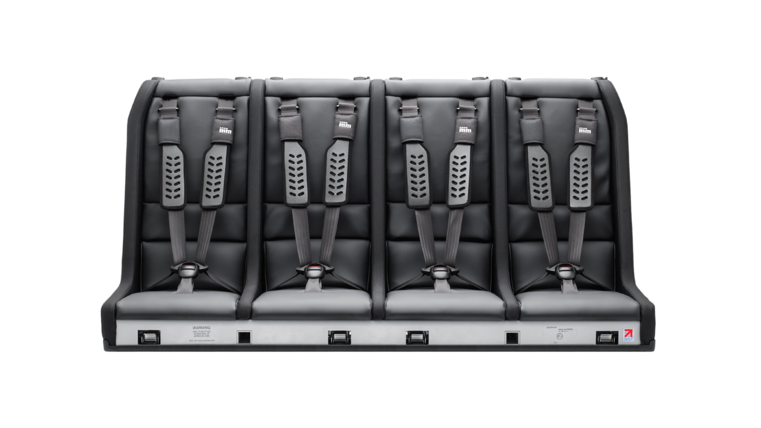
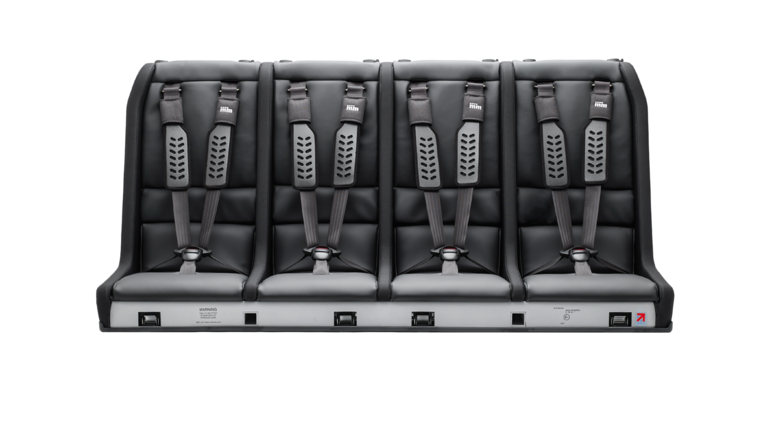
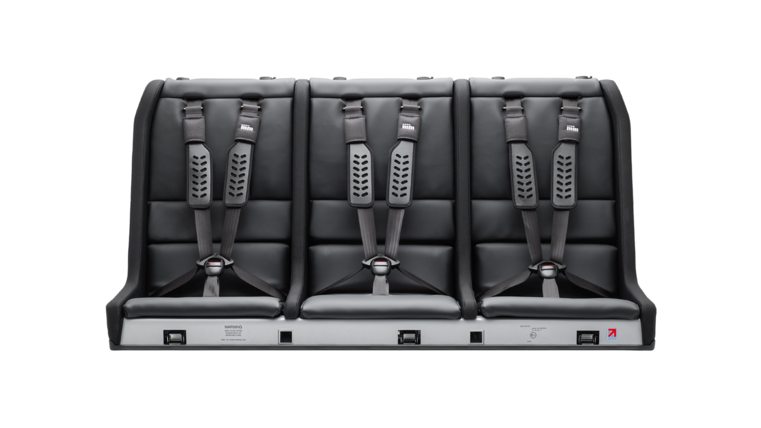
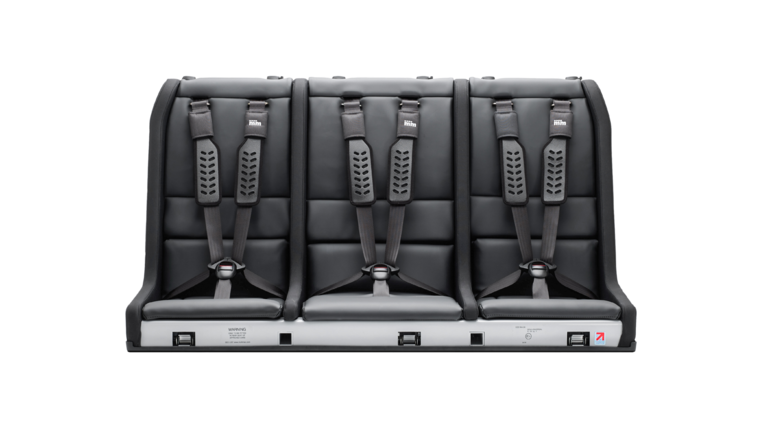
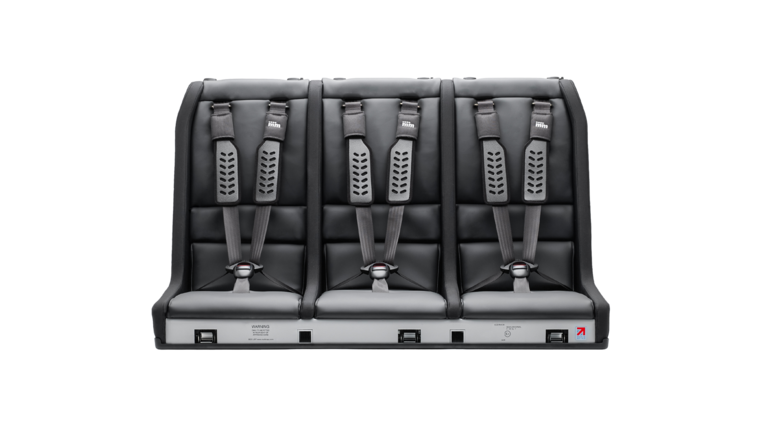
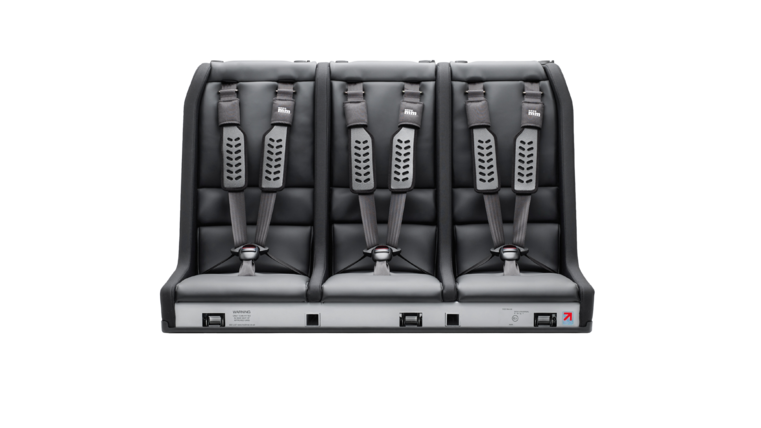
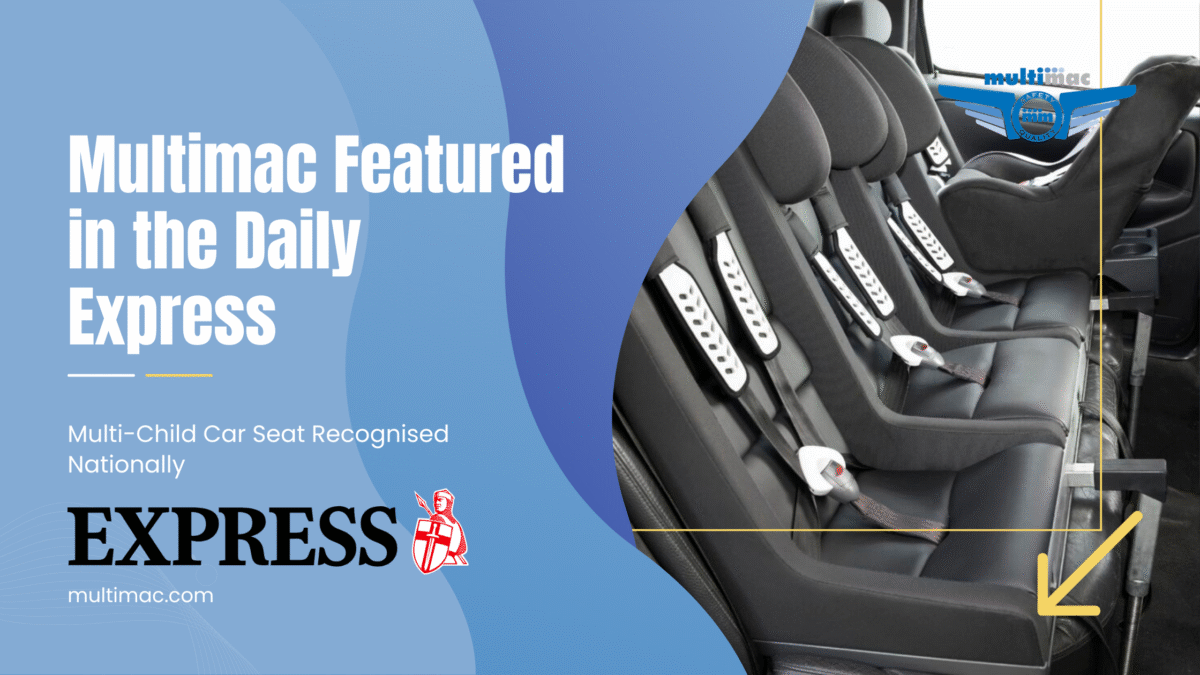
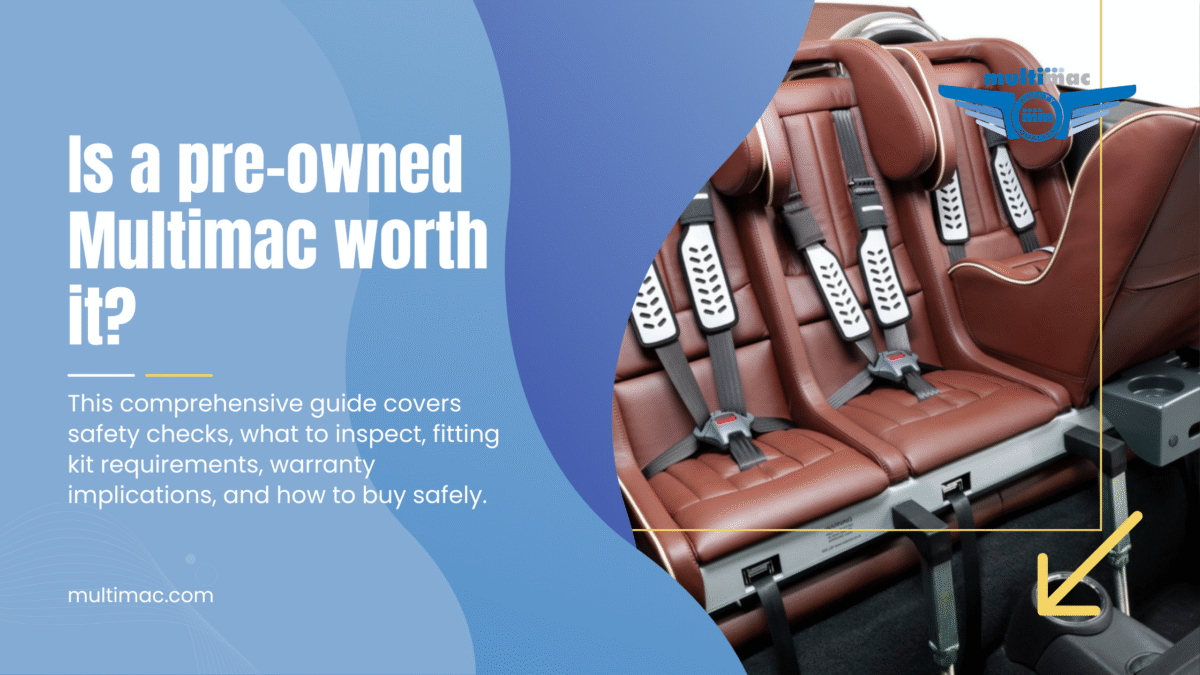
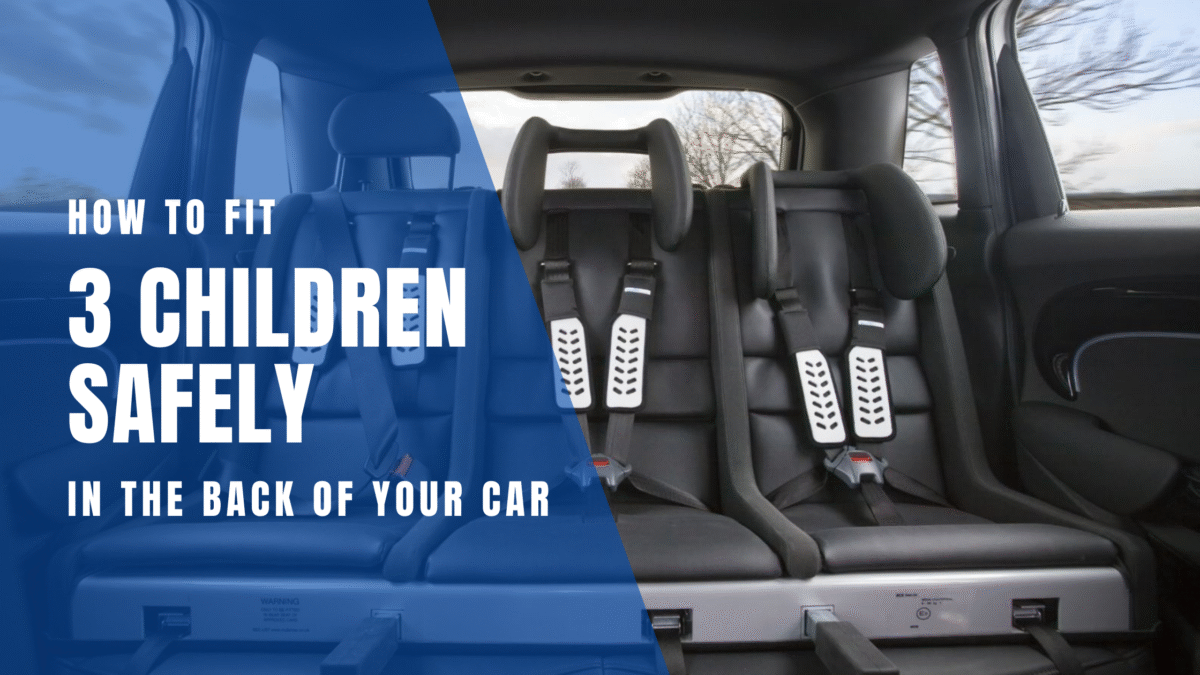
Here’s what’s interesting: whilst three individual car seats won’t fit comfortably in most UK family cars, a Multimac bench system absolutely will.
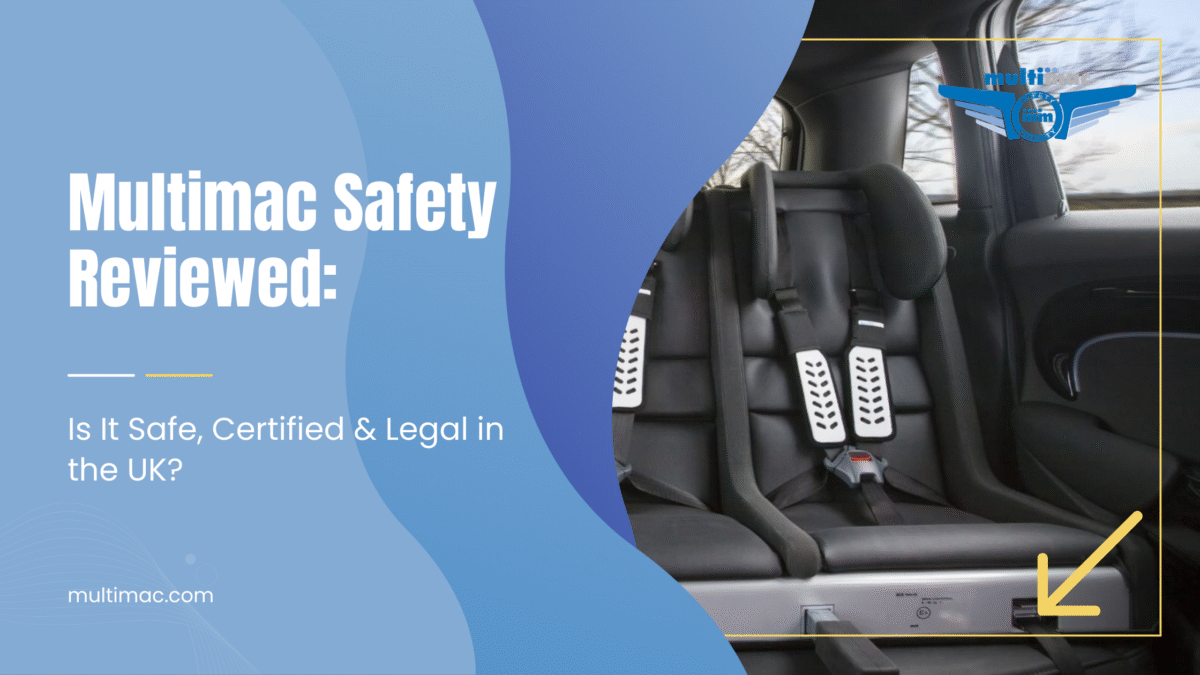
Multimac has been designing R129-approved multi-child car seat systems since 1995, specifically to solve this exact problem. The bench-style design installs as a single unit, with three or four individual seat positions built into one integrated system.
Think of it like this: instead of trying to squeeze three separate 17-inch-wide boxes into a 50-inch space, you’re installing one purpose-built unit that’s precisely engineered to utilise that space efficiently.
The system works in surprisingly compact vehicles. Customers have successfully installed Multimac systems in:
- BMW 3 Series (including the E46, E90, and current G20)
- VW Golf (multiple generations)
- Audi A3 and A4
- Mini Cooper (5-door models)
- Mercedes C-Class
- Even sports cars like the Maserati GranTurismo
The key is professional installation using vehicle-specific tether straps that anchor to structural points in your car. This provides the robust attachment points necessary for R129 certification whilst working within your vehicle’s specific dimensions.
Each individual seat position within the Multimac accommodates children from birth (using the MiniMac infant insert) through to 12+ years, all within the same system. You’re not constantly buying new seats as children grow, and you’re definitely not buying a new car.
Understanding the Economics
Let’s be honest about the costs. A narrow car seat suitable for three-across installations costs £250-£400. For three seats, you’re spending £750-£1,200, and you’ll need to replace them as children grow through different stages.
A Multimac system costs £2,000-£3,000 including professional installation, depending on whether you choose the 3-seater or 4-seater model. That’s a higher upfront investment, but:
- It covers all children from birth through to 12+ years
- You keep the car you already own and love
- You avoid the £15,000-£30,000 cost of upgrading to a 7-seater
- It’s easily transferable if you change vehicles
- Strong resale value through Multimac’s Pre-Loved scheme
For families who genuinely love their current car and want to avoid the expense and hassle of upgrading, the maths works strongly in Multimac’s favour.
Real Customer Examples
The Multimac testimonials page features dozens of UK families who’ve kept their preferred vehicles rather than upgrading:
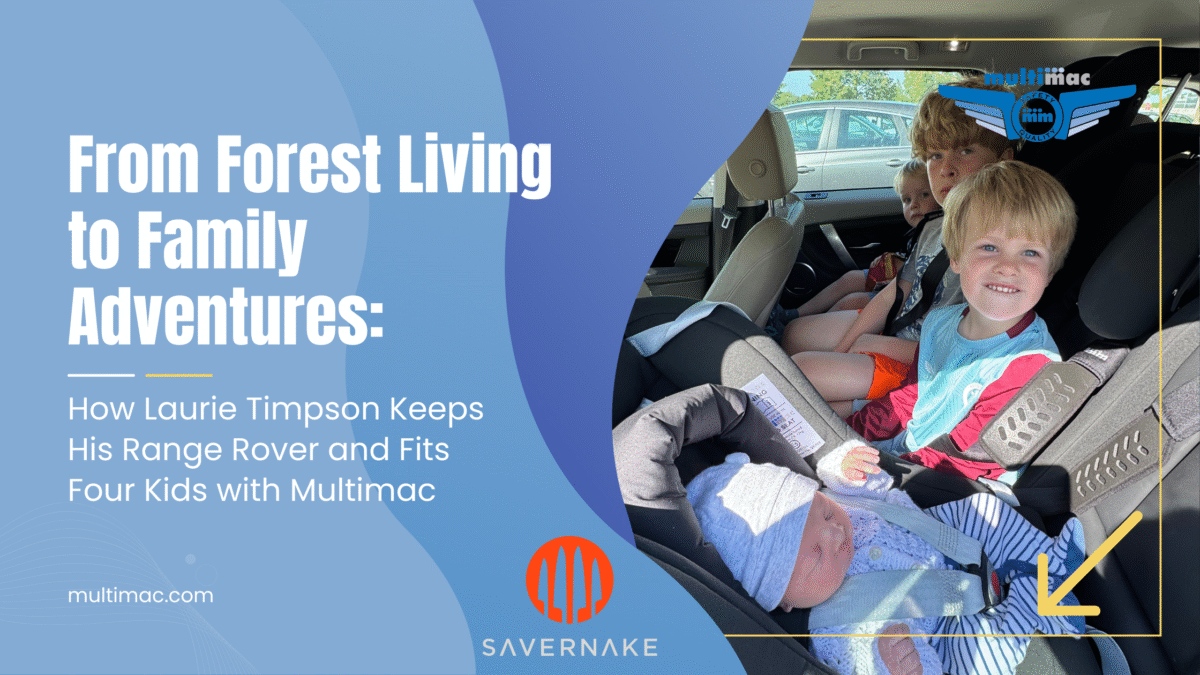
“Put simply, it is a brilliant piece of engineering and the seat has transformed the stresses and strains of travelling with three (or four) kids aged six and under. The kids love the seat and they’re safe, which is the main thing.” – Tom Mintern, Superclub in VW
“Big thanks for the help and quick support, got the multimac fitted in this morning and it feels absolutely solid. Very happy, thank you very much!” – Lynsey Middler, BMW installation
The common thread? Relief that they don’t need to give up the car they love whilst still safely accommodating their growing family.
When You Actually Need a Bigger Car
To be clear, Multimac isn’t the answer for everyone. You genuinely need a larger vehicle if:
- You regularly transport adults in addition to three children
- You need substantial boot space alongside three car seats (though Multimac is surprisingly space-efficient)
- You prefer the higher driving position and visibility of an SUV
- Your family exceeds four children (though Multimac’s 4-seater handles this)
- You simply want a larger vehicle for personal preference
But if your sole reason for considering a vehicle upgrade is fitting three car seats, and you genuinely want to keep your current car, you have options beyond what the mainstream car seat market offers.
Making Your Decision
Start by checking if your specific vehicle is compatible with Multimac. The quote builder lets you input your car’s make, model, and year to see which Multimac system fits and get accurate pricing including professional installation in your area.
The fitting compatibility page shows certified installers throughout the UK who can assess your specific vehicle and ensure proper installation meeting all R129 requirements.
For many UK families driving compact and mid-size cars, discovering that three-across is possible without trading in their beloved vehicle comes as a genuine relief. The choice between keeping your BMW 3 Series or settling for a sensible MPV suddenly becomes less binary when you realise there’s an engineered solution that lets you have both – the car you love and the space your family needs.
Is your car compatible with Multimac?
Use our quote builder to find out which system fits your vehicle, view accurate pricing, and locate professional installers in your area. Or browse customer testimonials to see how other UK families in BMWs, Audis, VWs, and Minis solved their three-car-seat challenge without upgrading their vehicle.